Categories
1916 Rising

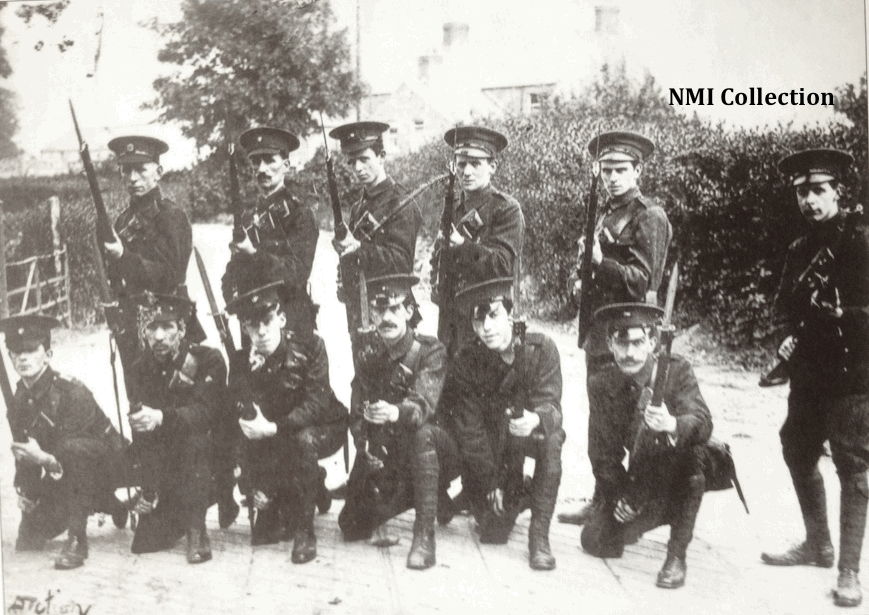
Irish Volunteer Tunic, The Surrender at Jacob’s Factory, 1916 Rising

During the week of the Easter Rising the site of Jacob’s Biscuit Factory on Bishop Street was occupied by up to 150 Irish Volunteers, Fianna Éireann and Cumann na mBan, led by Thomas MacDonagh, John McBride and Michael O’Hanrahan.

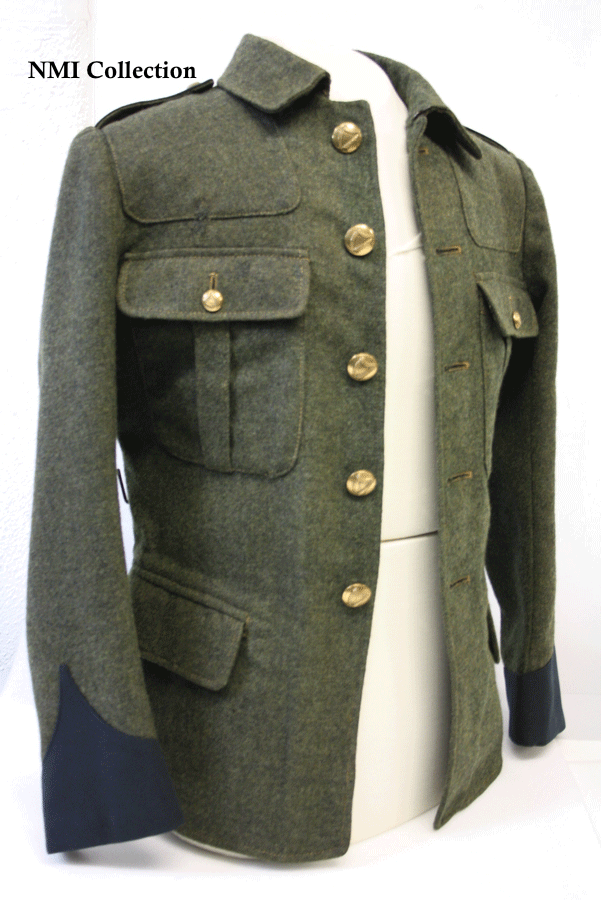
It was surrendered on Sunday 30 April, when one of the Volunteers left this tunic behind.  It was donated to the National Museum in 1917.

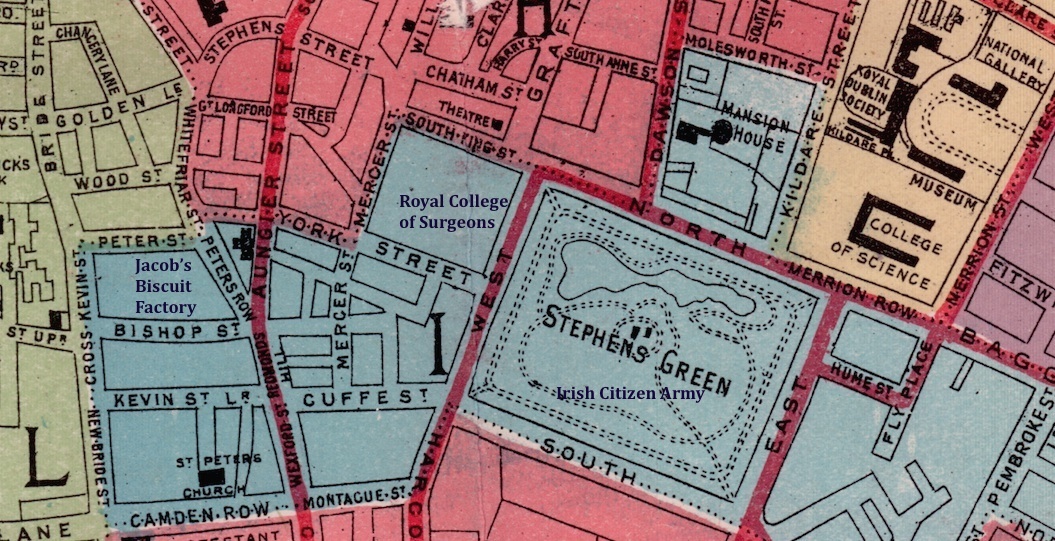
The Jacob’s complex, where the National Archives and DIT Aungier Street now stands, took up a large area between Bishop Street and Peter Street, and was closely surrounded by mostly tenement housing. It was positioned between Portobello Barracks and the city centre and its tall towers made it ideal for sniping – it was therefore a good position to try to cut off military reinforcements travelling to the centre of action. 
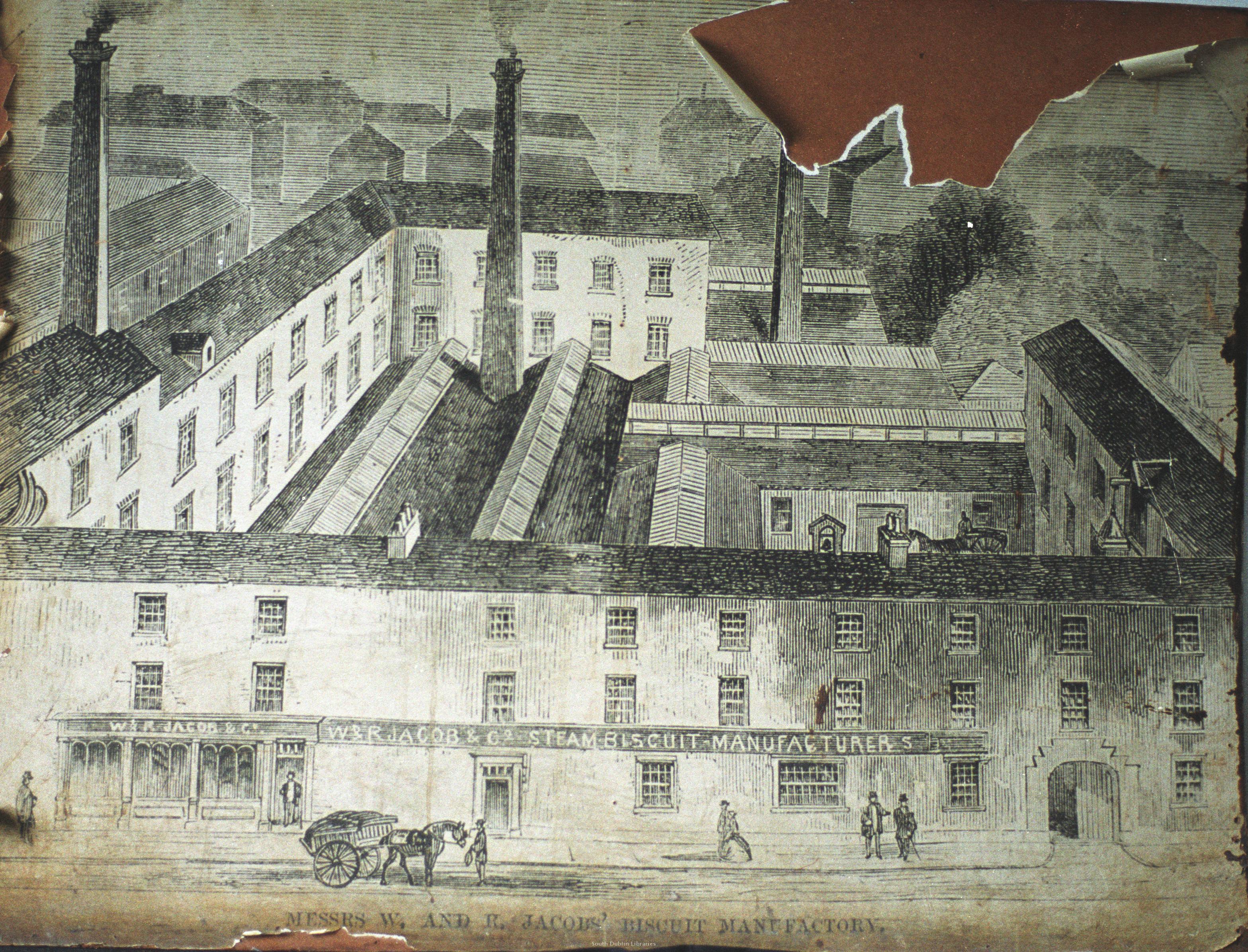
The main body of Volunteers took the Factory at mid-day on Monday 24th April, and set up outposts in Fumbally Lane, Camden Street, Wexford Street and Aungier Street. The factory was located in the Liberties and Blackpitts area which was quite pro-British, with many families connected to the British Army. The local community, including the ‘separation women’ (the dependents of Irish men in the British Army), was at first hostile to the Volunteers and were verbally abusive to them; one civilian who physically attacked a Volunteer was killed in his defence.
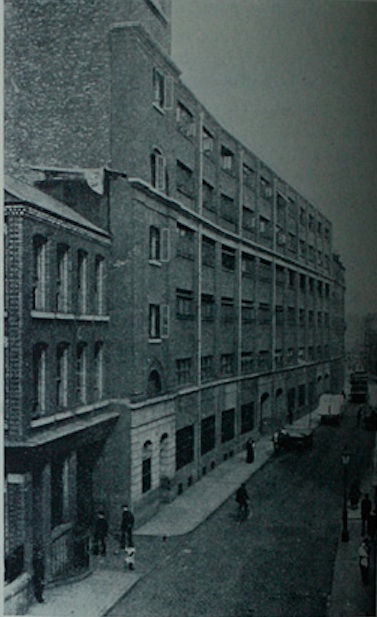
Thomas Slater, in his witness statement to the Bureau of Military History, tells of how they broke through the door with a sledge, politely telling the employee on duty that the best thing he could do was to get his hat and leave, along with any other employees. Being a bank holiday, the factory would have had a minimal level of staff on that day. The men barricaded themselves in, using sacks of flour against windows and doors.  As the week progressed the garrison saw little action in the form of assault on the buildings, apart from intermittent rifle fire between the Volunteers and the military, and focused on the sourcing of provisions to feed the men, who were otherwise surviving on biscuits and sweet goods.

In Seosamh de Brun’s beautifully descriptive statement he tells of how the men occupied themselves during rest periods inbetween their duties, when the combatants slept, read books from the Jacob’s library, wrote diaries and even formed study circles. Seamus Pounch relates that the men and women held a céilí during a lull in the fighting.

The Jacob’s men were mainly active in supplying nearby garrisons such as the Irish Citizen Army in the Royal College of Surgeons with provisions, forming parties to gather information on what was happening in the city (the last communication from the GPO was on the Wednesday) and supporting other garrisons by sending men to join the fighting. In particular, a group of 20 men was sent to de Valera’s Boland’s Mills and Westland Row Railway Station, which was under heavy fire from the British Army. When they reached the Mount Street area they were fired on and were forced to retreat, with Volunteer John O’Grady mortally wounded – the only member of the garrison to die that week.
 

Patrick Pearse officially surrendered to General Lowe on Saturday 29 April, but the news did not reach Jacob’s that day.  On the Sunday, Father Aloysius, a Capuchin father, came to the factory with the order. Thomas MacDonagh, refusing to accept the surrender order as binding as Pearse was a prisoner, went with the priest to confer with him in person. Thomas Slater stated that before he left, he told the men ‘to get away if they could, as there was no use of lives being lost’, and many left at this point.   On his return, he conferred with the other commanding officers, confirming the surrender order and breaking down with the words ‘Boys, we must surrender, we must leave some to carry on the struggle’.

He called the men to the headquarters on the ground floor to inform them. Michael Walker remembered his words, ‘We are about to surrender but we have established the Irish Republic according to international law by holding out for a week. Though I have assurance from his reverence here that nobody will be shot, I know I will be shot, but you men will be treated as prisoners’ (of war).  At this there was uproar, with the men declaring that they did not trust the word of the British, and some urging to continue the fight.  

The men had the option of either marching out and surrendering, or escaping. Some took that option; escaping through windows wearing the civilian clothing which had been supplied to them by the Whitefriars Street Priory. Walker was one of these, though he was later found and arrested.  Seamus Pounch escaped arrest and had to lay low for some weeks, describing ‘how awkward it was now to have appeared so prominently and so often in uniform in the years leading up to the Rising’.

Vincent Byrne, a 15 year old Volunteer who would later become a member of Michael Collins’ ‘Squad’, remembers being lifted out of a window onto the street to escape, where he was taken into a house by a local woman to brush the telltale flour off his clothing.

Those who officially surrendered were brought to Richmond Barracks before being deported to various prisons and internment camps in Britain.  The leaders – Thomas MacDonagh, John McBride, and Michael O’Hanrahan were court martialled and executed the following month.
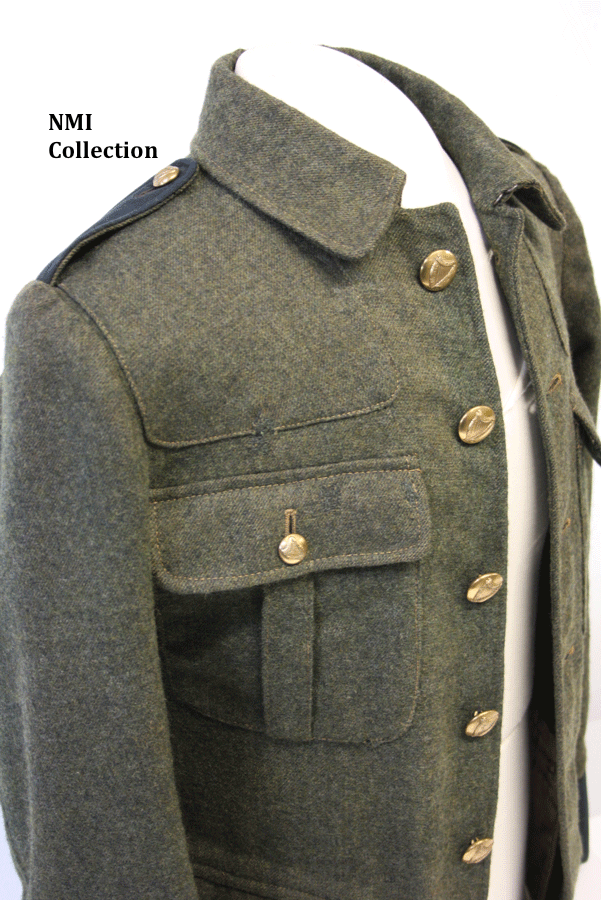
 

This Irish Volunteer tunic is of the pattern decided upon by the organisation’s uniform subcommittee in early 1914, and is one of the earliest examples of the type to survive. It was donated to the National Museum in 1917, just one year after the Rising, when its aftermath was still keenly felt by the city, and so it is not only a fine example of contemporary collecting, but is also the earliest object from the 1916 Rising to enter a national cultural institution.

It was found in Jacob’s Factory after Easter Week, and it is likely, given what the witness statements tell us about the surrender, that the Volunteer who wore it made the decision to abandon it before attempting escape.  We don’t know who owned this tunic, or whether or not he avoided arrest and internment.  I believe that it cannot have been an easy decision for him to make. From a personal perspective, he would have paid for this tunic on a weekly basis over a long period of time, and a number of small, neat repairs to the breast pocket show how valued it was by its owner.

On a practical level, if he had been arrested in uniform he would have had a better chance of being treated as a prisoner of war (though this did not in fact happen to the arrested rebels), but being dressed as a civilian increased his chances of escape. To abandon his uniform and escape may also have been regarded as dishonourable, despite having the full permission of his commanding officers to do so. We can assume from the pattern of the uniform that he was a member of the Irish Volunteers from at least early 1914, and that he was dedicated to the cause of the Irish Republic. Perhaps he went on with the struggle for independence, as MacDonagh hoped when he surrendered the garrison and himself, wishing to ‘leave some to carry on the struggle’.
 

© Brenda Malone. This work is original to the author and requires citation when used to ensure readers can trace the source of the information and to avoid plagiarism.

https://libguides.ucd.ie/academicintegrity/referencingandcitation

Sources and general reading used in the creation of these articles are listed on the Further Reading page.
Categories
19th century

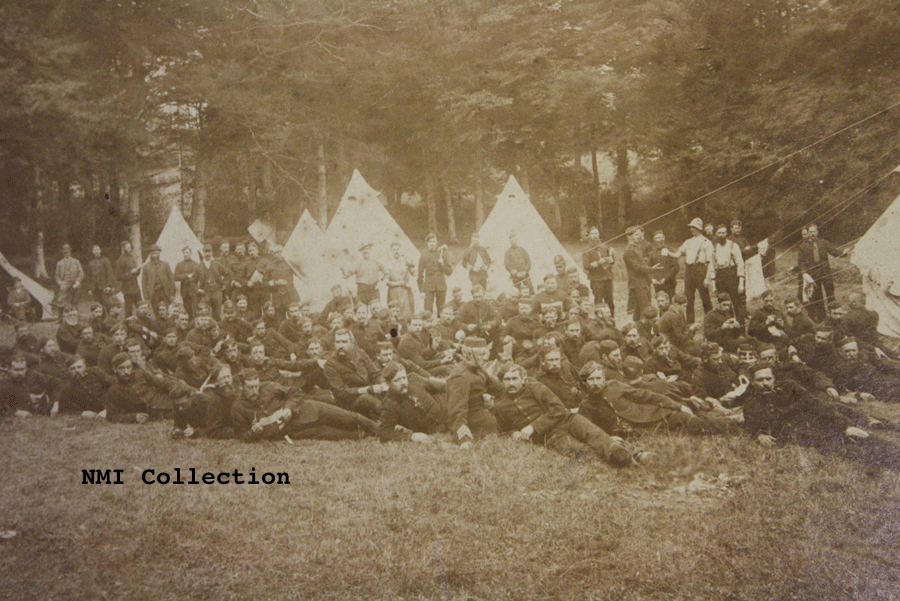
RIC Encampment, Coolgreany Evictions, 1887

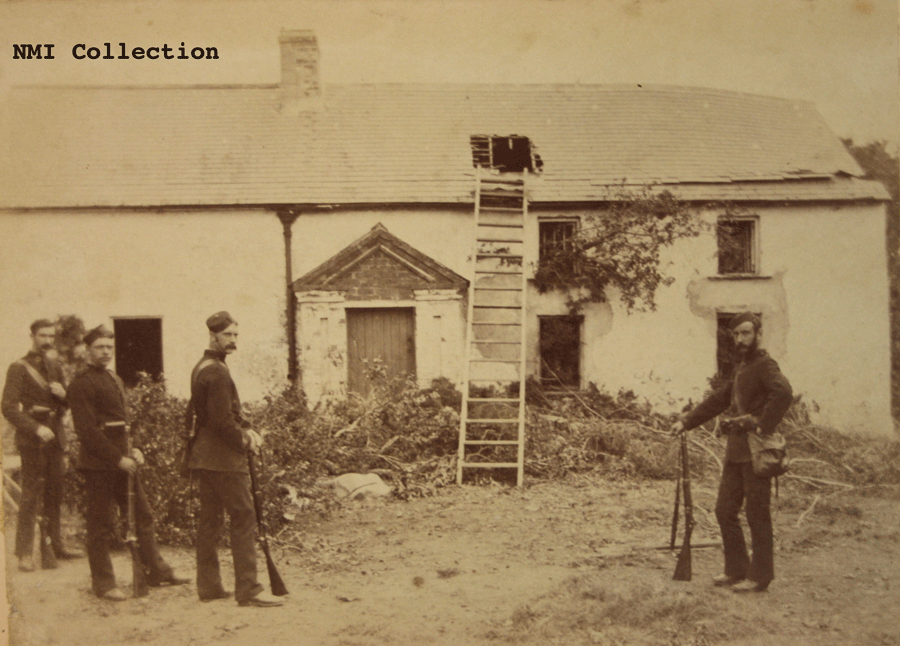
Previously on the blog I’ve posted about the Coolgreany Eviction Album from 1887 (The Eviction of Mrs Darcy and The Murder of John Kinsella).  There are two copies of the Coolgreany photograph album in public collections; the National Museum of Ireland received its copy in 1942 from a donor who rescued it from destruction when it was about to be disposed of in a fire, and the National Library of Ireland acquired its copy in 1992 from the grand-niece of Fr Laurence Farrelly, who was active in the Plan of Campaign in Co. Wexford in the 1880s.


The album shows scenes from the infamous Coogreany Evictions in Co. Wexford, near Gorey, where from February 1887 about 300 people were evicted from the estate of the Dublin wine merchant, High Sheriff and Justice of the Peace George Frederick Brooke, after their adoption of the Plan of Campaign.


The album contains photographs of the families who were evicted, their homes at the time of the eviction process, and their new shelter at neighbours’ holdings.

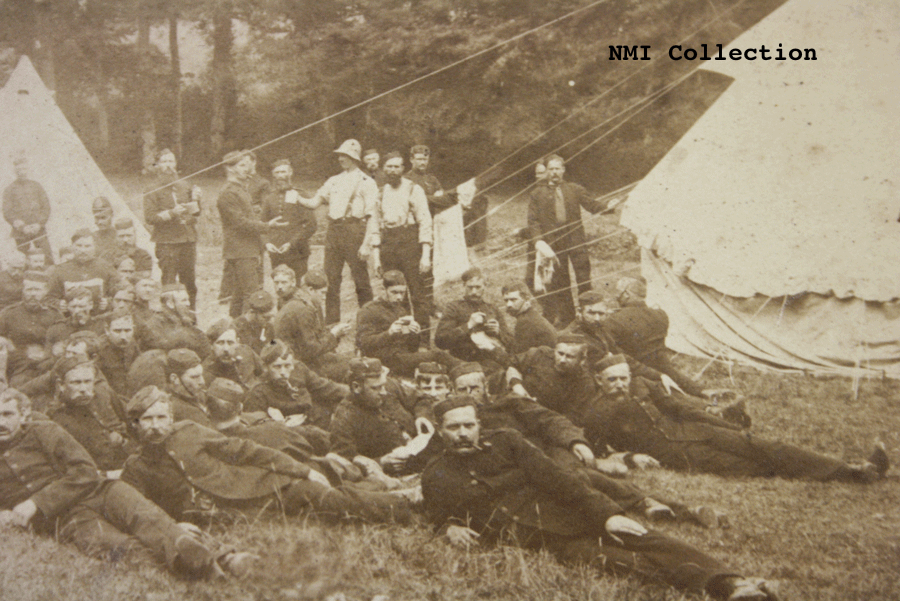
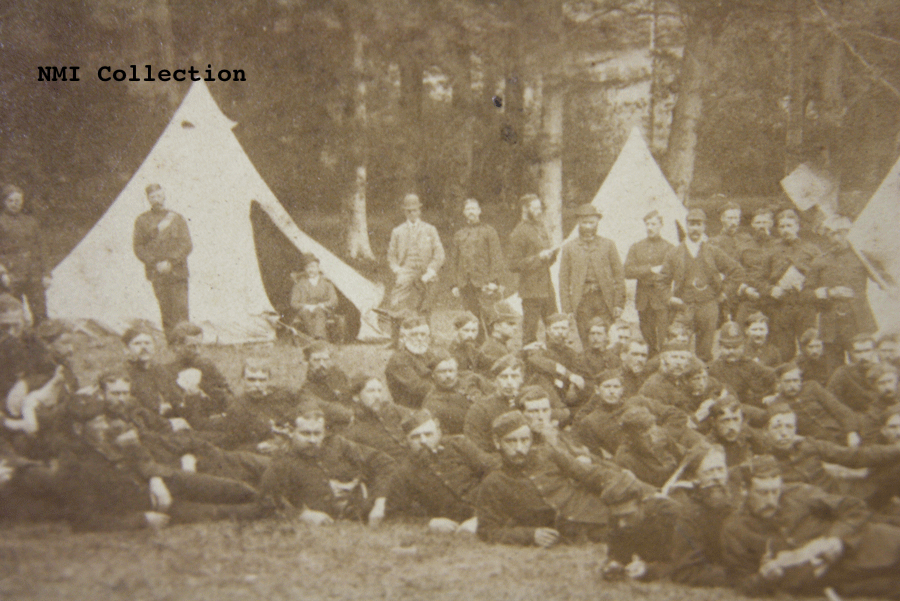
Recently, a scrapbook containing material relating to the visit of Queen Victoria to Ireland in 1900 was acquired by the museum from the family of John J. Jones, who joined the Royal Irish Constabulary as a cadet and later became Chief Commissioner of the Dublin Metropolitan Police. Inside the scrapbook was this loose photograph with the title ‘RIC Encampment, Coolgreany Evictions 1887’.

The Royal Irish Constabulary was established with the Peace Preservation Act in 1814, which set up police forces in the baronies under the jurisdiction of Dublin Castle, the UK administration in Ireland. Its role in policing the people of Ireland in this century of civil unrest, particularly in relation to land, led it into regular conflict with the rural population.

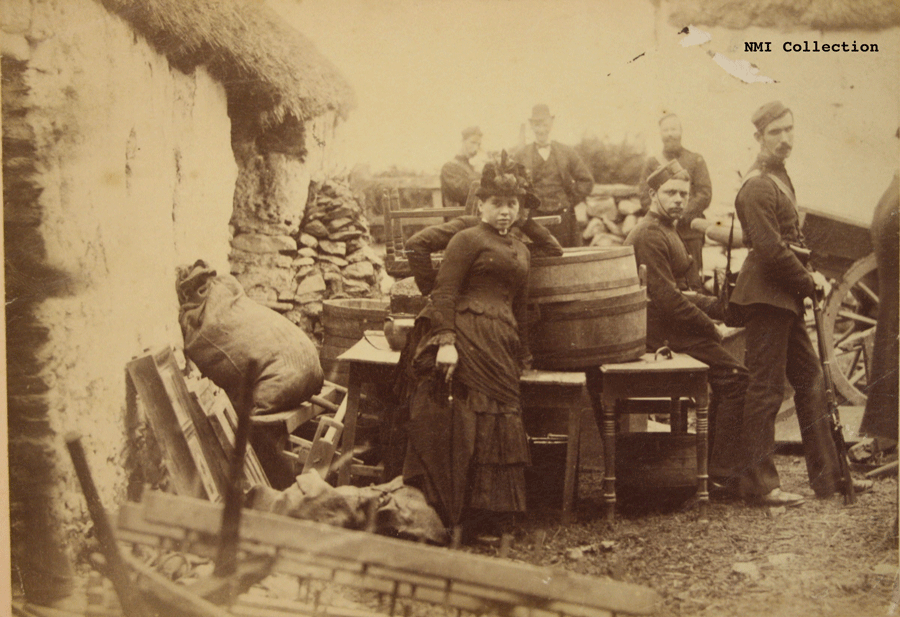
It was regularly used, along with the military and the ‘Emergency men’ hired by estate managers and their bailiffs, in the course of evictions. In Coolgreany many photographs show RIC constables armed with carbine rifles enforcing the eviction order and providing protection for the estate managers and their employees against the protesters.


Their role was not simply to act against the evictees however; in July of 1887 John Dillon M.P. enquired in the House of Commons about an incident the day before, when a house in Coolgreany was said to have been burned to the ground before the Sheriff had taken possession of it, with the bailiff throwing the women of the house out of the top floor window, and a number of RIC constables had to go in and rescue the women.


This encampment of RIC constables was brought in from outside areas to aid the evictions in Coolgreany in early 1887. There are at least 100 constables pictured, and the photograph, when seen alongside the images of the evicted families, give an idea of the sheer force which the tenants faced when fighting for their homes.

© Brenda Malone. This work is original to the author and requires citation when used to ensure readers can trace the source of the information and to avoid plagiarism.

https://libguides.ucd.ie/academicintegrity/referencingandcitation

Sources and general reading used in the creation of these articles are listed on the Further Reading page.
Categories
1916 Rising

Toffee Axe, Looting in Dublin, 1916 Rising

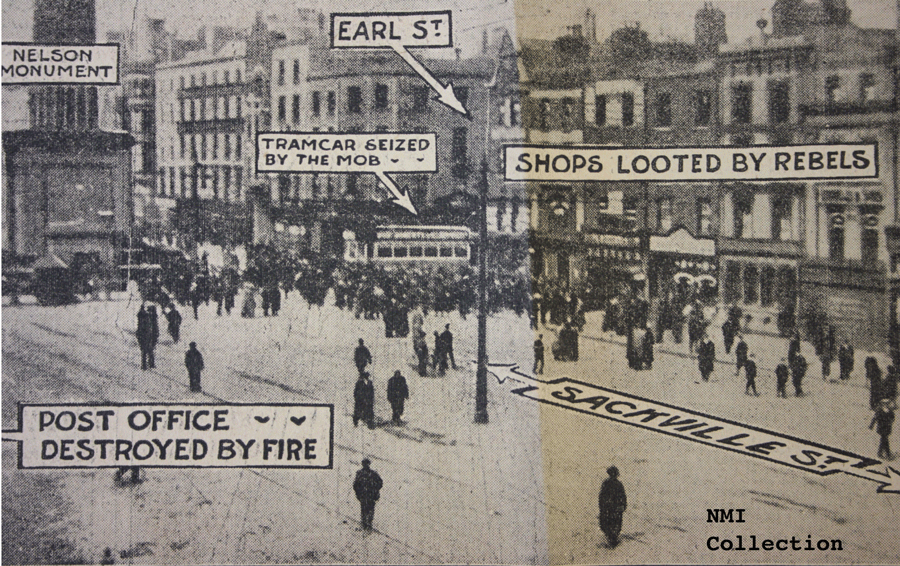
Just before mid-day on Monday 24 April, Patrick Pearse stood at the front of the GPO and read the Proclamation declaring the Irish Republic. The rebels entered the building and began barricading the doors and windows, and smaller garrisons took their positions in outposts around Sackville Street such as the Metropole and Imperial Hotels, and shops such as Kelly’s and Hopkins. Shortly afterwards, the looting in Dublin’s main street began.

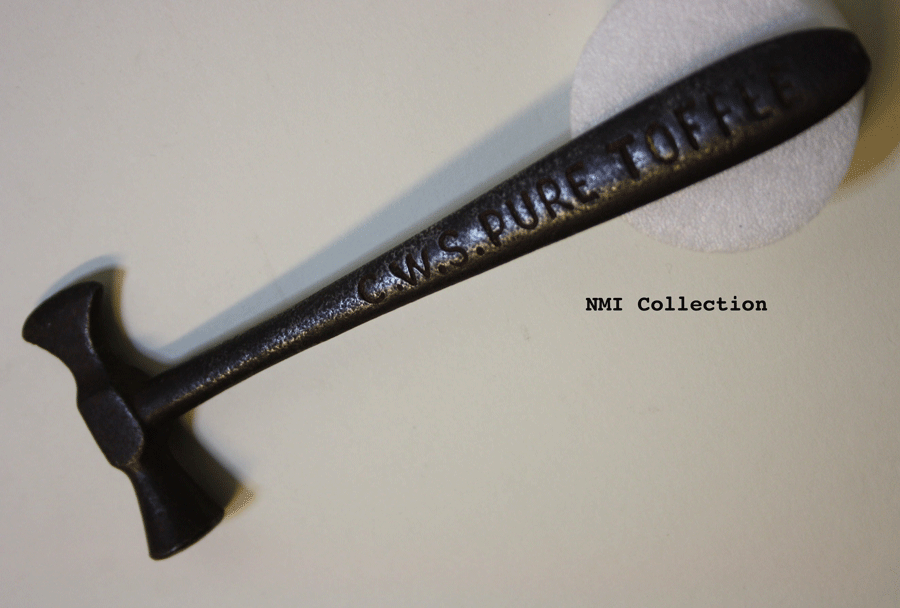
This 7 inch long toffee axe, more than likely taken from a confectioner’s shop, was kept as a souvenir by a Mr Daly after it was thrown at him, hitting his hat, by a looter in Sackville Street during the week of the Rising. It was given to the National Museum in 1980.

At almost the same moment as the Proclamation was being read, DMP Constable James O’Brien was shot dead by the rebels in Dublin Castle Yard, and Constable Michael Lahiff was shot at St. Stephen’s Green. Immediately after these incidents the Dublin Metropolitan Police were withdrawn and ordered to their barracks. Being an unarmed force, they would have been targets for the rebels and, with only their standard issue wooden batons, they would have had no way to defend themselves against the rebels’ rifles. This left the streets without its normal law enforcement at a time when the city was descending into chaos. Still, despite the order for the DMP to return to their barracks, the arrests of at least 27 people were made.

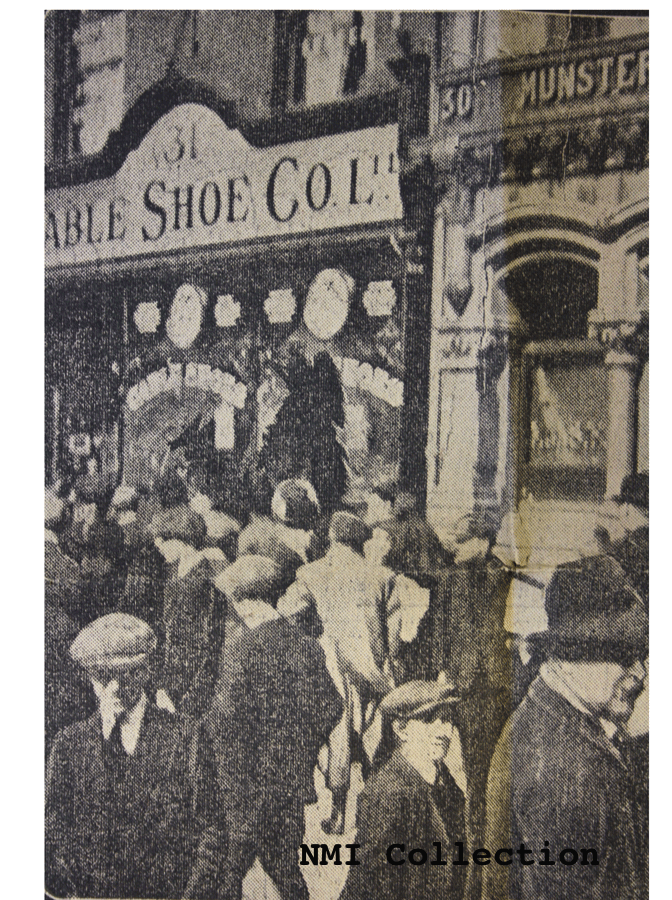
Most of the looting took place in the first three days, amid the crossfire between the rebels and the British Army Regiments, but before the fires took firm hold in the central streets.  Lower Sackville Street was a focal point, with clothes, toy and sports shops proving popular. Noblett’s and Lemon’s confectioners shops were looted for chocolates and sweets; the toffee axe may have come from one of these. The Cable Shoe Company (pictured) had its windows smashed, and The Daily Mail reported that people were seen trying on boots and shoes, and returning for another pair if the first selection failed to fit correctly.

Lawrence’s Photographic and toy emporium was also cleared of its contents. Fireworks were taken, and The Irish Times described the scene – ‘Rockets rushed up in the air and burst with a sound like a cannon, and all the smaller sorts of fireworks were thrown whizzing about among the crowd. Finally the premises were set on fire and burned to the ground’.


Efforts were made by other citizens to stop the activity. On Monday Francis Sheehy Skeffington, known to be opposed to the use of physical force, made efforts to prevent the looting in the city by personally appealing to the people. The next evening he called a meeting at Westmoreland Chambers with the same aim. It was after this meeting, as he was returning home, that he was arrested and brought to Portobello Barracks, where he was shot on the orders of Colonel Bowen Colthurst.

Pearse himself issued a proclamation from the Provisional Government to the Citizens of Dublin, at one point condemning the behavior with the lines ‘The Provisional Government hopes that its supporters – which means the vast bulk of the people of Dublin – will preserve order and self-restraint. Such looting as has already occurred has been done by hangers-on of the British Army. Ireland must keep her new honour unsmirched’.

Although the reports focus mainly on the shops in the Sackville Street area which sold luxury items, looting was also happening when the opportunity arose in other areas where the rebels had taken position. For example, it was recorded that after the rebels surrendered their position in Jacob’s Factory, the crowd looted the building on an ‘extensive scale’, taking flour and biscuits.  The citizens of Dublin, many of whom lived in extreme poverty, took not only the luxury items they could never afford, but also the basic foodstuffs they needed. This need was also seen in the aftermath of the Rising; where people, including children, searched the still smoking wreckage of buildings for anything they could use, and took the wood from the rebels’ street barricades for their fires.

In an item titled ‘The Lighter Side of the Dublin Troubles’ by G.H. Mumford (Evening News, London, 6 May 1916), the author describes the atmosphere in the city after the Rising ended –

Now that the trouble is all over it is permissible to forget the deplorable and dwell a moment on the ludicrous. Ireland always smiles through her tears.

If it were not for the Sackville Street holocaust and for the long casualty list one would regard the happenings of last week as a weird and bad extravaganza, with Dublin beating Sir W.S. Gilbert’s Titipu to a frazzle. To tell the truth, a large section of people hardly knows whether to be mirthful or melancholy about it even yet. Some visitors yesterday were becoming lugubrious over the ruins and the losses when one of them directed the attention of his companions to a hoarding opposite. There in a big type they read this: ‘All Easter Week, The Christian’. Condolences dissolved in convulsions.

Every second man one meets has quaint stories of the looting to tell. One relates to a man who, having taken a haul from a hosier’s window, was seen coming back. A second looter expostulated to him, suggesting that surely he had got his share, and it was somebody else’s turn. ‘That’s all right’ said the man addressed. ‘But I’m going to change one of these shirts. I want that one over there with the blue spots’.

A priest, meeting one of his Sunday scholars, said cheerily ‘Well, my little maid, and what do you think of “Ireland A Nation”?

The child paused, as though mentally balancing the family’s gains and losses. ‘I dunno’, she replied slowly. ‘Mother’s got a new fur coat, but father’s got a bullet in the ankle’. 

© Brenda Malone. This work is original to the author and requires citation when used to ensure readers can trace the source of the information and to avoid plagiarism.

https://libguides.ucd.ie/academicintegrity/referencingandcitation

Sources and general reading used in the creation of these articles are listed on the Further Reading page.
Categories
Irish Civil War

Carved Chessman, Liam Mellows’ Execution, December 1922

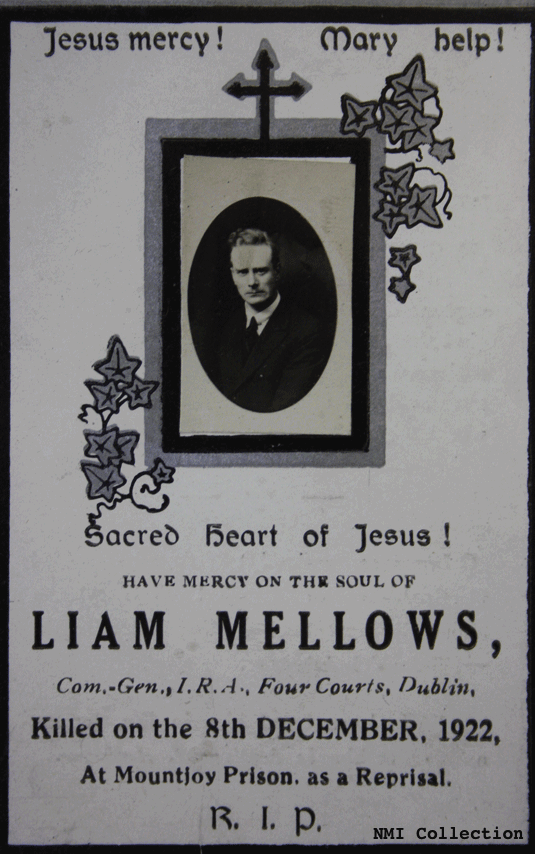
The last post on the blog looked at Arthur’s Griffith’s note announcing the signing of the Anglo-Irish Treaty of December 1921 and the subsequent civil war between Pro and Anti-Treaty forces in Ireland, which lasted from June 1922 until May 1923. During this conflict the Irish Free State government forces, or Pro-Treaty side, officially executed 77 members of the Anti-Treaty Republican forces. The most well known of these was the execution of Liam Mellows, Joe McKelvey, Robert Barrett and Rory O’Connor on 8 December 1922.

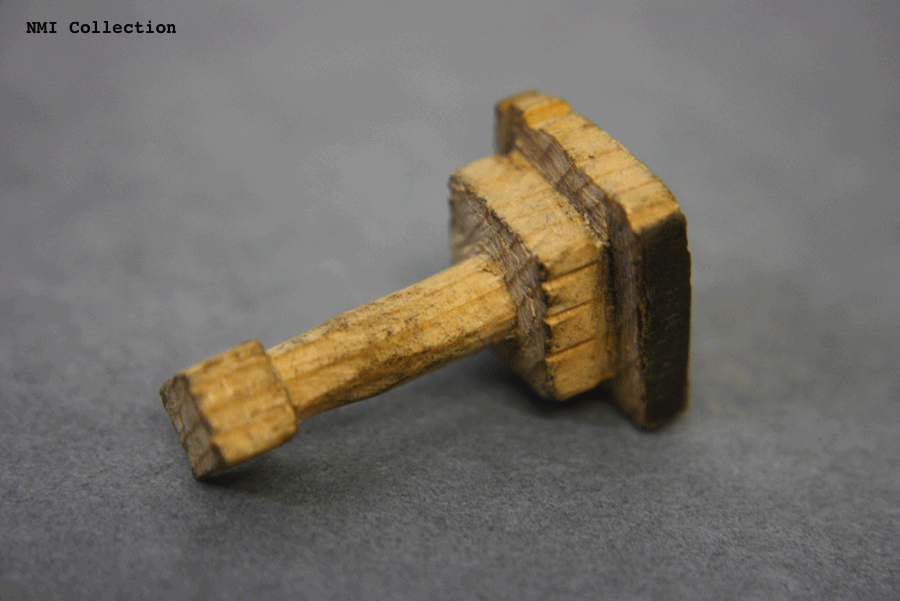
This wooden chess piece was carved by Liam Mellows in Mountjoy Jail where he was interned after his capture after the fall of the Four Courts at the end of June. It found its way into the possession of a Mr John Finerty of New York, who returned it to Eamon de Valera during one of his terms as Taoiseach between the early 1930s and the end of the 1950s. De Valera in turn presented it to the National Museum of Ireland.

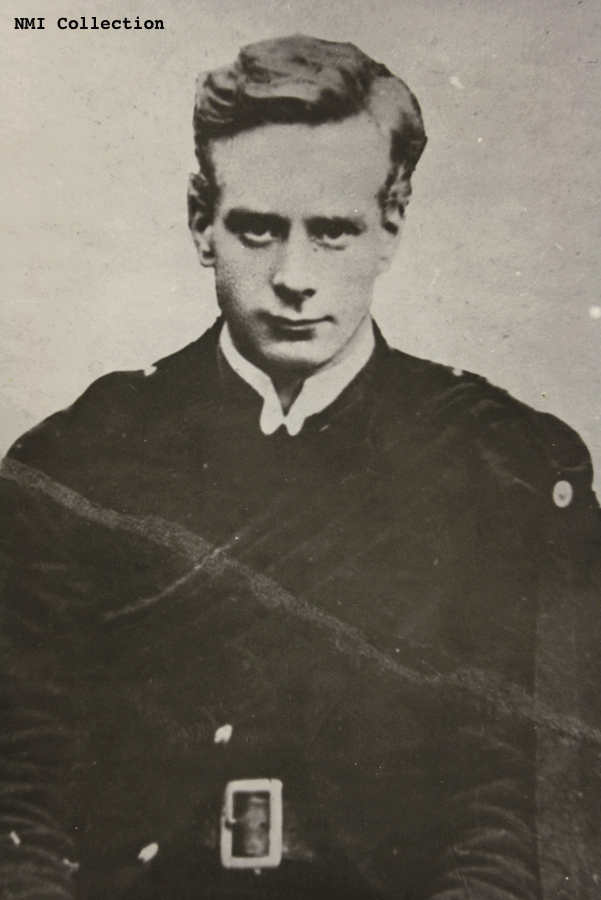
 Liam Mellows was born in Manchester to Sarah Jordan of County Wexford, and British Army officer William Mellows. He grew up in Wexford, and became a nationalist and socialist at an early age, joining both Fianna Éireann and the Irish Republican Brotherhood.  In November 1913, at the age of 21, he was one of the founding members of the Irish Volunteers. During the 1916 Rising, he led the garrison in Galway in a series of attacks on Royal Irish Constabulary barracks, after which he escaped to America where he was arrested and interned in New York. He was released in 1918 and returned to Ireland, where he was elected for Sinn Fein to the First Dáil in the 1918 General Election, representing Galway East and North Meath. He also became the IRA’s Director of Supplies during the War of Independence.

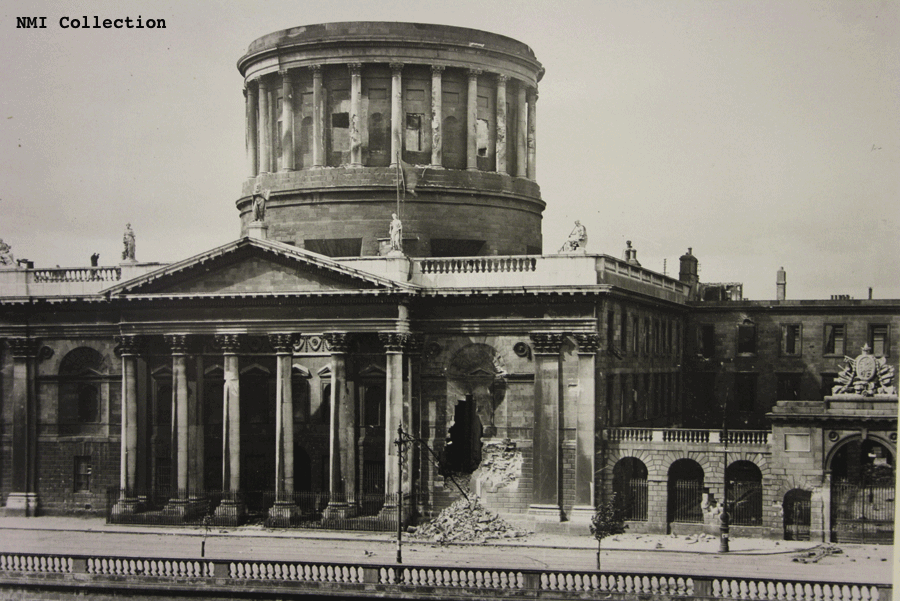
Mellows was a vocal opponent of the Anglo-Irish Treaty, believing that it undermined the principle of the Republic which had been fought for. On 14 April 1922 an Anti-Treaty Republican garrison, led by Rory O’Connor and including Mellows, Dick (Richard) Barrett and Joe McKelvey, took the Four Courts.  The siege lasted over two months, ending when Free State Forces bombarded the building, forcing a surrender on 30 June. Some escaped and continued the fight on the city streets, but Mellows, McKelvey, Barrett and O’Connor were taken captive and interned in Mountjoy as prisoners of war.

However, after the killing of Michael Collins in August 1922, the new leaders of government introduced a policy of execution on the basis that, as the Treaty had been ratified by the people in the June elections, the opposing forces were rebelling against the legitimate government of Ireland.  The majority of the official executions began to take place in November. As a reaction to this, on 7 December Sean Hales, the pro-Treaty Sinn Féin TD for Cork, was shot and killed by Anti-Treaty republicans as he left the Dáil.

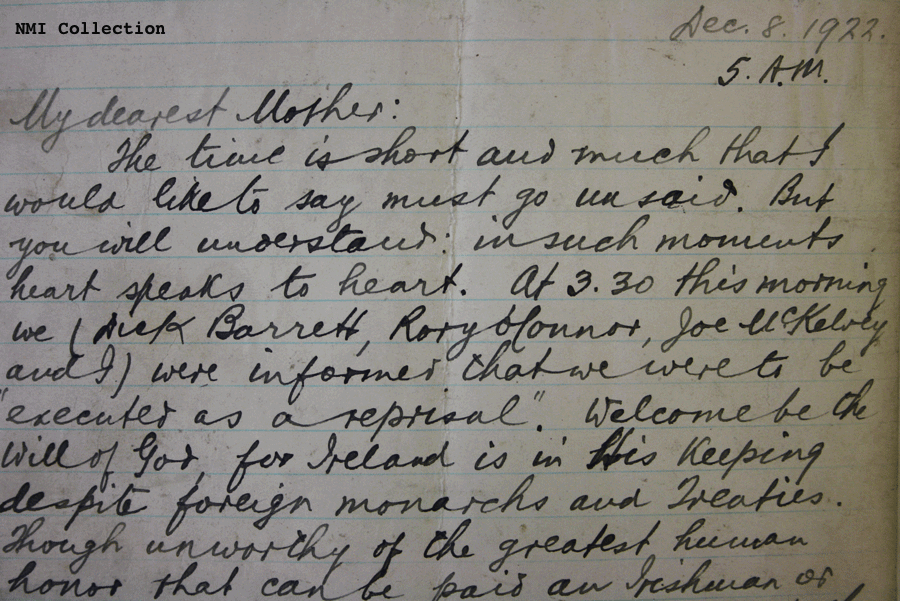
At 3.30am on 8 December, Mellows, McKelvey, Barrett and O’Connor received the following message, signed on behalf of the Army Council by General Richard Mulcahy.

You are hereby notified that, being a person taken in arms against 
the Government, you will be executed at 8 a.m. on Friday 8th December as a reprisal for the assassination of Brigadier Sean Hales T.D., in Dublin, on the 7th December, on his way to a meeting of Dáil Éireann and as a solemn warning to those associated [with] you who are engaged in a conspiracy of assassination against the representatives of the Irish People.

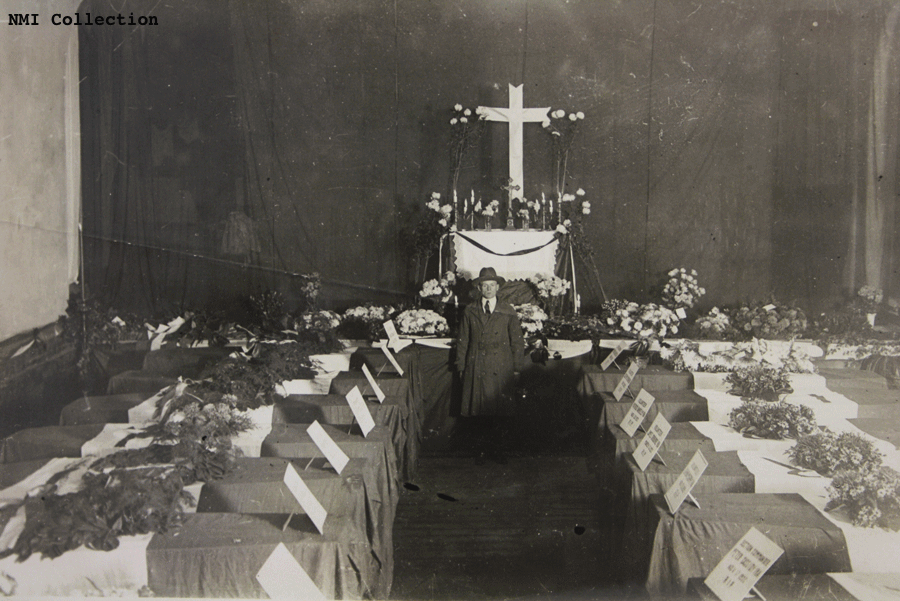
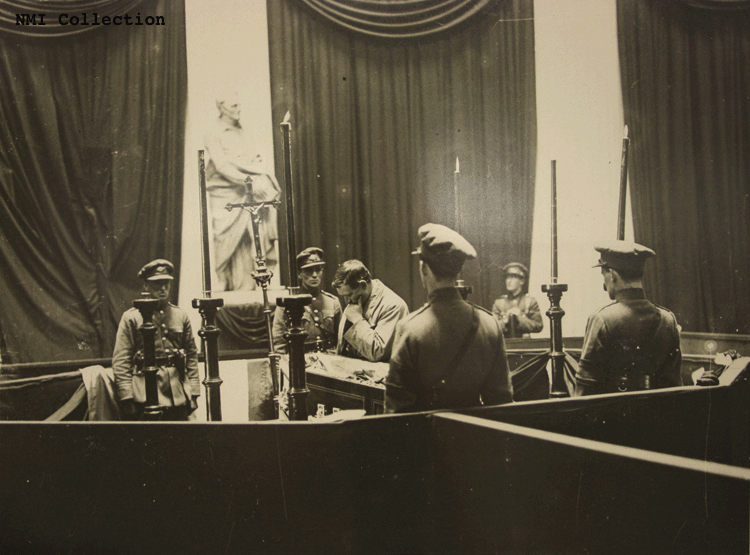
At 8am that morning, the four men were led into the yard of Mountjoy Jail and shot.


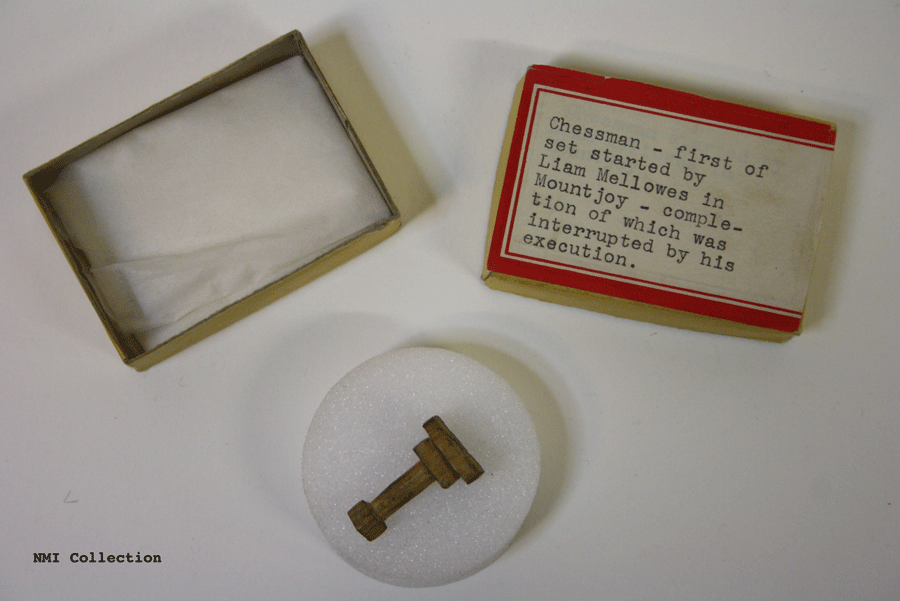
Mellows’ chess piece is one of the many emotive objects in the National Museum’s Historical collections. When it arrived in the museum it was in a box labeled by the donor ‘Chessman – first of set started by Liam Mellowes in Mountjoy – completion of which was interrupted by his execution’. The piece is small, just over an inch high, but every groove and scratch Liam carved can be clearly seen. It’s almost impossible to hold this object without wondering what he was thinking and feeling when he was making it.  The executions of 8 December were not the first so he must have known his death was a possibility. However, he had been in prison since July and had not yet been tried in a court for his part in the siege of the Four Courts. This chessman should have been the first of a set of 32 pieces, and I wonder if he thought he would have the time to make the full set. His choice to carve a pawn may have some meaning, though it may also be completely coincidental.

The decision to execute Mellows, McKelvey, Barratt and O’Connor as a reprisal for the killing of Sean Hales on 7 December was sudden, and the men were told they were to die less than five hours before the event.  Mellows took this time to write a number of last messages to loved ones. At 5am he wrote to his mother Sarah Mellows, starting with the lines ‘The time is short and much that I would like to say must go unsaid. But you will understand: in such moments heart speaks to heart’. His letter goes on to reinforce his belief in the pre-Treaty vision of the Irish Republic, and his wish that his fellow Irishmen will once again be united in this vision.

1916 Letters Project

Trinity College Dublin are currently running a project titled ‘Letters of 1916: Creating History’, with the aim of creating a digital archive of letters written from Ireland between 1 November 1915 to 31 October 1916. This will include letters held in public collections as well as those held privately. If you wish to contribute to this project by providing a digital image of a letter you own, or by transcribing a letter, click here – http://dh.tcd.ie/letters1916/

© Brenda Malone. This work is original to the author and requires citation when used to ensure readers can trace the source of the information and to avoid plagiarism.

https://libguides.ucd.ie/academicintegrity/referencingandcitation

Sources and general reading used in the creation of these articles are listed on the Further Reading page.
Categories
Irish Civil War War of Independence

‘The End of the Conflict of Centuries is at Hand’ – The Signing of the Anglo-Irish Treaty, 1921

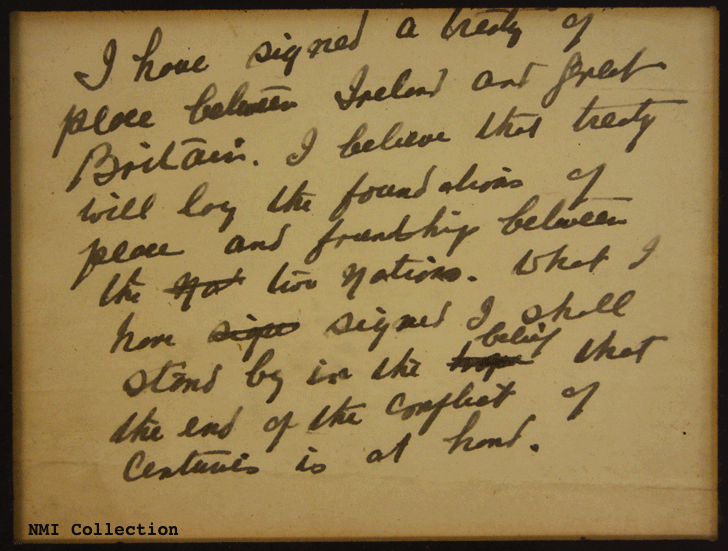
This note, hastily written by Arthur Griffith, was the statement which told the world of his belief that the war between Ireland and Britain was at an end. It was the first message to the public on the outcome of the negotiations which led to the Anglo-Irish Treaty of 1921. Written for issue to the World Press immediately after signing the Treaty on 6 December, it reads

I have signed a Treaty of peace between Ireland and Great Britain. I believe that treaty will lay foundations of peace and friendship between the two Nations. What I have signed I shall stand by in the belief that the end of the conflict of centuries is at hand”. 


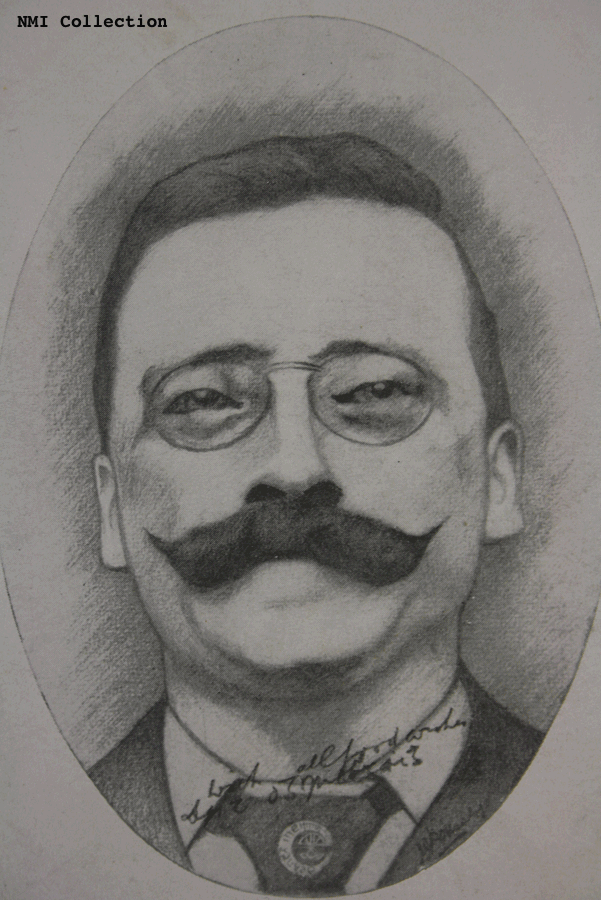
Arthur Griffith, born in Dublin in 1871, was a journalist and politician. He had been involved in nationalist movements from an early stage; he was a member of the Gaelic League and the Irish Republican Brotherhood, co-founded Cumann na nGaedheal in 1900, and founded the political movement  Sinn Féin in 1905. Having worked as a printer, he established a series of nationalist newspapers, including United IrishmanSinn FéinÉire and Nationality.  He joined the Irish Volunteers in 1913, but did not take part in the 1916 Rising. Despite this his connection with Sinn Féin, whom the British authorities believed were responsible for the rising, led to his arrest and internment in Reading Jail until 1917. After his release he became Vice-President of Sinn Féin under Éamon de Valera, and was elected as MP for East Cavan. Instead of taking their seats in the House of Commons, the Sinn Féin MPs established Dáil Éireann as the government of the Irish Republic on 21 January 1919 with de Valera as President. Griffth became Acting President during the War of Independence, and was again imprisoned from December 1920 until July 1921.


The War of Independence is generally recognised as having started on 21 January 1919 in Soloheadbeg, Co Tipperary, when seven members of the IRA shot and killed two RIC constables. A series of actions in the form of raids and reprisals followed over the next year. In 1920 the RIC received reinforcements in the form of the British recruited Black and Tans and the Auxiliaries; a division made up of ex-British Army Officers, and the conflict intensified. In December that year, after the events of Bloody Sunday, Ireland was placed under Martial law. From this point the violence and death toll escalated, and when British Prime Minister Davd Lloyd George suggested a conference between the two governments Sinn Féin agreed, and a Truce was called in July 1921.

A series of meetings were held and in October an official delegation, headed by Arthur Griffith and including Michael Collins, was formed to carry out the negotiations with the British government. After two months an agreement was reached, officially known as The Articles of Agreement for a Treaty between Great Britain and Ireland. The Treaty would see the withdrawal of British troops from the majority of the country, but gave dominion status to Ireland rather than that of an independent Republic, retained the Oath of Allegiance to the British Crown, and provided for the establishment of a Boundary Commission to create a border between the Irish Free State and the Northern counties which opted to remain under British rule. The Irish negotiators; Griffith, Collins, Robert Barton, Eamonn Duggan and George Gavan Duffy, though not happy with the terms, were told by Lloyd George that non-acceptance would lead to a resumption of the war which, at the point the Truce was called, was being lost by the IRA. The delegation eventually recommended the Treaty to Dáil Éireann, and it was signed on the 6 December.


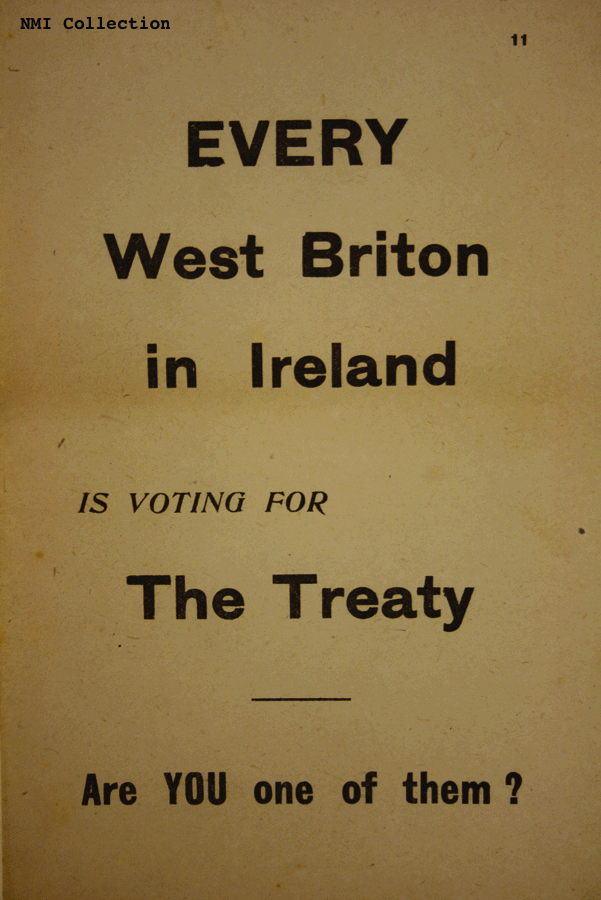
 The Treaty was rejected by de Valera and split Republican opinion. Though it was narrowly ratified in the Dáil, this split eventually led to civil war, which started with the occupation of the Four Courts by Anti-Treaty Republicans in April 1922 and its bombardment by Pro-Treaty Republicans, now the Free State Forces, on 28 June. 


By its close in May 1923 many leaders in the Irish Republican movement were dead, with 77 official executions of Anti-Treaty Republicans during the war. Arthur Griffith died of heart failure on 12 August 1922, and Michael Collins was killed in an ambush and gun battle at Béal na Bláth, Co. Cork, ten days later. While this conflict lasted only 10 months, it was to effect Irish politics for the next decade, and lived long in the memory of the Irish people. The Irish Free State of 26 counties officially became the Republic of Ireland in 1949.


A copy of the Articles of Agreement bearing the signatures of the Irish and British delegates, including Arthur Griffith, Michael Collins, Eamonn Duggan, George Gavan Duffy, Lord Birkenhead, David Lloyd George, and Austin Chamberlain, is on display in the Understanding 1916 exhibition at the National Museum of Ireland, Collins Barracks.


 The National Museum of Ireland is pleased to announce that it has received funding from the Department of Arts, Heritage and the Gaeltacht which is being used to digitise important documents in the NMI’s collections. Historically significant items, such as Griffith’s statement, the last letters of the 1916 Rising leaders, original political documents, and prison autograph books will be digitised and made available to the public online.   


© Brenda Malone. This work is original to the author and requires citation when used to ensure readers can trace the source of the information and to avoid plagiarism.

https://libguides.ucd.ie/academicintegrity/referencingandcitation

Sources and general reading used in the creation of these articles are listed on the Further Reading page.
Jewel Adviser

Perfect Piece Awaits

AN SIONNACH FIONN

Irish News, Politics, Culture

In the Dark

A blog about the Universe, and all that surrounds it

Crawling EgMaf

... where things go slow, but we're getting there!

Portals of London

Towards a catalogue of London’s interdimensional gateways

Landscapes of Revolution

A Project Exploring Ireland's Conflict Archaeology, 1913-1923

caught on the wire

Reflections on military history

Fintan O'Mahony

Reading and writing amid the ruins

Early Irish Cinema

What's On in Irish Cinemas - 100 Years Ago

Virtual Curation Museum

Where the Past Meets the Future

the many-headed monster

the history of 'the unruly sort of clowns' and other early modern peculiarities

A SILVER VOICE FROM IRELAND

An Eclectic mix of items from a 'senior' blogger in Ireland looking at the past and keeping an eye on the present.

Pue's Occurrences

An Irish History Blog

The Museum of Ridiculously Interesting Things

a collection of ridiculously interesting art, objects, ideas, and history

Dublin Tenement Experience

Living the Lockout

kilmainhamgraffiti

Recording, photographing, deciphering, analysing and understanding historical graffiti from Kilmainham Gaol, Dublin. This research has been funded by the Irish Research Council (2012-2014)