Categories
World War I

Occupying Istanbul – Photograph album of Lt Andrew J. Horne, 1923

Lt Andrew J. Horne Constantinople Photograph Album, 1923 (NMI)

The last post on the blog looked at the experience of two Dublin brothers Thomas and Joseph McEnroe in World War I. Thomas had been a professional soldier from 1902, and his brother volunteered in 1916. It is estimated that about 350,000 Irish men and women served in this war in various roles. This photograph album is one of two extraordinary books compiled by a medical officer from Dublin, Lt Andrew John Horne, and was donated to the NMI by his daughters in early 2014.
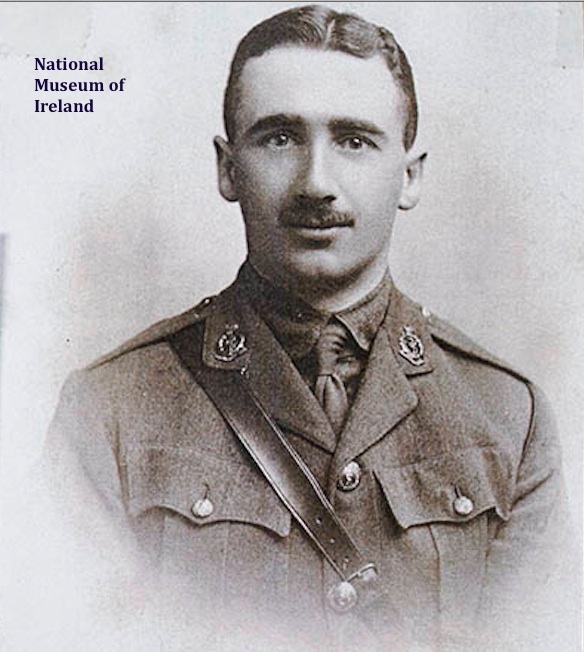
Lt Andrew J. Horne (NMI)

Andrew was born in 1891 to a wealthy Catholic family. His father, Andrew J. Horne from Galway, was a physician and Fellow of the Royal College of Physicians and Royal Academy of Medicine of Ireland. In 1911 he, his wife Margaret and three adult children were living in 94 Merrion Square in Dublin, with young Andrew studying medicine in university. He was just 23 when war broke out in 1914, and he entered service as a medical officer with the 17th Stationary Hospital, which was attached to the 29th Division. His first album depicts his time in Gallipoli, Turkey, where he served during the disastrous campaign from April 1915, which saw about 180,000 Allied casualties. His hospital was established on a hill overlooking the peninsula and he managed to photograph the action from his vantage point, including shells exploding on the beaches. He was one of the five officers who were the last to leave the Gallipoli Peninsula on 9 January 1916, and went on to serve in Mesopotamia, Alexandria and India. After the war he spent time with the British Army in Malta (an established centre for the Royal Army Medical Corps), the Dardenelles, the Asian / Europe border and Istanbul, then known as Constantinople, where he made his second album. The album dates from early to mid 1923 and illustrates a very particular and turbulent time in the history of the city.
Lt Andrew J. Horne Constantinople Photograph Album, 1923 (NMI)

Constantinople was the capital of the powerful Ottoman Empire, but by the time war broke out in 1914 the empire was in major decline, having lost most of its territories in Europe and North Africa. It entered the war in November on the side of the Central Powers in an attempt to regain its lost empire. The Allied Powers considered Constantinople, with its location at the intersection between Europe and Asia, and its control of the route from the Aegean Sea to the Black Sea through the Bosphorus Strait, as one of the great prizes of the war. Russia claimed sovereignty, and Britain and France wanted to open the area to supply Russia via these sea routes. The Allies were already negotiating the division of Istanbul during the Gallipoli Campaign of 1915. Though the Ottomans saw some military successes during the war, the Allies victory in October 1918 and the subsequent armistice led to a five-year occupation of Turkish territories, including Constantinople, by British and French troops from November. Soon afterwards, the British Prime Minister Lloyd George encouraged Greece to pursue territories in the Ottoman Empire. Their invasion of 1919 led to the growth of the Turkish Nationalist Movement, with the remains of the Ottoman army led by the experienced World War I officer, Mustafa Kemal Atatürk. This conflict, known as the Turkish War of Independence, not only repelled the Greek invasion, it also ended the occupation of Constantinople and eventually led to the establishment of the Republic of Turkey.
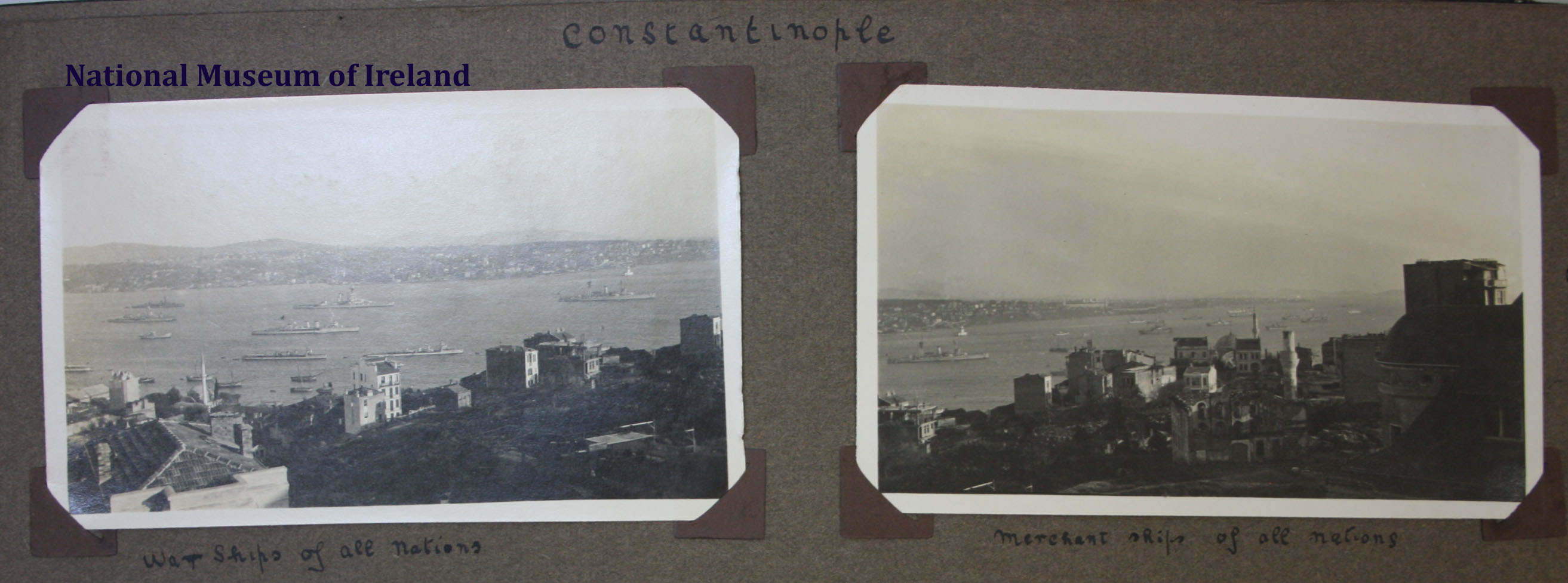
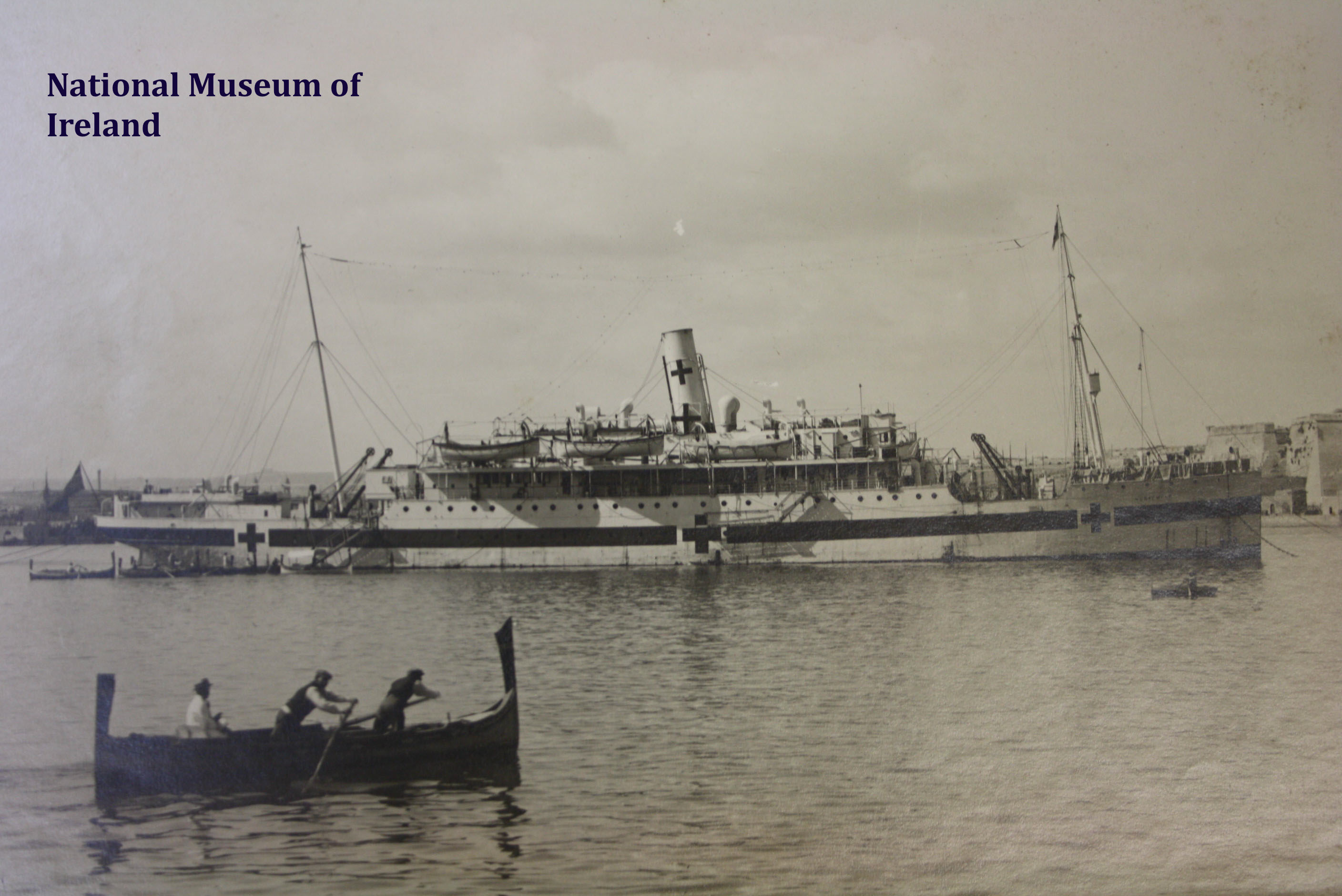
Lt Andrew J. Horne Constantinople Photograph Album, 1923 (NMI) By the time Andrew Horne arrived in Constantinople in 1923, the city was on the brink of huge change. Photographs in his album are a mix of a city under military occupation, with images of hospital ships and battleships on the Bosphorus alongside images of merchant ships transporting goods, a reminder of the economically strategic importance of the city and why its possession was so desirable.

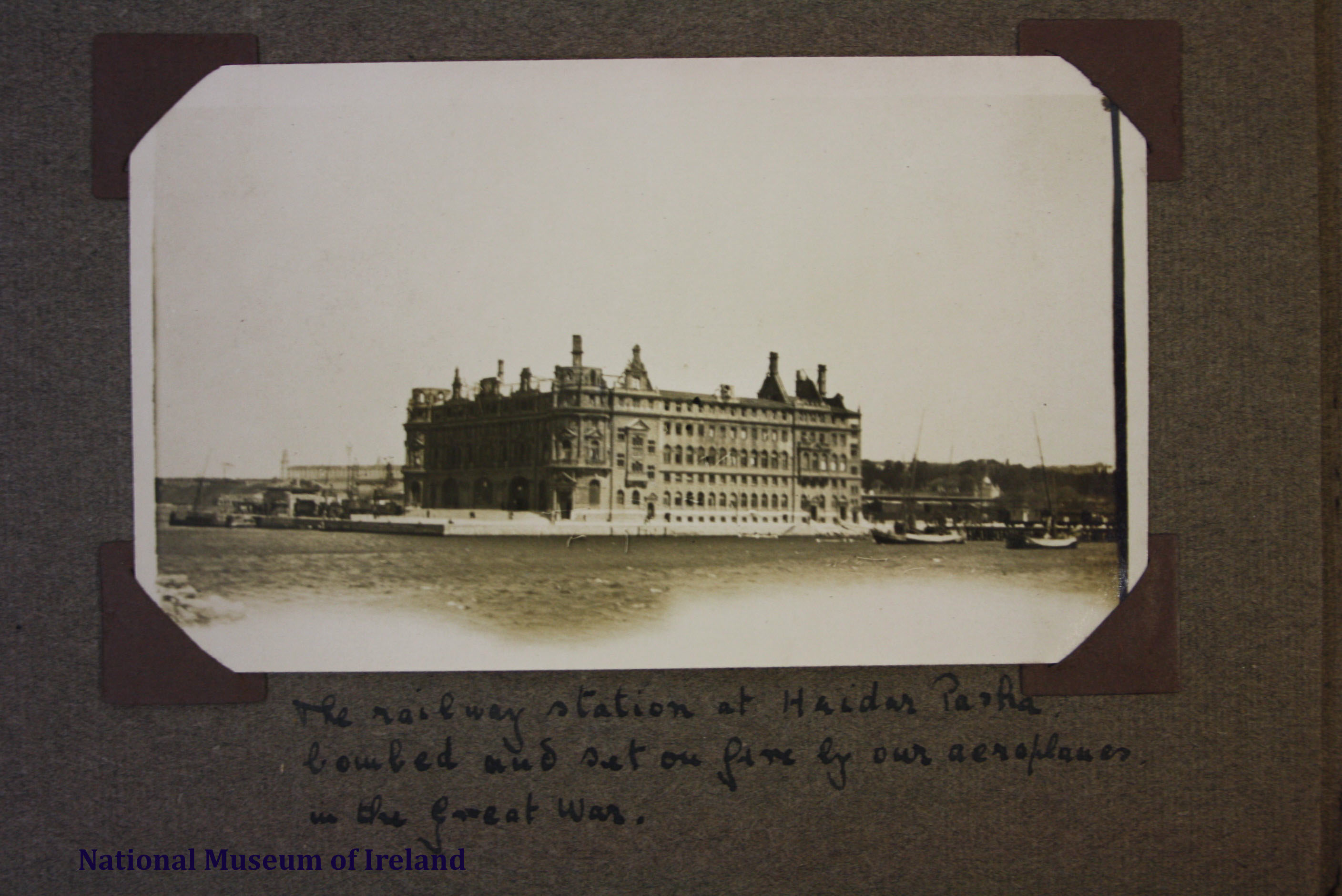
Another image shows the railway station building at Haider Pasha on the Asian side on the city, underneath which is written ‘bombed and set on fire by our aeroplanes in the Great War’.
Lt Andrew J. Horne Constantinople Photograph Album, 1923 (NMI)

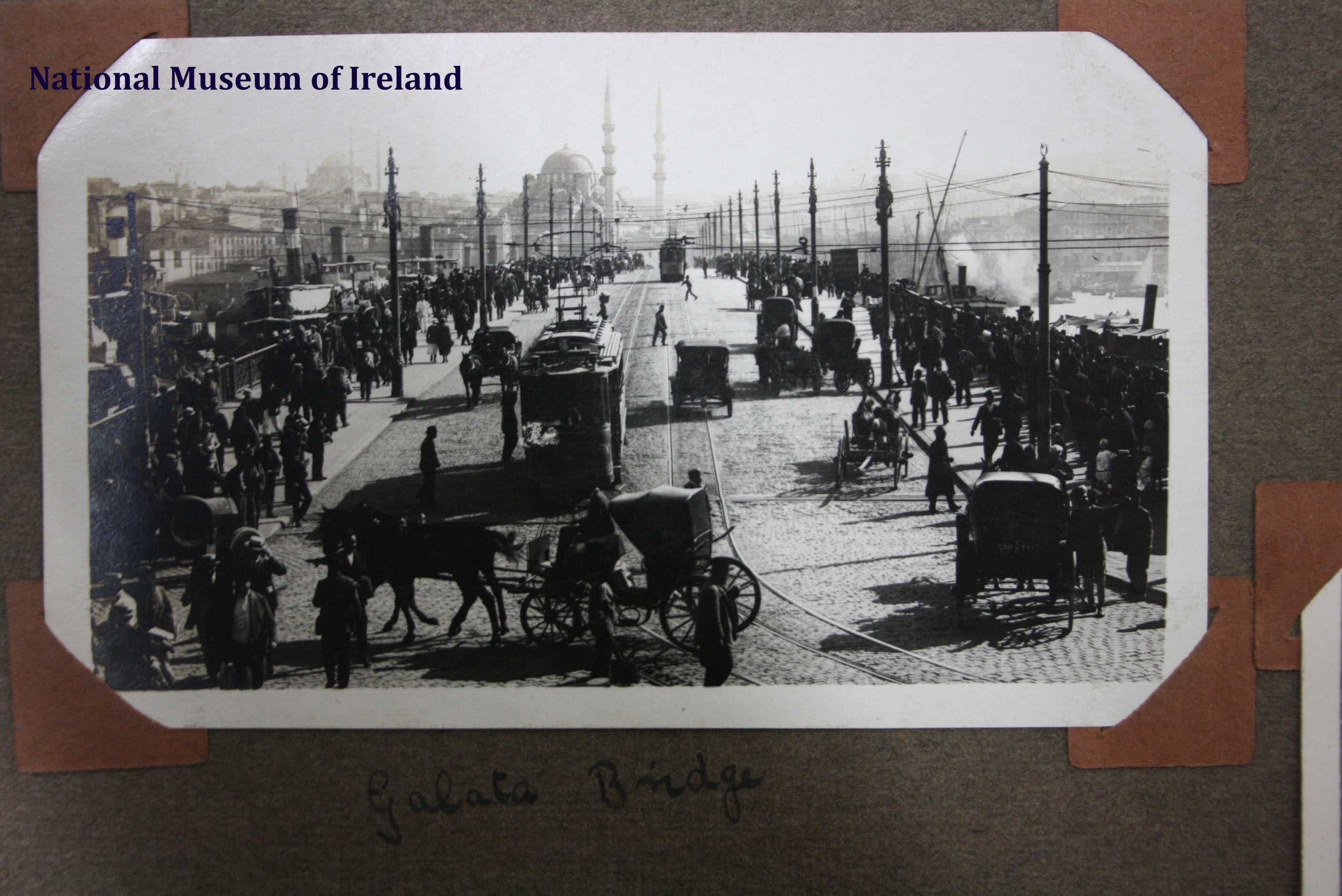
Some photographs show the recent modernization of Constantinople, for example the old Galata Bridge, with the electric tram which had replaced the horse trams in 1912.
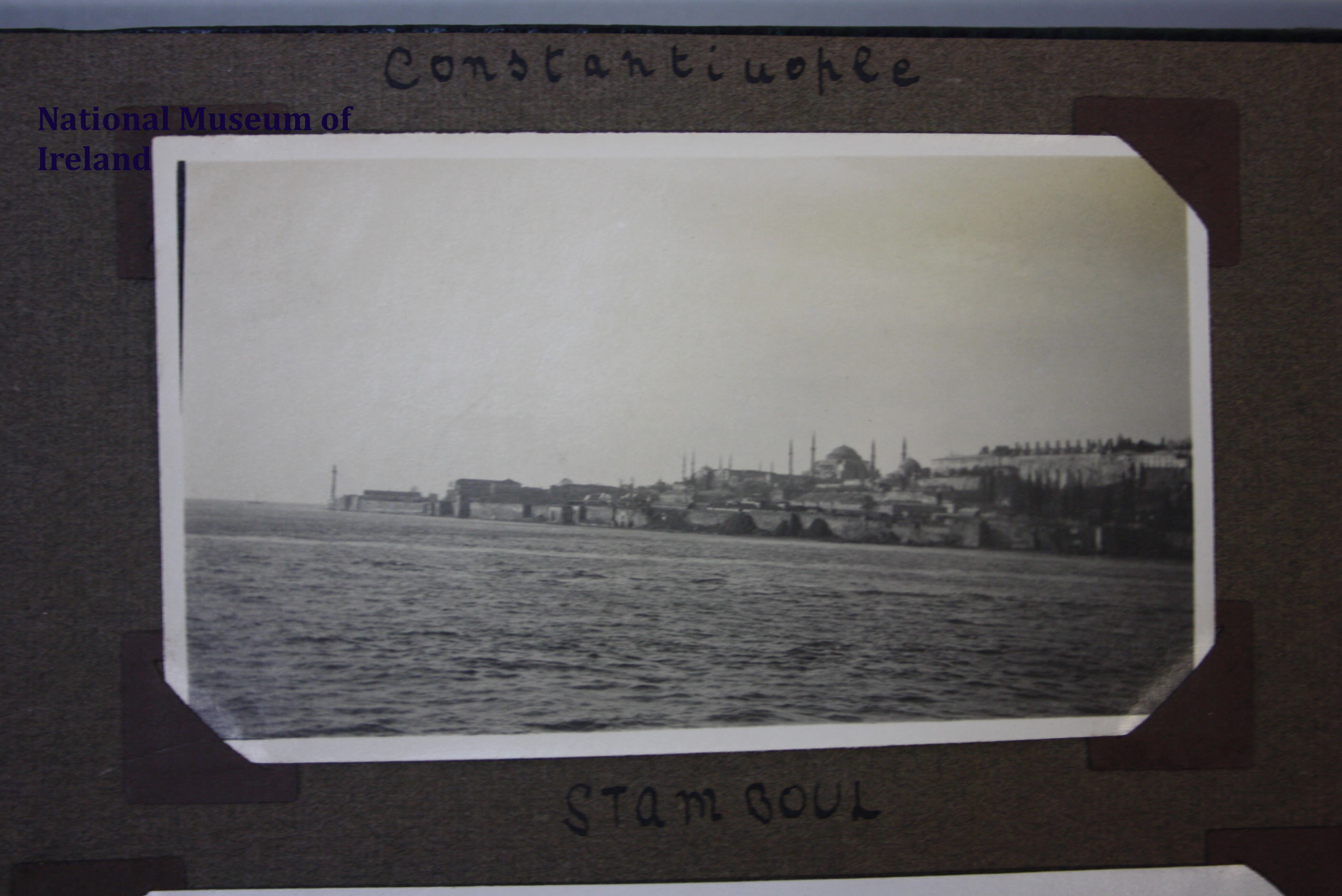
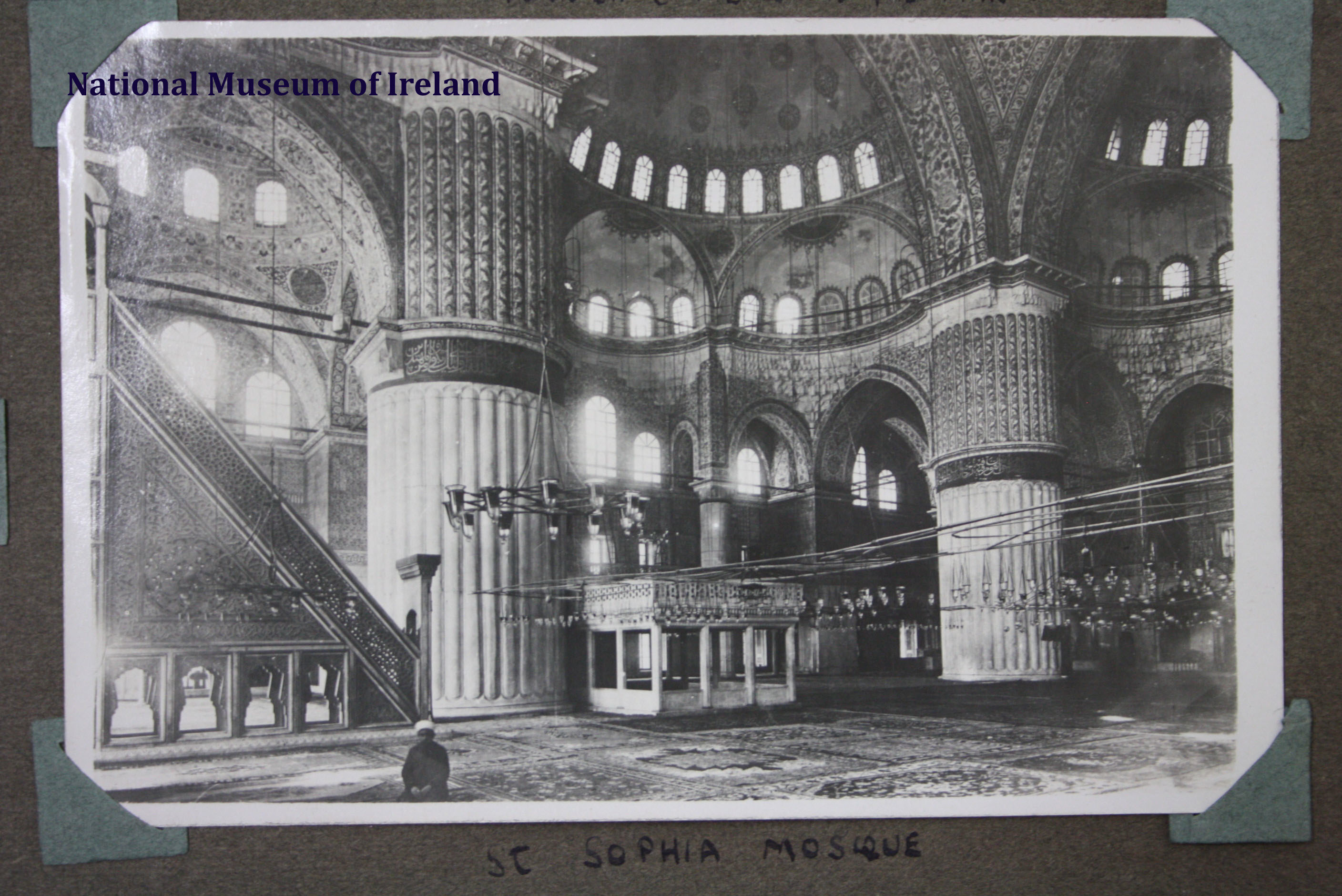
Lt Andrew J. Horne Constantinople Photograph Album, 1923 (NMI) Many of the photographs however, are of the typical sights of the city as seen by a visiting outsider. He photographs the Harem at Topkapi Palace from the river, and visits the Hagia Sophia, originally the Greek Orthodox church of St. Sophia and a functioning mosque when Andrew visited. Less than 10 years later it would close and become the museum it is today.
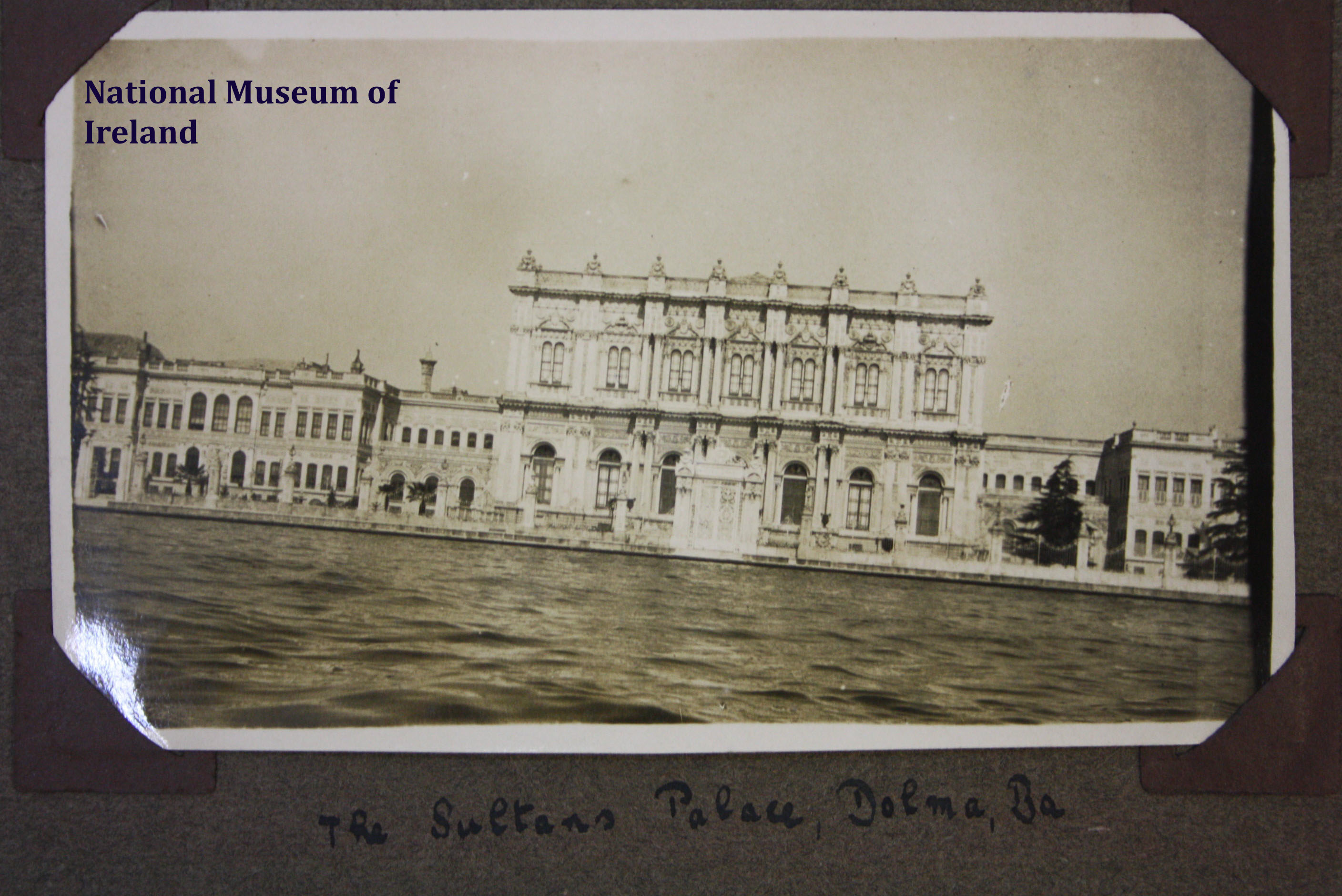
Lt Andrew J. Horne Constantinople Photograph Album, 1923 (NMI) Lt Andrew J. Horne Constantinople Photograph Album, 1923 (NMI)

Lt Andrew J. Horne Constantinople Photograph Album, 1923 (NMI)    Lt Andrew J. Horne Constantinople Photograph Album, 1923 (NMI)

Lt Andrew J. Horne Constantinople Photograph Album, 1923 (NMI)                Lt Andrew J. Horne Constantinople Photograph Album, 1923 (NMI)

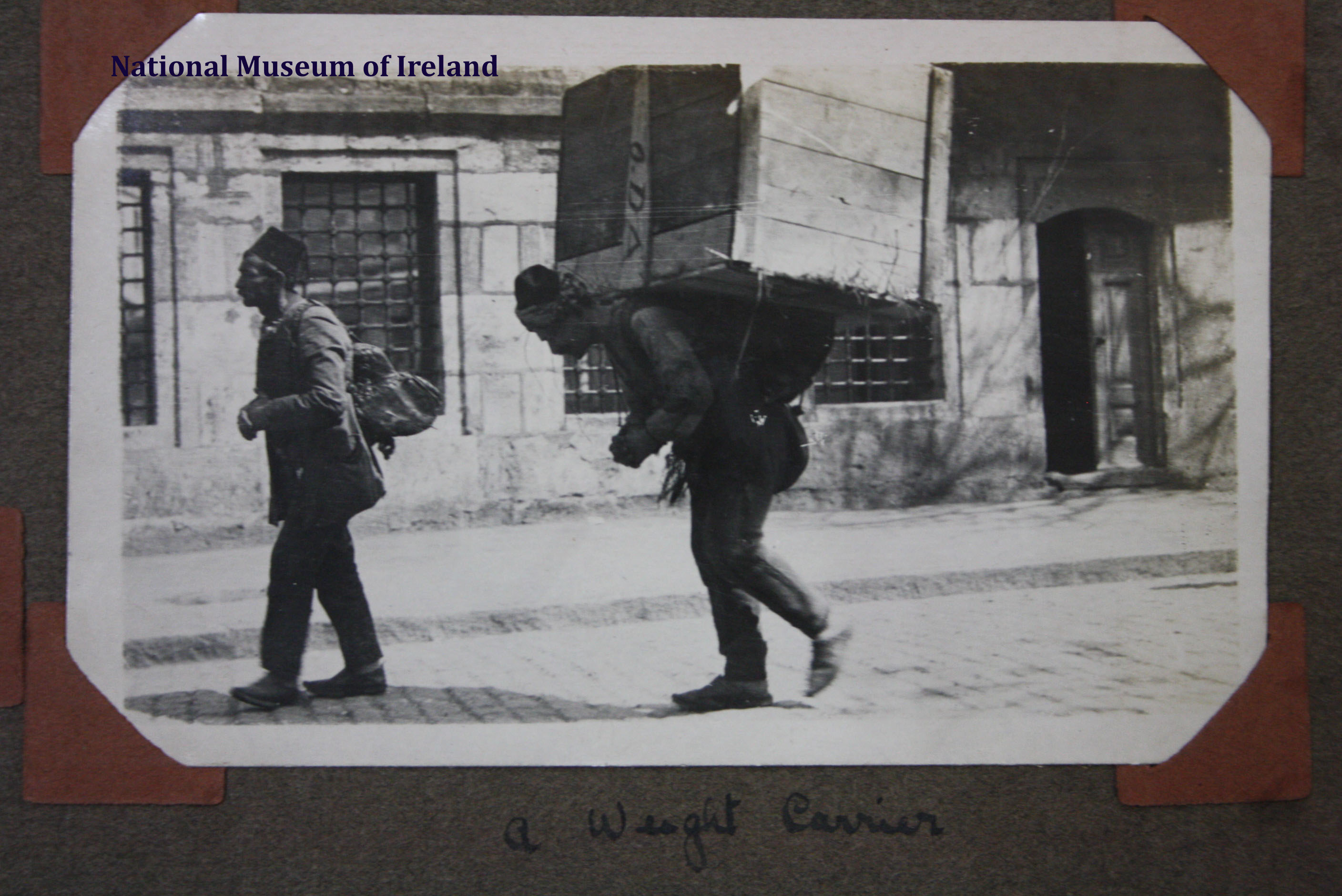
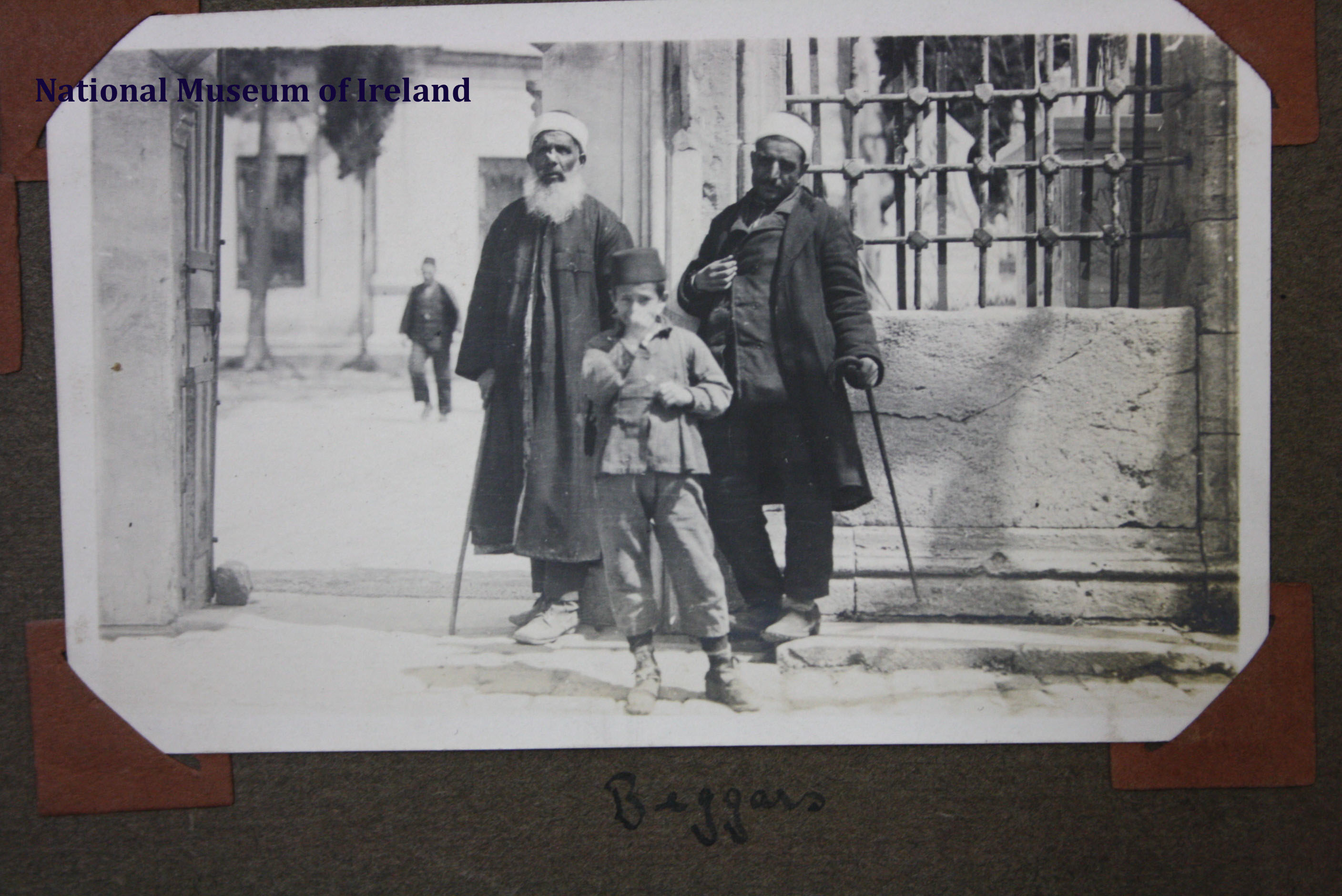
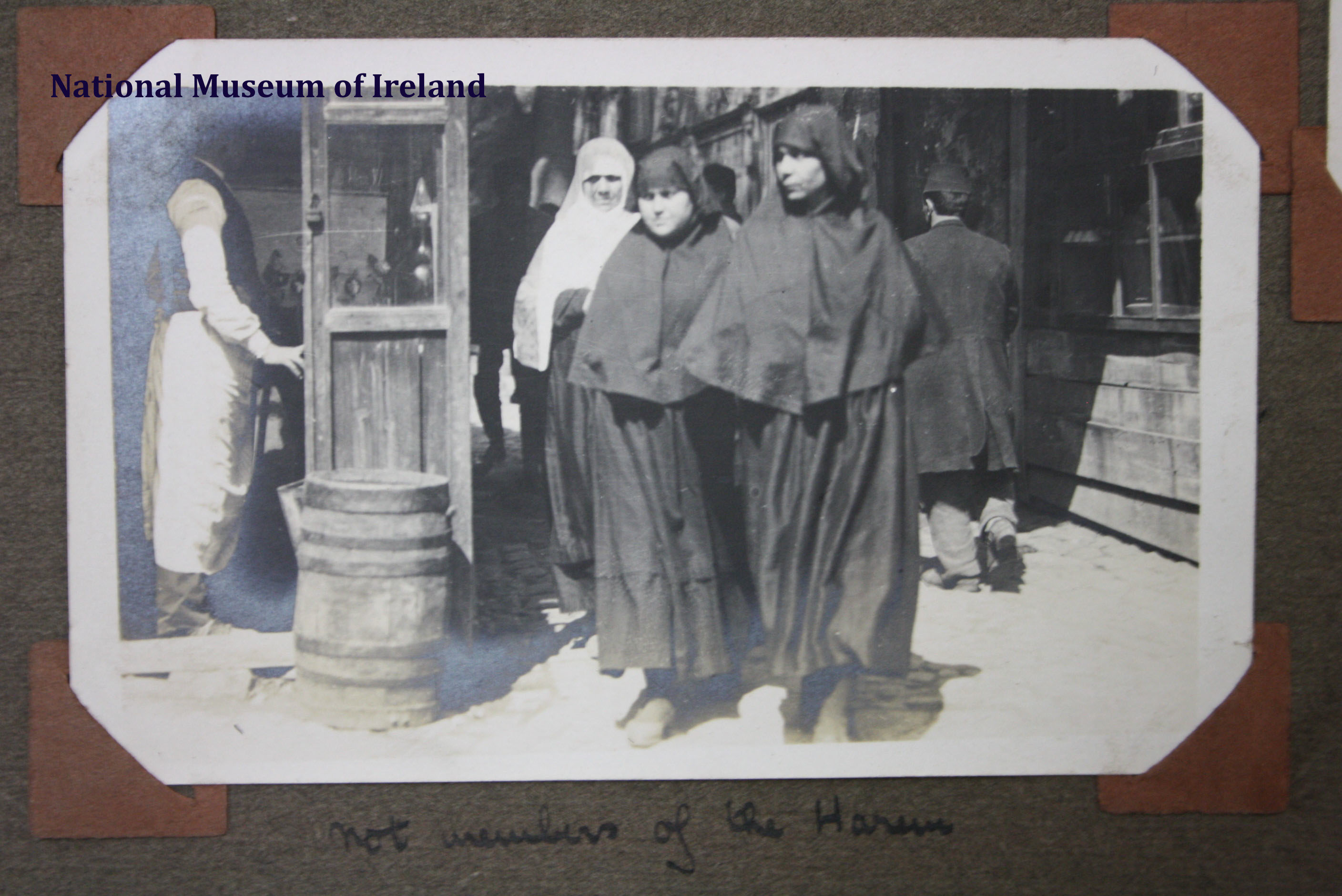
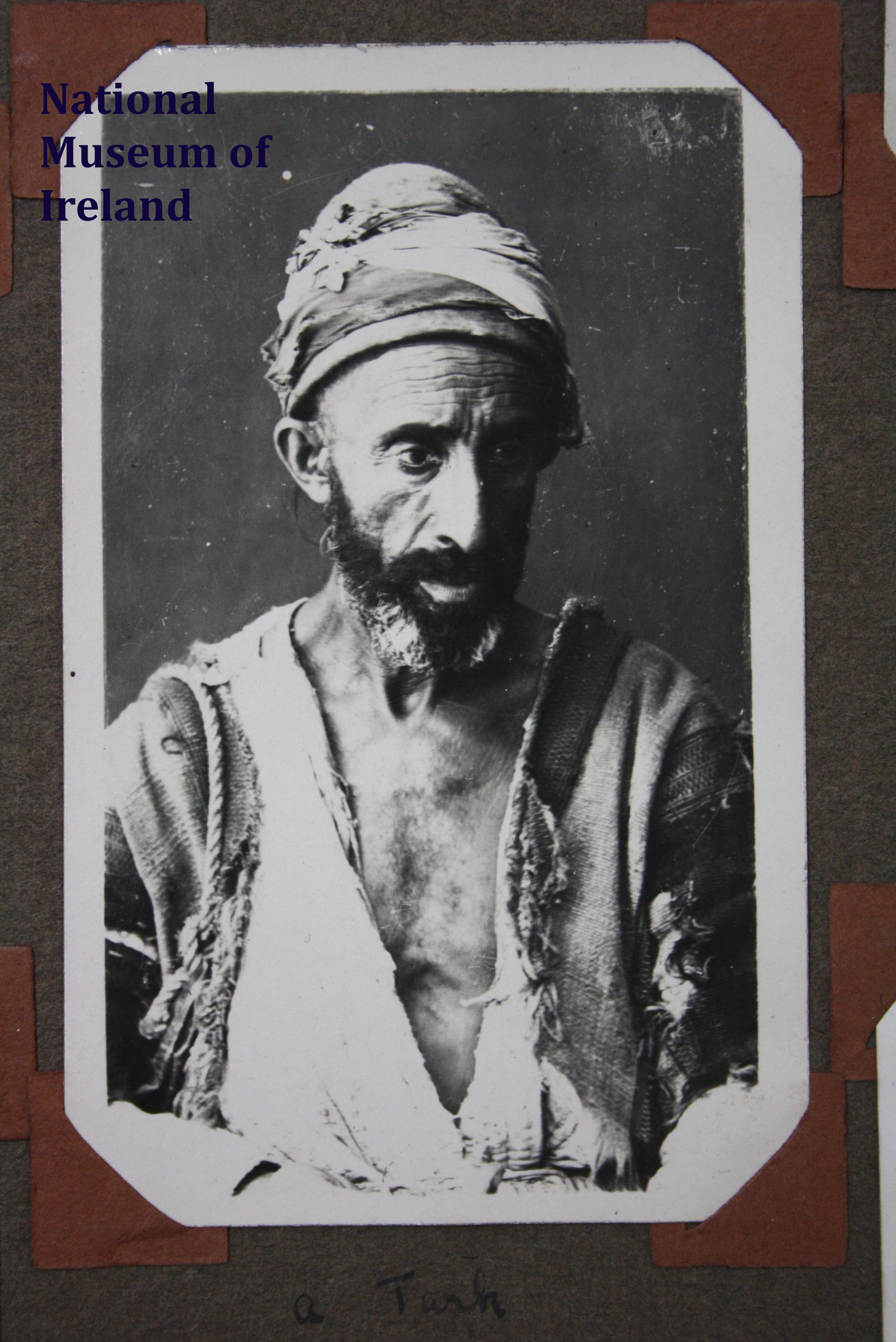
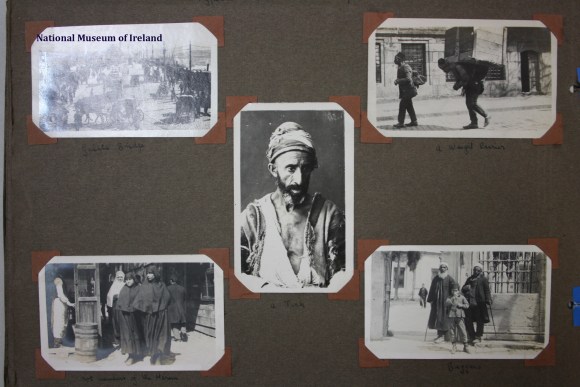
The city and its people must have seemed quite exotic to Andrew; he photographs men and women in traditional dress, workers and beggars in the streets.

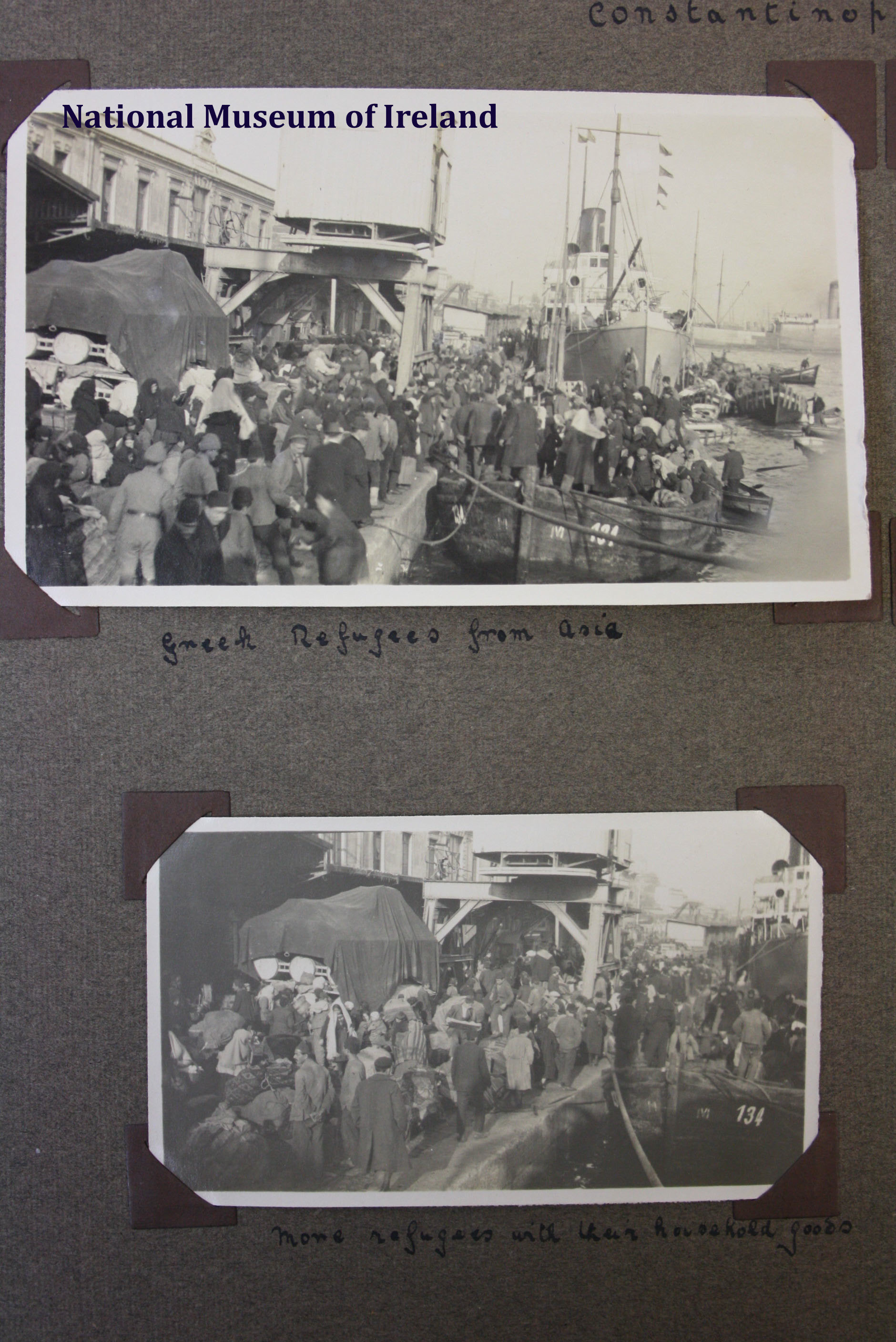
One page of photographs shows people, labeled as Greek refugees from Asia, at a Constantinople port. This is a scene from the compulsory population exchange between Greece and Turkey in 1923, which saw the movement of about 2 million Greeks and Turkish Muslims between the two countries. The people in Andrew’s photograph, pictured with their household goods waiting to leave by boat, were some of the 1.5 million relocated to Greece after the Convention Concerning the Exchange of Greek and Turkish Populations was signed on 30 January 1923. This was to lead to the population of the newly formed Republic of Turkey to be almost 98% Muslim within a few years, though the country was to remain a secular state.
Lt Andrew J. Horne Constantinople Photograph Album, 1923 (NMI) Although Andrew could not have known it, his photographs captured the last moments of Constantinople, the capital of an empire. A few months beforehand, the Ottoman Sultanate had been abolished, and the last Sultan had fled the country. A few months later, the occupation of the city was ended with the arrival of the Turkish Army, and the declaration of the Republic on 29 October 1923. Atatürk, the leader of the Provisional Government of Turkey, became its first president, and moved the capital to Ankara. Even the name Constantinople soon went out of use, as the city became the Istanbul we know today. Lt Andrew J. Horne Constantinople Photograph Album, 1923 (NMI) Lt Andrew Horne’s Gallipoli photograph album will be on display and fully viewable in digital format in the World War I Centenary exhibition in the National Museum of Ireland, Collin Barracks, opening end of November.
© Brenda Malone. This work is original to the author and requires citation when used to ensure readers can trace the source of the information and to avoid plagiarism.

https://libguides.ucd.ie/academicintegrity/referencingandcitation

Sources and general reading used in the creation of these articles are listed on the Further Reading page.
Categories
Irish in World War I Prisoner of war World War I

Prisoner of War Photograph Album, Joseph McEnroe, WWI

marsellaise

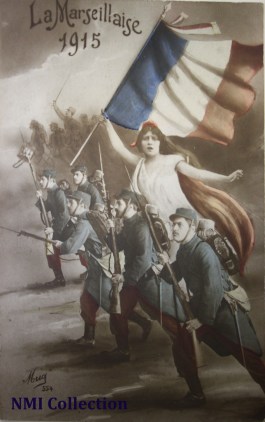
This July we commemorate the centenary of the First World War and remember those men who served in the various armies of all nations. Two such men were brothers Thomas and Joseph McEnroe, who served with the Royal Irish Fusiliers, and between them their experience covers the war years between 1914 and 1918. This album was made by Joseph after the war, and documents his experience as a prisoner of war in Germany between 1917 and 1918. It was donated to the National Museum in 1986.

It has only been in the fairly recent past that Ireland has fully acknowledged the role of its people during this conflict; it is thought that up to 150,000 Irishmen enlisted and served in the various theatres of war, and the Irish at home, especially women, found job opportunities on war service, particularly in the manufacturing of munitions. The number of Irish deaths is the subject of debate, some estimate it to be about 35,000, while others include recent emigrants in foreign armies and go as high as about 50,000. It would be impossible to say definitively, as enlistment records do not necessarily state the nationality of the soldier, the Irish regiments were not ‘Irish only’, and individual Irishmen also served in regiments that were not connected to Ireland. Nor do the enlistment forms record the motivation for joining. In 1914 Ireland was part of the British Empire, and about 21,000 Irishmen were already serving in the British Army as professional soldiers. As the war broke out, tens of thousands more enlisted, encouraged by the call to defend small nations such as Belgium. For many Irishmen hoping for Irish independence this was an act of nationalism. Irish nationalist politician John Redmond believed that Irish participation would lead to Home Rule, and encouraged the Irish Volunteers to enlist, causing them to split in 1915 with the vast majority of Volunteers going on to enlist in the British Army.
However, motivations would have been different for every volunteer. In August 1914 this promised to be a short war, and some may have joined as a way to see the world outside Ireland. Unemployment was also very high at this time, especially in urban areas, and many others would have seen a chance to provide an income for their families.

Thomas and Joseph McEnroe were two such men – Thomas being the professional soldier, and his younger brother Joseph volunteering in 1916. They were the only children of the widowed Frances McEnroe of Waterford. In 1901 they were living in Wood Quay, Dublin, and both sons were working as wood sawyer assistants. On 22 April the next year 18 year old Thomas enlisted in the Royal Irish Fusiliers at Armagh, and started a military career. He was posted to India and served there until 1910, when he returned to Dublin and transferred to the Reserves. He took a job as a general labourer in a flourmill and settled down with his wife Susan. On 5 August 1914, the day after the UK declared war on Germany, he was re-engaged and became a Private in the 3rd Battalion, Royal Irish Fusiliers, and was mobilised to France on 12 September 1914. His military records show where and when he was injured. He was at the second Battle of Ypres in April 1915 – the Battle of St. Julien – and would have experienced the first German gas attack using a lethal chlorine gas. Thomas was shot through the pelvis on the 25th and was sent to Crumpsall Military Hospital in Manchester for his recovery. He was eventually discharged on 29 June 1916, aged 32, as ‘being no longer physically fit for war service’.

Joseph McEnroe – centre

One month later his 29 year old brother Joseph enlisted as a Private in the 1st Battalion of the Royal Irish Fusiliers. I could find little about his service; it seems his records are among those lost during World War II. Only his medal card survives, so we know that he enlisted on 31 July 1916, shortly after the huge losses suffered by British forces at the Battle of the Somme.

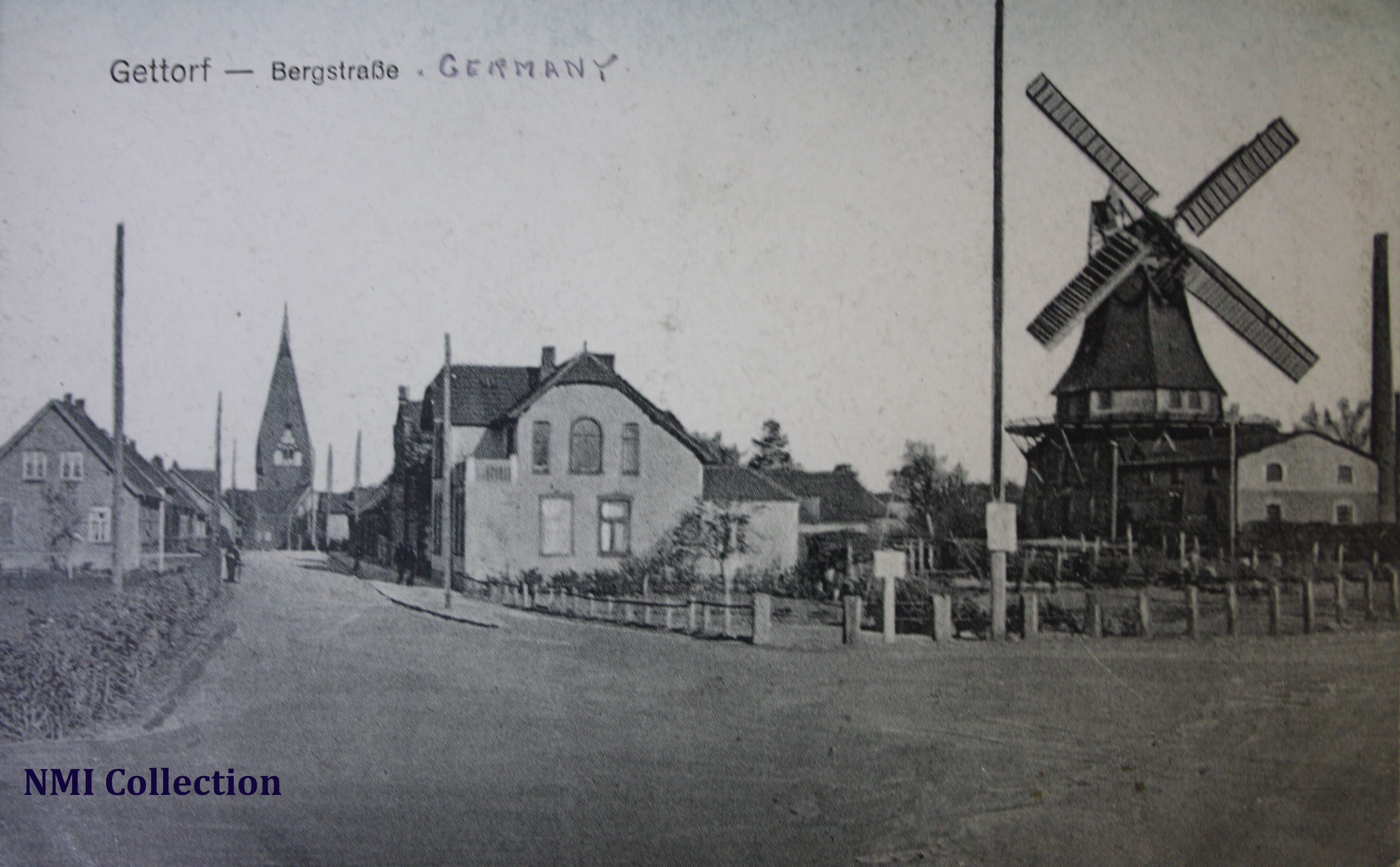
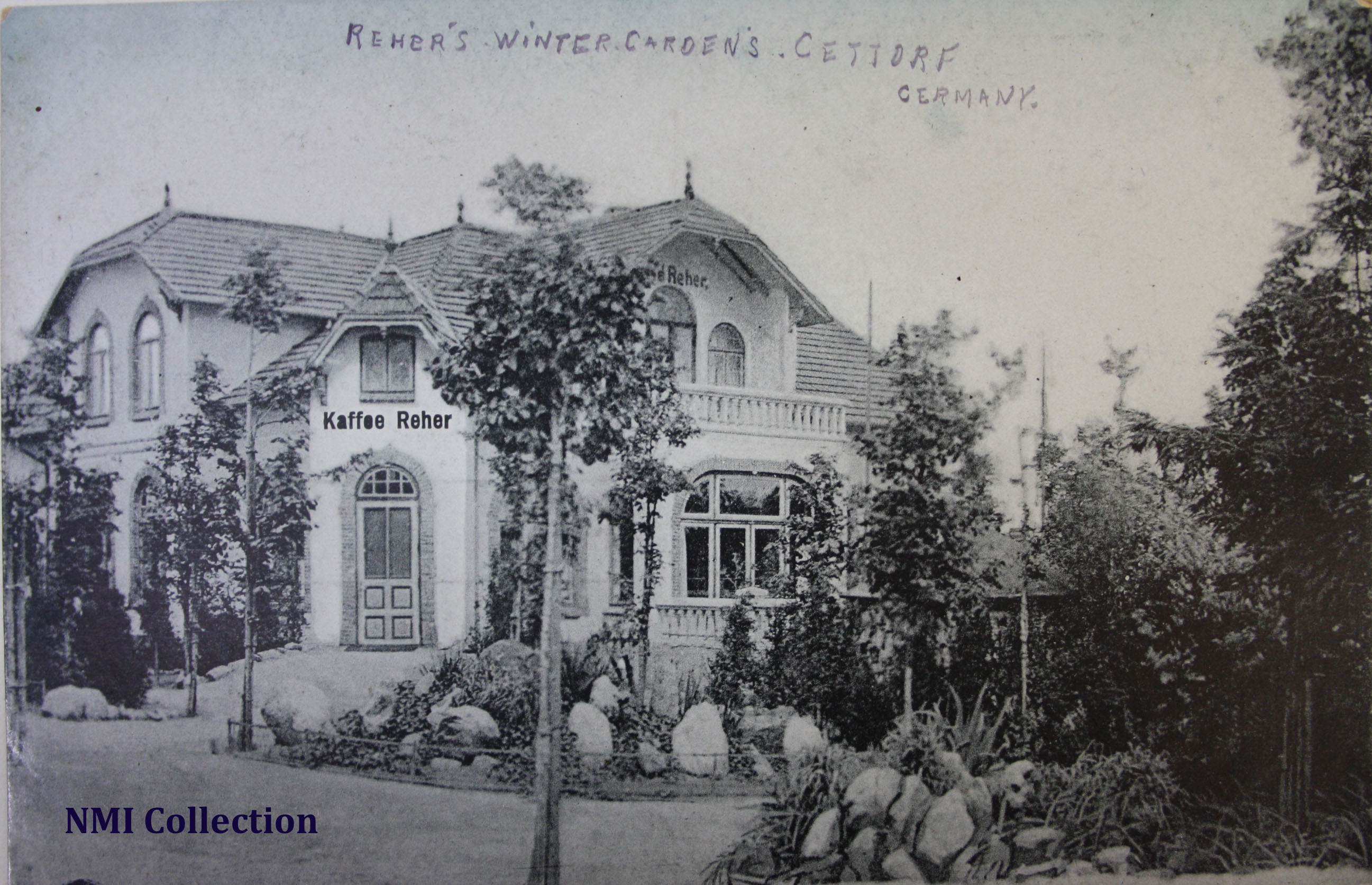
prisonersThe photograph album he made tells us more about his experiences. He was probably sent to France, and captured sometime in early 1917, as in the album he tells us he spent two years as a prisoner of war in Gettorf, a town near the Danish border. Joseph filled his album with the postcard pictures of the picturesque German town that he sent home to his wife Catherine, noting the post office, the winter gardens and cafes.

gettorf    cafe

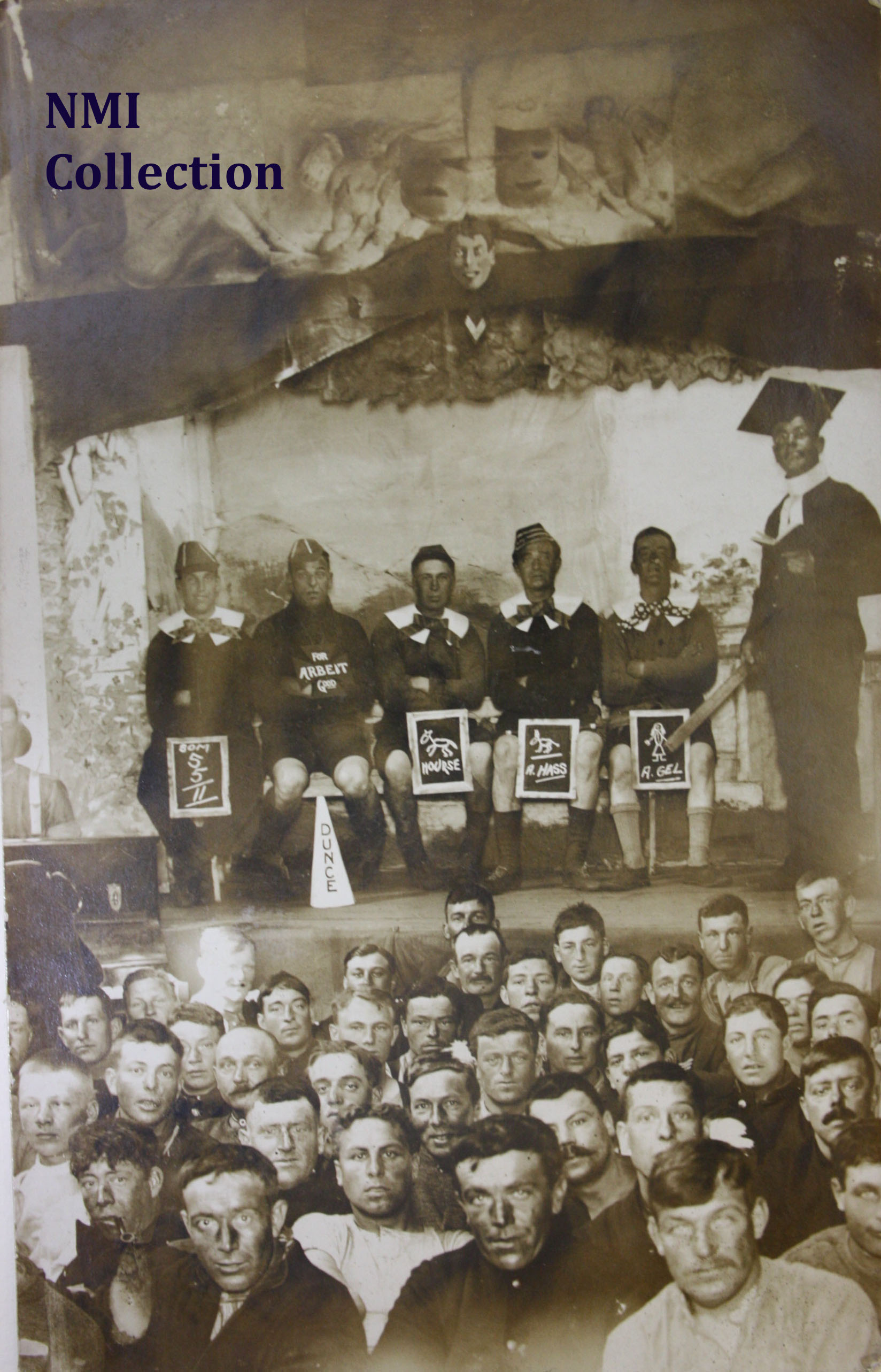
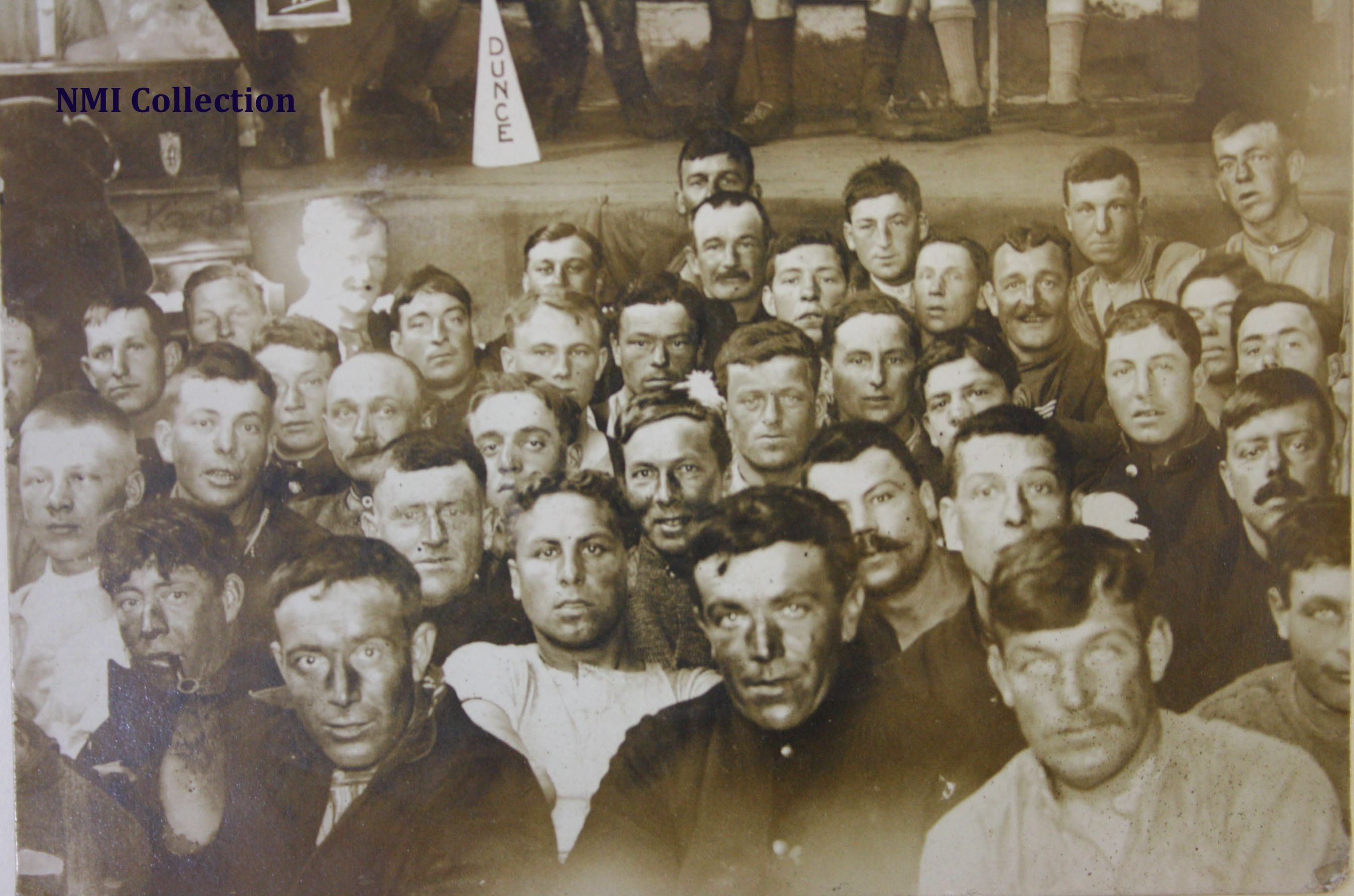
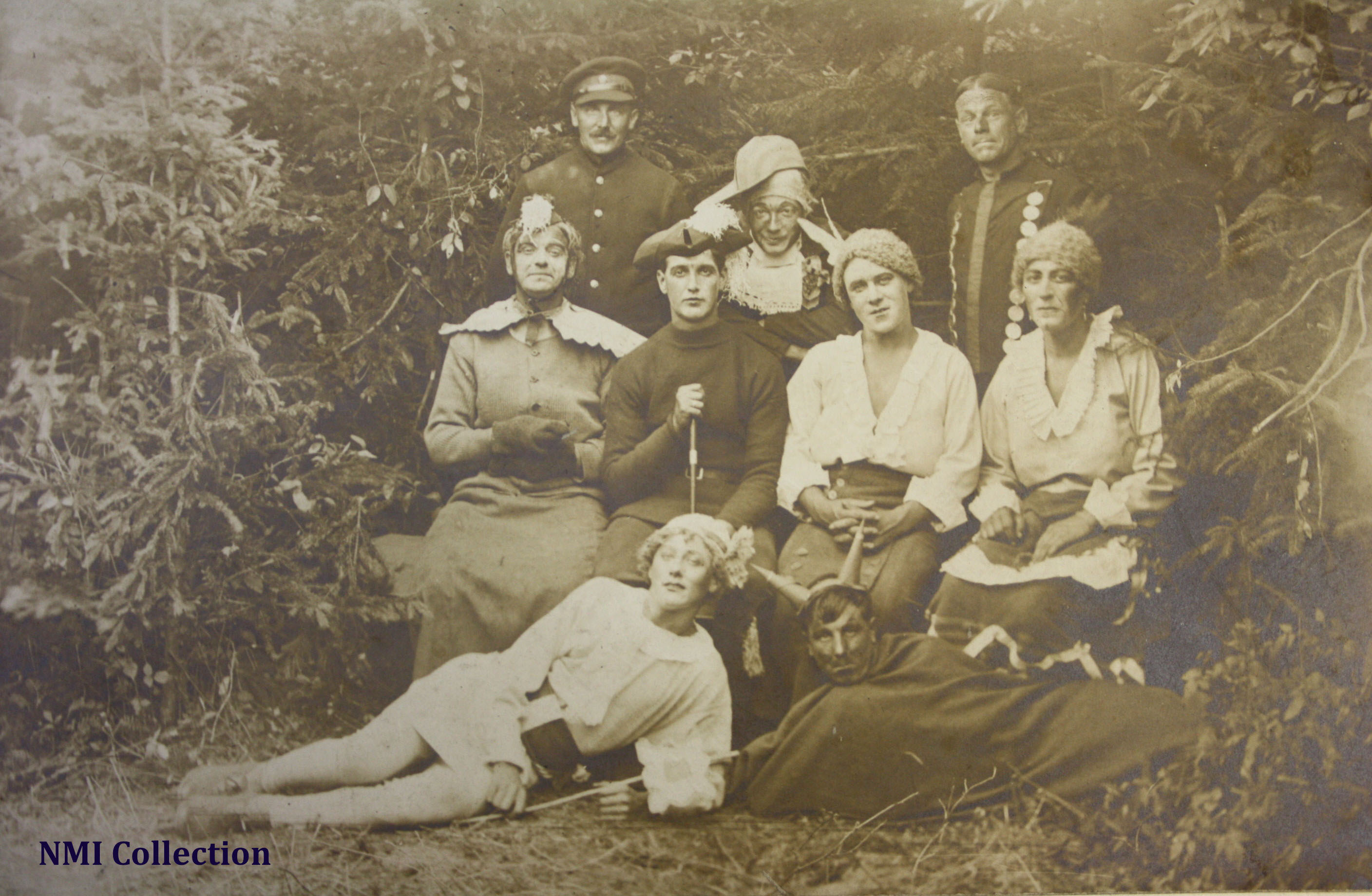
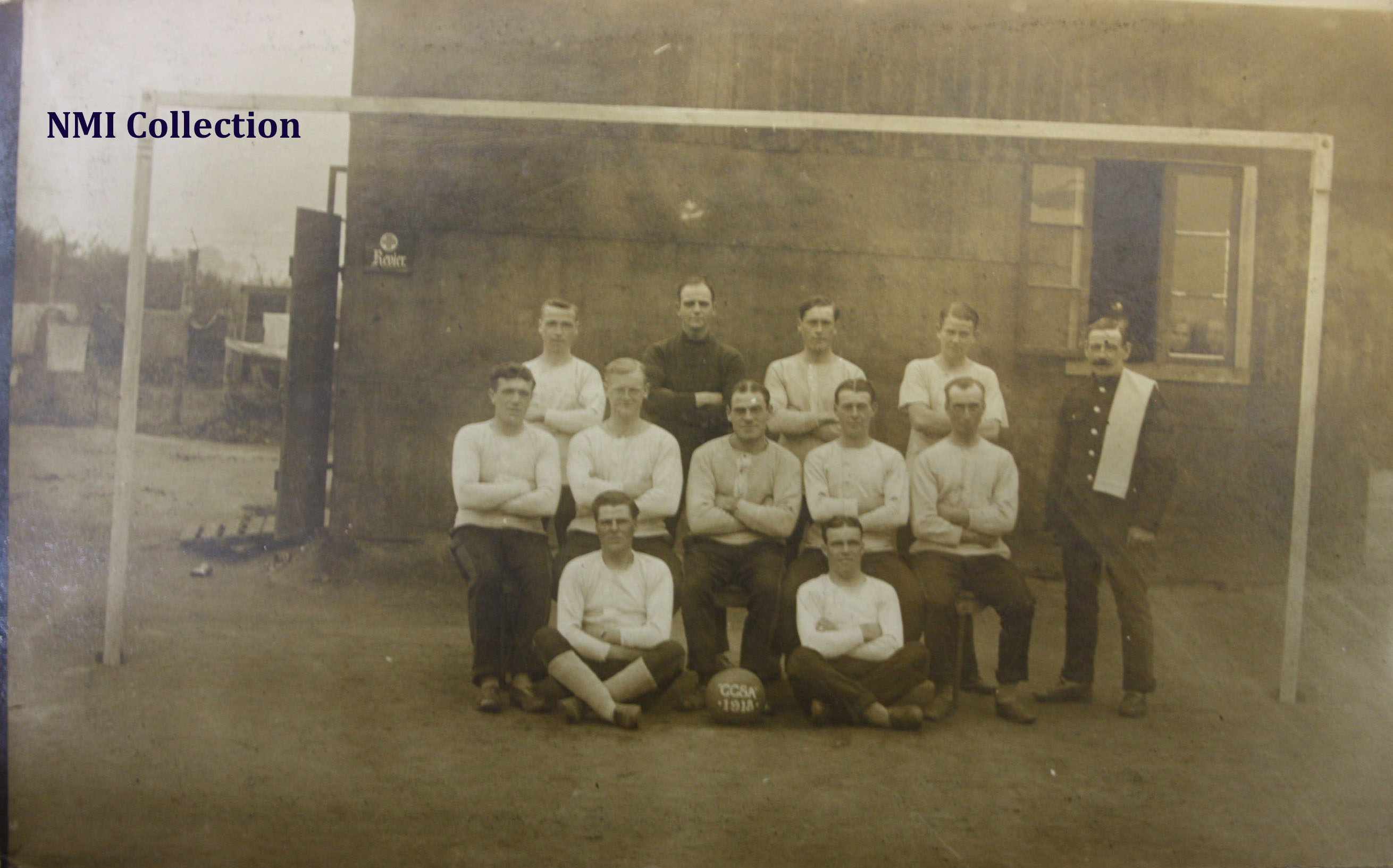
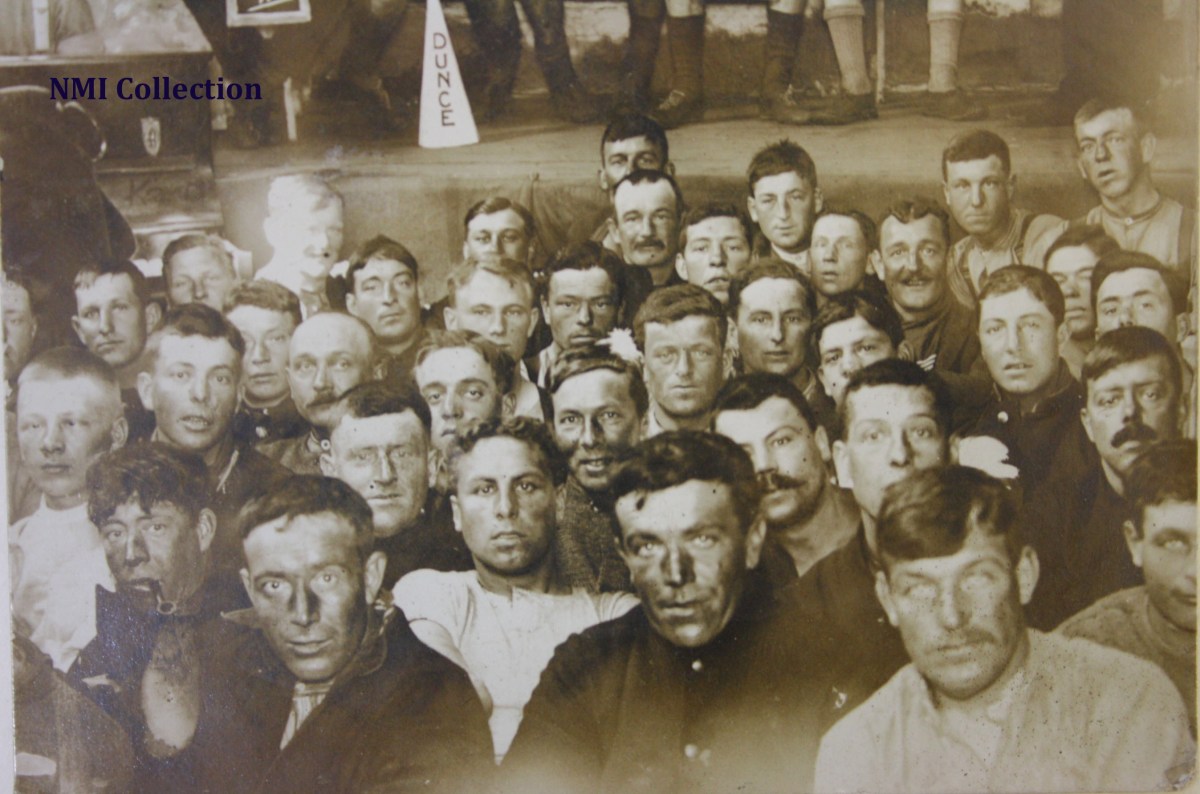
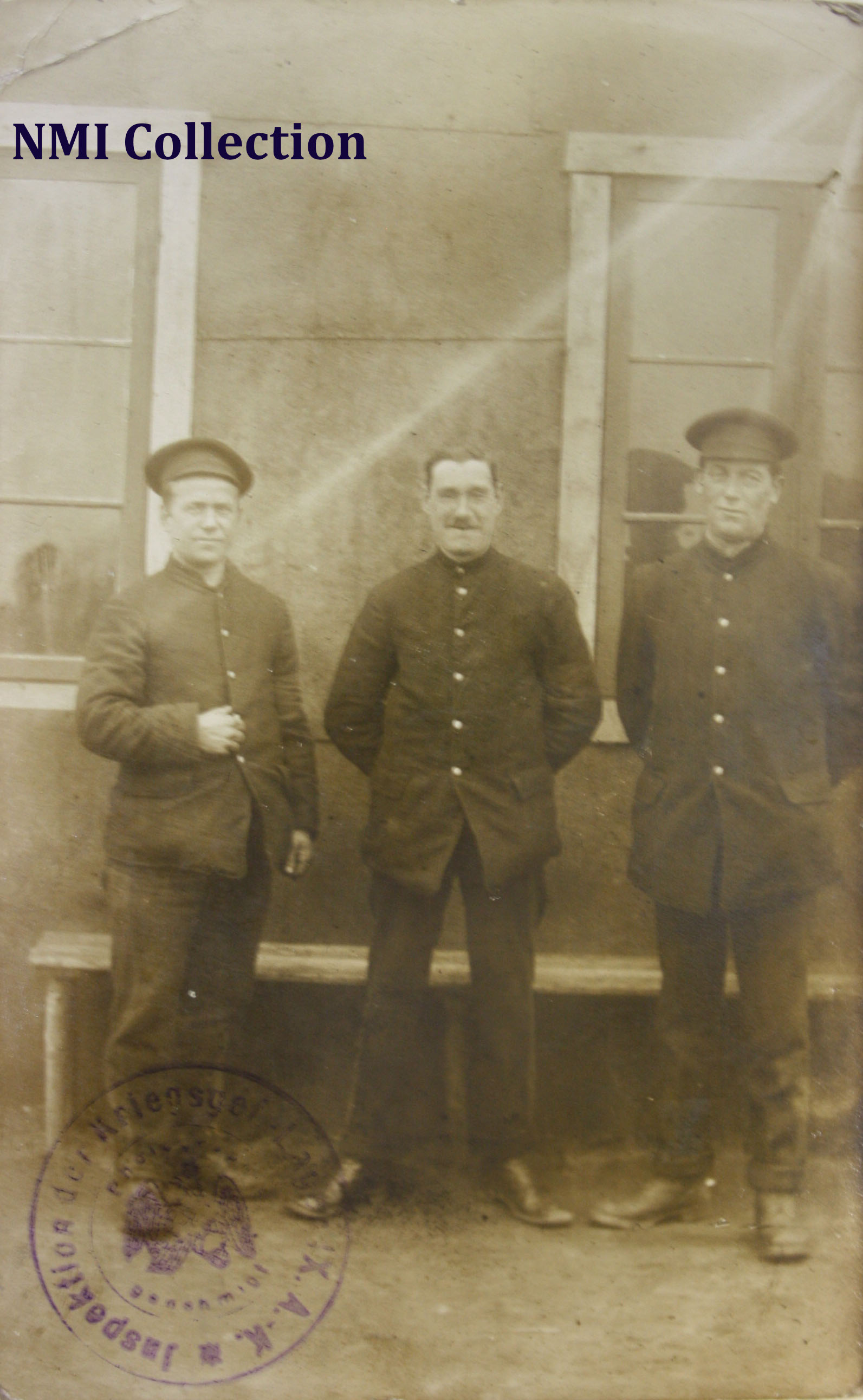
There are many photographs of him with fellow prisoners, some posing outside barrack buildings, a football team, and scenes from plays enacted in the camp, all giving an impression of normal life, with the names of the men meticulously recorded by Joseph on the reverse sides or the album page. One particularly stands out for me – the actors on the stage dressed as schoolchildren and their teacher, but the drawn and soiled faces of the prisoner audience in the foreground tell us more about the reality of their conditions.

dunceplay

faces

cemetary

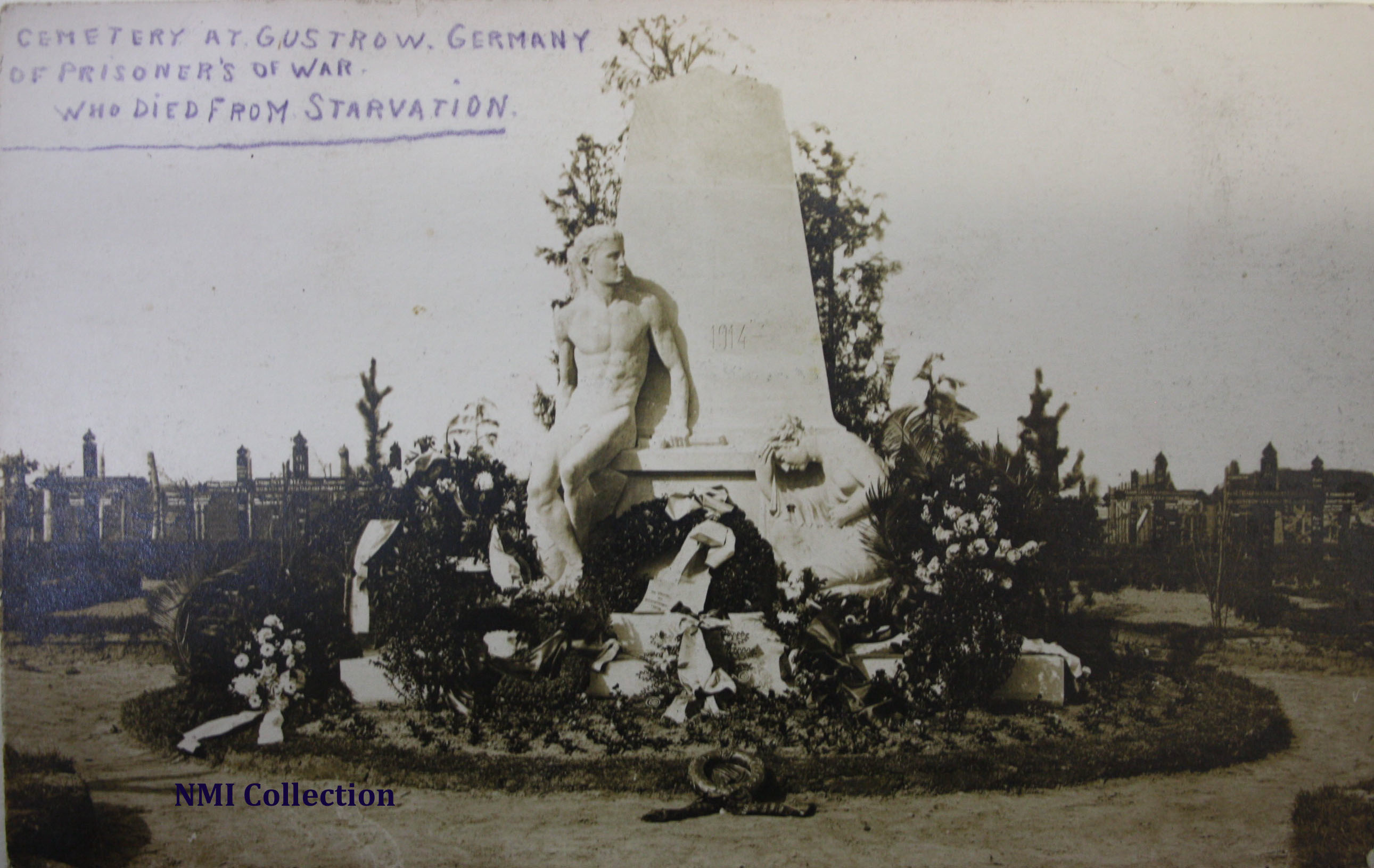
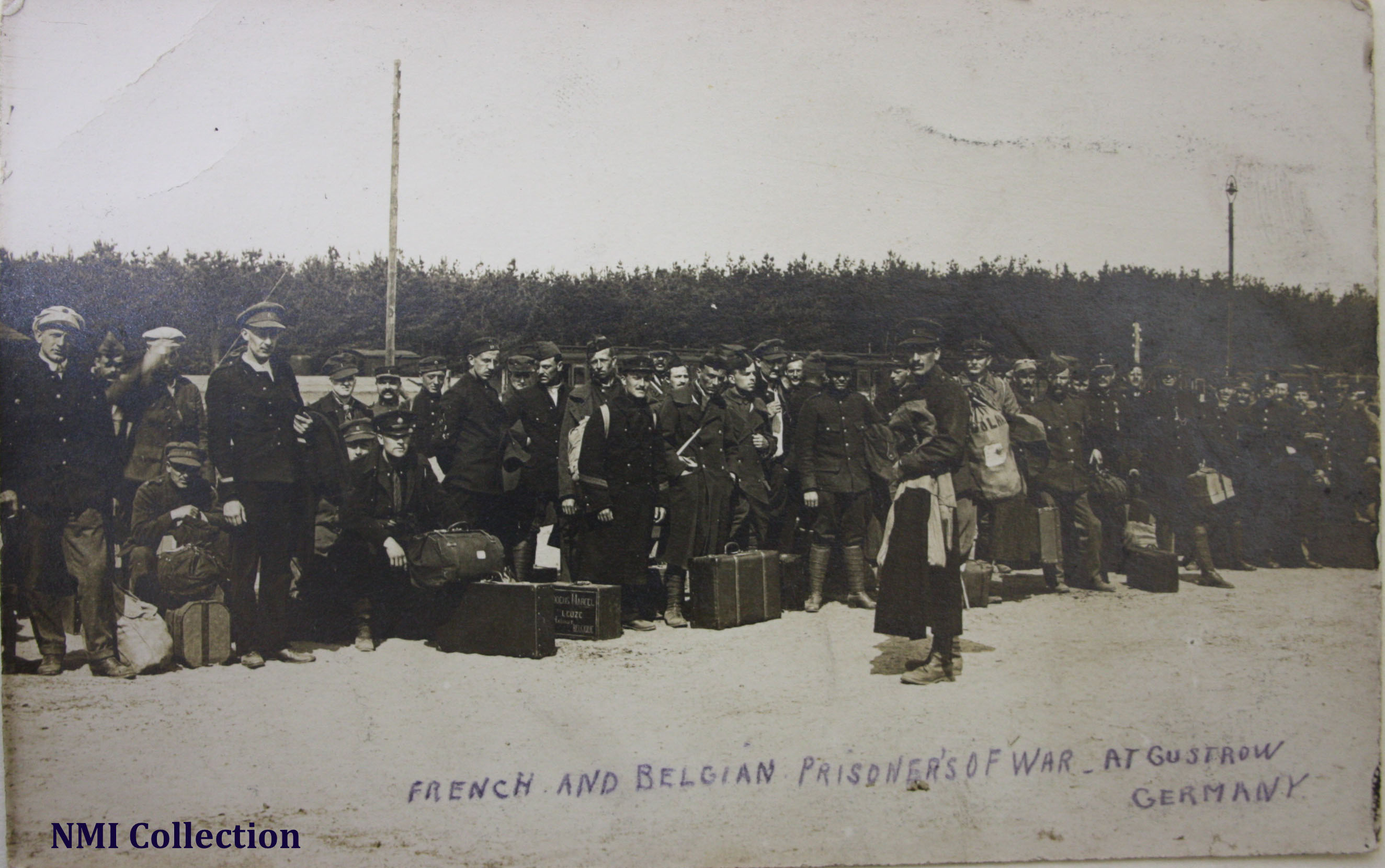
One of the photographs included in this album is of the memorial in the cemetery at Gustrow, dedicated to the prisoners of war who died of starvation. POWs, though they were not generally executed, still suffered bad conditions, forced labour, disease and starvation in the camps. Joseph was probably no exception – his medal record shows he was discharged from service in September 1919, the cause listed as ‘sickness’.

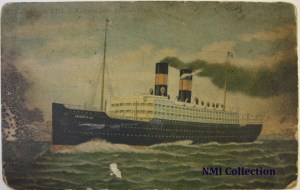
Joslinereph returned home in December 1918, one month after the armistice, on the Norwegian liner the Frederik VIII, which had been chartered by the British government to transport their men back from Germany. Though the McEnroes’ story reflects the experience of many Irish families during the Great War, they are unusual in one way – they both survived. At a time when Irish households, and sometimes whole streets, were receiving news of the death of their loved one, Frances McEnroe was lucky enough to have both her sons live through serious injury and imprisonment and return home.

play football

The National Museum of Ireland has a number of photograph albums made by soldiers. They typically hold images of regiment group, individuals, places served, major events, and some even contain photographs of battle scenes, all captioned with names and memories. At first glance it might seem that their purpose is to celebrate their regiment and its history. A closer look gives me more the impression of a commemoration of the maker’s fellow soldiers, a way of remembering his experiences and the men who shared them with him, and maybe a desire for these not to be forgotten.

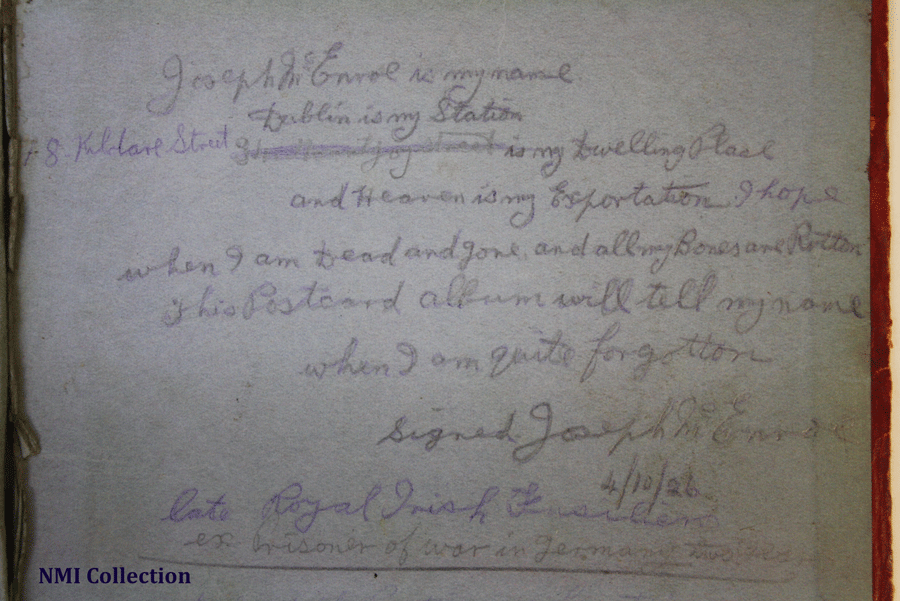
In the back cover of Joseph’s photograph album is the following inscription –

Joseph McEnroe is my name, Dublin is my station, 18 Kildare Street is my dwelling place, and Heaven is my Exportation. I hope when I am dead and gone, and all my bones are rotten, this postcard album will tell my name, when I am quite forgotten.
Joseph McEnroe 4/10/26
Late Royal Irish Fusiliers, ex prisoner of war in Germany, two years.

verse

Soldiers and Chiefs – National Museum of Ireland – Collins Barracks

The role of the Irish soldier in World War I is explored in the Soldiers and Chiefs exhibition in Collins Barracks, which details the participation of about 150,000 Irishmen and women in the British Army and war service during the Great War.
The National Museum will open a new exhibition and hold a seminar day in late October 2014 to mark the centenary of World War I.

© Brenda Malone. This work is original to the author and requires citation when used to ensure readers can trace the source of the information and to avoid plagiarism.

https://libguides.ucd.ie/academicintegrity/referencingandcitation

Sources and general reading used in the creation of these articles are listed on the Further Reading page.
Categories
1916 Rising World War I

The Hollywood Star and Pearse’s Missing Cap Badge, 1916

Image

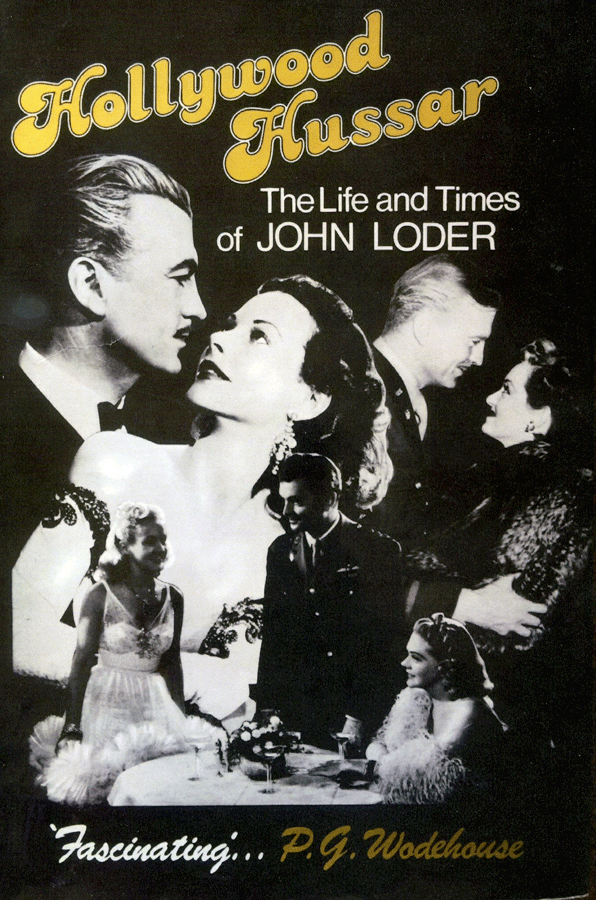
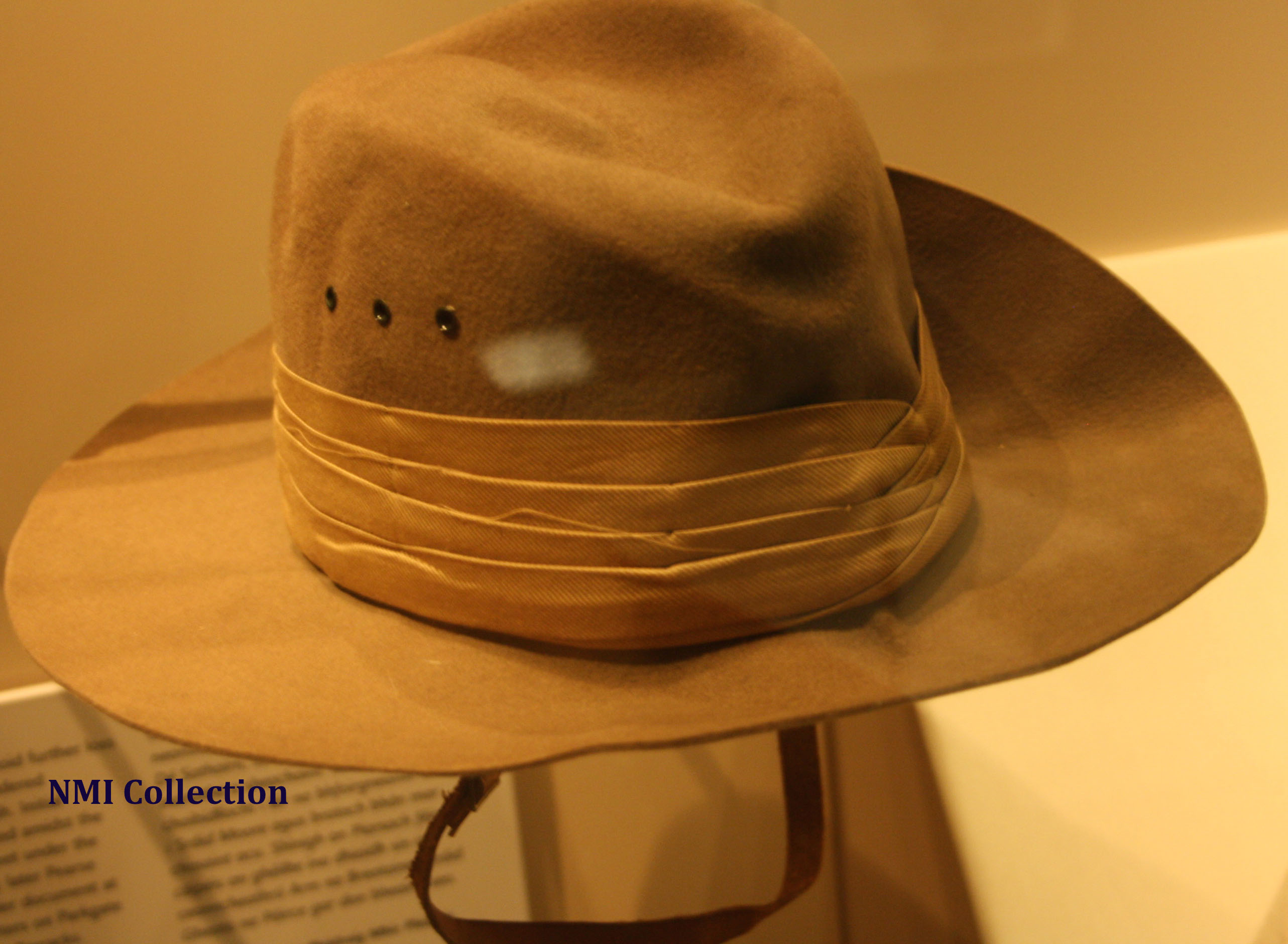
In the late 1940s the Irish Volunteer hat and Browning 7.65mm automatic pistol used by Patrick Pearse during Easter Week 1916 were donated to the National Museum of Ireland. The distinctive Australian style hat was missing something vital – its cap badge, with no information on its loss and no indication of its whereabouts. The mystery was solved in 1977 with the publication of Hollywood Hussar by actor John Loder, famous for his roles in The Doctor’s Secret – one of the first ‘talkies’, and King Solomon’s Mines.

Image

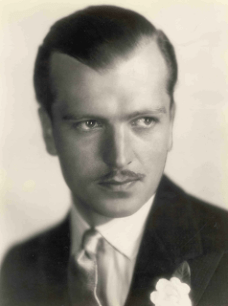
Loder was born John Lowe, the son of Brigadier General Arthur Lowe, the commander of the British troops in Ireland from the beginning of the rising, and the officer who took Pearse’s surrender on Saturday 29th April. Loder had followed his father into the army in the early months of World War I, and had seen service in Gallipoli and Egypt. He arrived in Ireland on the Friday before the outbreak of the rebellion to take up his new appointment as Aid-de-Camp to his father. On the outbreak of the rising, he went with Lowe to set up his headquarters in Dublin Castle.

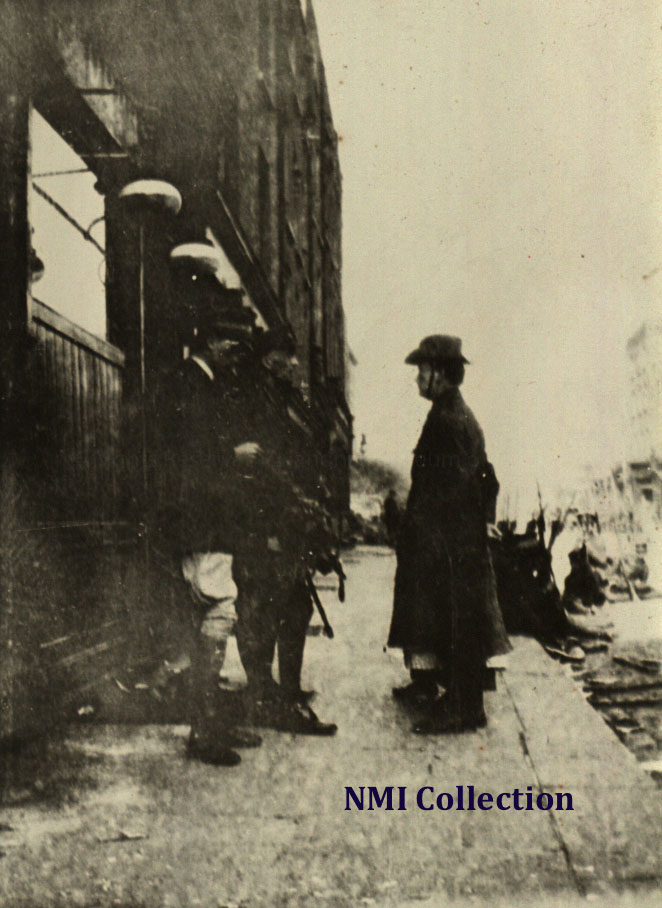
His account of the rebellion is brief, but he describes the fighting in the city centre, the destruction of the GPO and the death of civilians. At the end of the week Elizabeth O’Farrell came to Dublin Castle with a message from Pearse proposing the negotiation of a surrender. Loder wrote the message back to Pearse with the instructions to meet at Britain Street and surrender unconditionally, dictated and signed by Lowe. Loder was with his father at 4pm when Pearse and O’Farrell arrived. The famous surrender photograph shows Loder to the fore, his tall frame slouched slightly, cigarette in mouth.

Image

Image
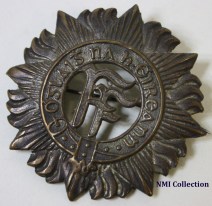
An example of an Irish Volunteer’s cap badge of the period. There were a number of different designs of badge, but this is likely to have been the type on Pearse’s hat.

He describes taking Pearse into detention in a staff car, accompanied by a priest, though his memory of Pearse giving the priest his watch and ring to give to his wife must be a mis-interpretation of the events; Pearse was likely passing his possessions on to his mother or sister. Loder had asked the driver of the car to continue driving past the jail’s gates in order to allow Pearse to finish giving his last messages. In gratitude, Pearse took his hat off, removing what Loder described as the Sinn Fein badge and gave it to him. He ends this recollection saying that he would have liked to have given this memento to the National Museum to join the other items belonging to Pearse, but it was destroyed in his parent’s home during the London Blitz in 1940 to 1941.

Image

After the Dublin rebellion, he was posted to France, fighting at the Battle of the Somme, and was eventually taken prisoner by the German Army in March 1918. After the war he continued his army career at the British Military Mission in Berlin, and on his demobilisation he returned to civilian life, setting up a pickle business in Potsdam, Germany. He turned to acting and moved to America in the 1920s, winning parts in Hollywood and later Broadway, radio and television. Described in his IMDb entry as ‘A tall, debonair, immaculately-groomed British leading man best known for his pipe-smoking chaps’, he lived the Hollywood lifestyle, complete with five marriages, until 1958 when he became a rancher in South America. He returned to London after his last divorce, and died there in 1988.

Many thanks to Michael Lee for telling me Loder’s story and providing me with a copy of his book.

© Brenda Malone. This work is original to the author and requires citation when used to ensure readers can trace the source of the information and to avoid plagiarism.

https://libguides.ucd.ie/academicintegrity/referencingandcitation

Sources and general reading used in the creation of these articles are listed on the Further Reading page.
Categories
1916 Rising

Waiting for Execution, Playing Cards, Thomas MacDonagh, May 1916

Image

In the previous blog post I looked at a letter written by Eamon de Valera in May 1916 in Kilmainham after he was sentenced to death for his part in the 1916 Rising. Like the majority of the 93 prisoners who received the death sentence in that month, de Valera’s sentence was commuted to penal servitude for life. In total, 16 men were executed; 14 in Kilmainham in Dublin, Thomas Kent in Cork Military Detention Barracks and Sir Roger Casement in Pentonville Prison in London.

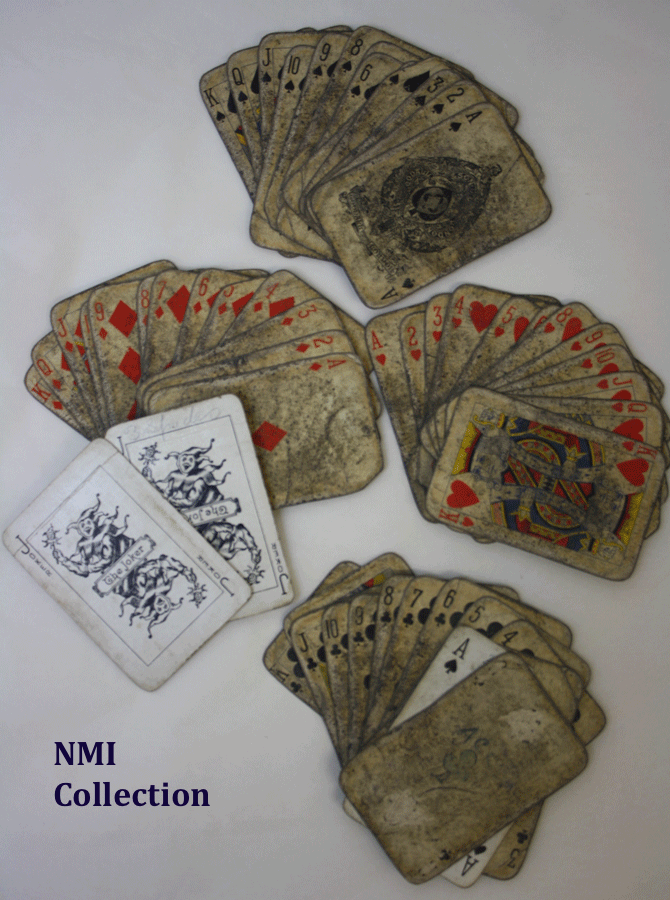
One of the leaders whose sentence was enacted was Thomas MacDonagh. On 2nd May, MacDonagh, Patrick Pearse and Tom Clarke were court martialled and transferred to Kilmainham Gaol, where they were shot on the morning of the 3rd May.   This deck of playing cards is said to have been used by MacDonagh in his cell in the hours before his execution, and were given to the uncle of the donor by MacDonagh’s sister, a nun, who visited him in Kilmainham the night before his death. They were gifted to the National Museum in 1947.


Image

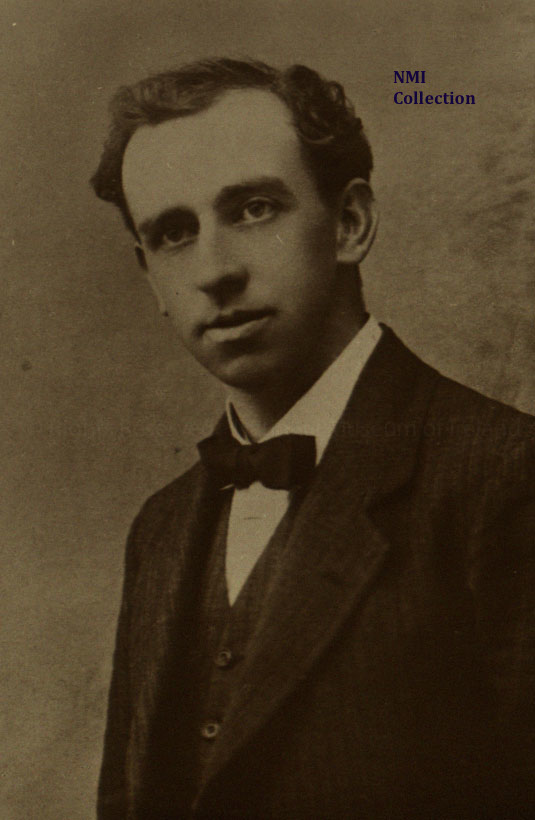
Thomas MacDonagh, born in Tipperary, started his career as a teacher, poet and playwright. He met Pearse on the Aran Islands while there to improve his Irish language skills, and in 1908 helped him found St. Enda’s School in Ranelagh, Dublin, becoming a teacher of English and French. Through his membership of the Gaelic League he met Joseph Plunkett, with whom he edited The Irish Review.

He joined the Irish Volunteers at its inception in late 1913, and was permitted to join the Irish Republican Brotherhood in 1915. By the time of the rising, he was the commander of the Irish Volunteers Dublin Brigade, a member of the military council and was one of the seven signatories of the Proclamation.

MacDonagh was first in command of the garrison at Jacob’s Biscuit Factory on Bishop’s Street during Easter Week. The area saw relatively little in the way of action, serving mostly to try to cut off British Army troops moving into the city centre from Portobello Barracks, and later supplying provisions and men to support other rebel outposts. The news of the surrender reached them on Sunday, and MacDonagh immediately went to Pearse, who at that point was detained, to confirm the order. On his return, he gave the news to his men; the surrender was official. He also gave them a choice – to surrender with him or make their escape, in the hopes of carrying on the fight for an Irish nation. You can read more about the surrender of the Jacob’s garrison in a previous blog post here.

 Image

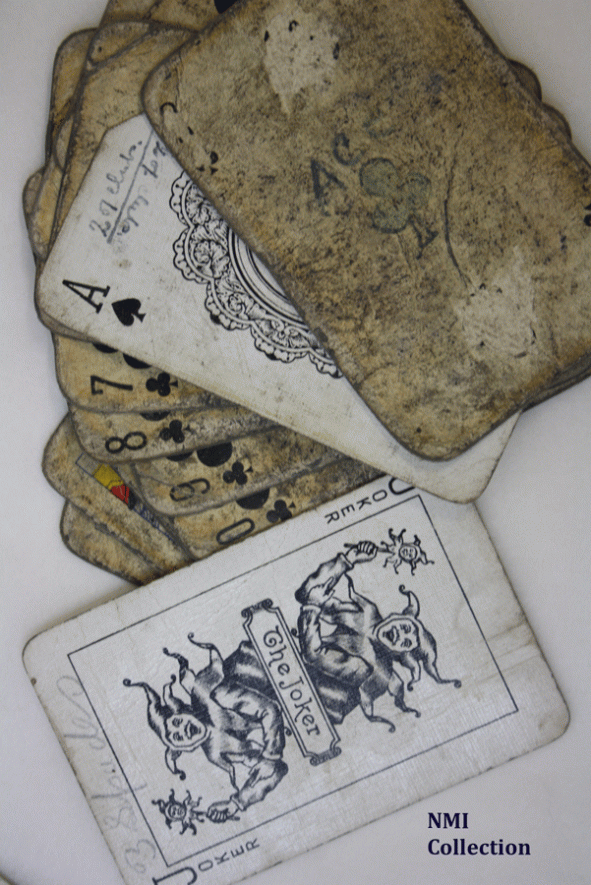
This deck of playing cards is not quite complete – there are 51 cards of the same set, branded ‘Gallaher’s Gold Bond Mixture’ tobacco, a Joker and Ace of Spades from a second deck, and another Joker from a third, replacing missing cards from the Gallaher’s deck. Two of these have their numbers and suits written on them, both in a different hand. They are well worn, to the extent that the Ace of Clubs symbol has been re-drawn on the card face. While it’s possible that they may have belonged to MacDonagh, it is more probable that they were given to him in the prison, perhaps by a warden, to occupy him in his final hours.

Father Augustine of the Capuchin Order, in his published personal recollections, stated that on the night of the 2nd MacDonagh had wished for his ministrations. He heard the confessions and gave Holy Communion to both he and Pearse, leaving them in prayer between 2 and 3am. He was ordered to leave the prison, and, unable to attend the executions, he returned to the gaol the next morning to retrieve the rosary beads given to MacDonagh the previous night by his sister, the nun Sister M. Francesca. There is no mention of the playing cards, which is perhaps not surprising given that card playing was disapproved of as gambling by the Church, and perhaps seen at the time as unfitting to MacDonagh’s memory.


MacDonagh’s last address to the court martial at his sentencing showed him to be proud to die for the cause of Irish freedom, and his friend James Stephens wrote that a British Officer who was witness to his execution said of him ‘They all died well, but MacDonagh died like a prince’.

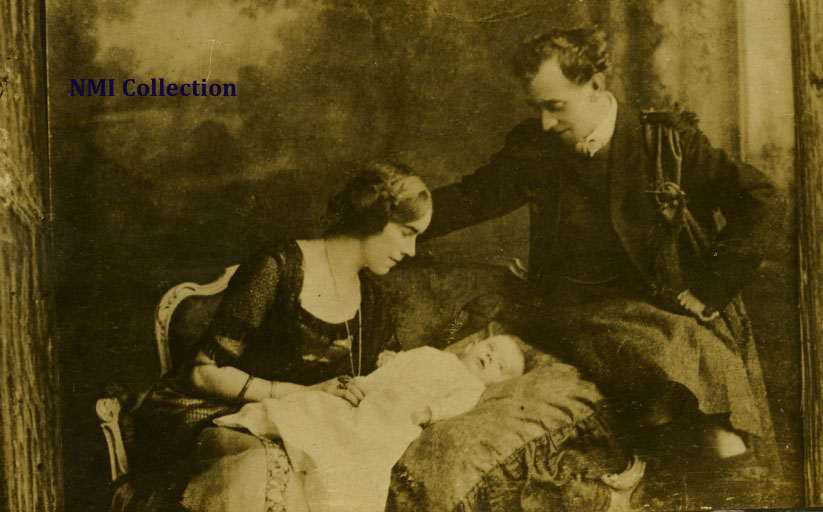
In whatever way he spent his last hours, the playing cards bring to mind how it must feel to sit alone and wait for death in such a situation. MacDonagh had married Muriel Gifford in 1912, and together they had a young son, Donagh, and baby daughter, Barbara. Though he was accepting of his death, he must have felt the pain of knowing he was leaving his family without a husband and father.

Like Liam Mellow’s chessman, the cards may have provided some small distraction for him in those hours.


Image

© Brenda Malone. This work is original to the author and requires citation when used to ensure readers can trace the source of the information and to avoid plagiarism.

https://libguides.ucd.ie/academicintegrity/referencingandcitation

Sources and general reading used in the creation of these articles are listed on the Further Reading page.
Categories
20th Century Commemoration Social History

The 1913 Lockout Baton Charge – Dublin Metropolitan Police batons

Image

It was recently announced that €22 million will be made available for a number of heritage and cultural projects as part of Ireland’s Decade of Commemorations.

I was delighted to hear that the Henrietta Street Tenement Building is to receive funding to be developed into a museum to explore the reality of tenement life in Dublin’s north inner city.  Last year the Dublin Tenement Experience: Living the Lockout was a real highlight during the 1913 Lockout centenary, and was hugely successful.  I look forward to seeing this museum in the next few of years.

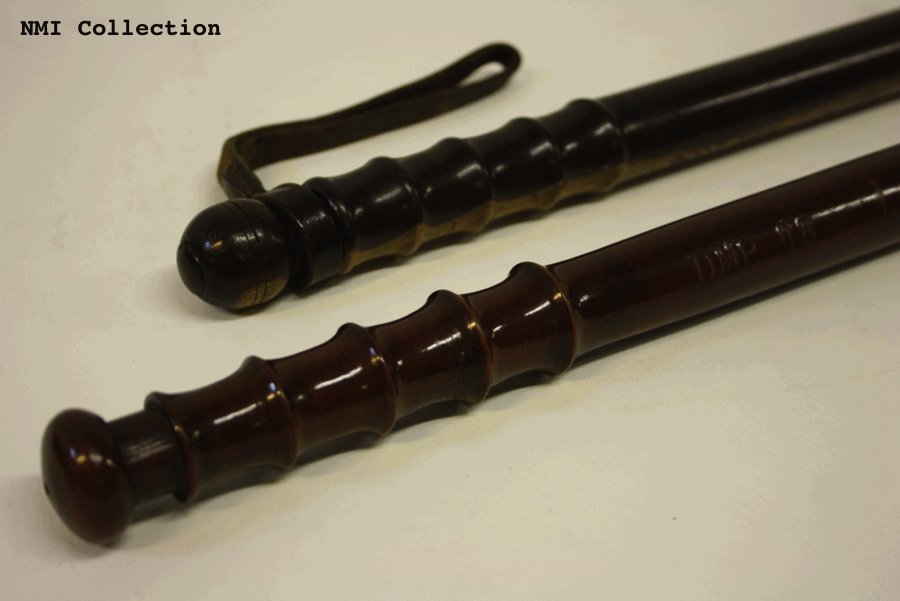
In the meantime, you can explore life in 1913 North Inner City Dublin in the wonderful Dublin Tenement Experience blog, which covers a range of topics such as personal stories from the tenements, the Church Street Tenement Collapse of September 1913, the effect of World War I on the families of Henrietta Street, and the photographs which highlighted the slum conditions in urban centres.   You can also read about the Dublin Metropolitan Police batons (NMI) which were used in the infamous Bloody Sunday Baton Charge of 31 August 1913.

© Brenda Malone. This work is original to the author and requires citation when used to ensure readers can trace the source of the information and to avoid plagiarism.

https://libguides.ucd.ie/academicintegrity/referencingandcitation

Sources and general reading used in the creation of these articles are listed on the Further Reading page.
Jewel Adviser

Perfect Piece Awaits

AN SIONNACH FIONN

Irish News, Politics, Culture

In the Dark

A blog about the Universe, and all that surrounds it

Crawling EgMaf

... where things go slow, but we're getting there!

Portals of London

Towards a catalogue of London’s interdimensional gateways

Landscapes of Revolution

A Project Exploring Ireland's Conflict Archaeology, 1913-1923

caught on the wire

Reflections on military history

Fintan O'Mahony

Reading and writing amid the ruins

Early Irish Cinema

What's On in Irish Cinemas - 100 Years Ago

Virtual Curation Museum

Where the Past Meets the Future

the many-headed monster

the history of 'the unruly sort of clowns' and other early modern peculiarities

A SILVER VOICE FROM IRELAND

An Eclectic mix of items from a 'senior' blogger in Ireland looking at the past and keeping an eye on the present.

Pue's Occurrences

An Irish History Blog

The Museum of Ridiculously Interesting Things

a collection of ridiculously interesting art, objects, ideas, and history

Dublin Tenement Experience

Living the Lockout

kilmainhamgraffiti

Recording, photographing, deciphering, analysing and understanding historical graffiti from Kilmainham Gaol, Dublin. This research has been funded by the Irish Research Council (2012-2014)