Categories
1916 Rising

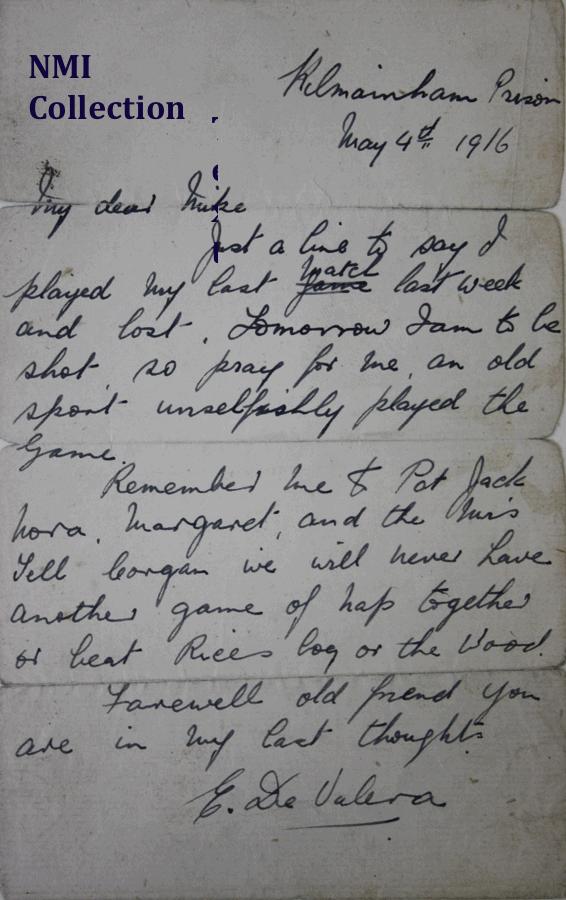
De Valera’s ‘Last Letter’, Kilmainham, May 1916

Last letter of Eamon de Valera, May 1916 (copy) (NMI Collection)

The National Museum holds many of the last letters written by the men executed in Kilmainham Gaol in May 1916 for their part in the Rising. The collection includes Patrick Pearse’s letter to his mother, and letters from Con Colbert, Michael Mallin, Eamonn Ceannt and others, written to family and friends. All these letters have common themes; a final goodbye to loved ones, a sense of acceptance of their fate and a pride in having fought for their ideals and a free Ireland. They make for emotional reading, especially with the knowledge that within hours of writing their author was dead.

Among these is also a contemporary manuscript copy of a last letter written in May 1916 by Eamon de Valera, who had his death sentence commuted to penal servitude for life and was not executed along with the other leaders of the Rising. It was donated to the museum in 1975.
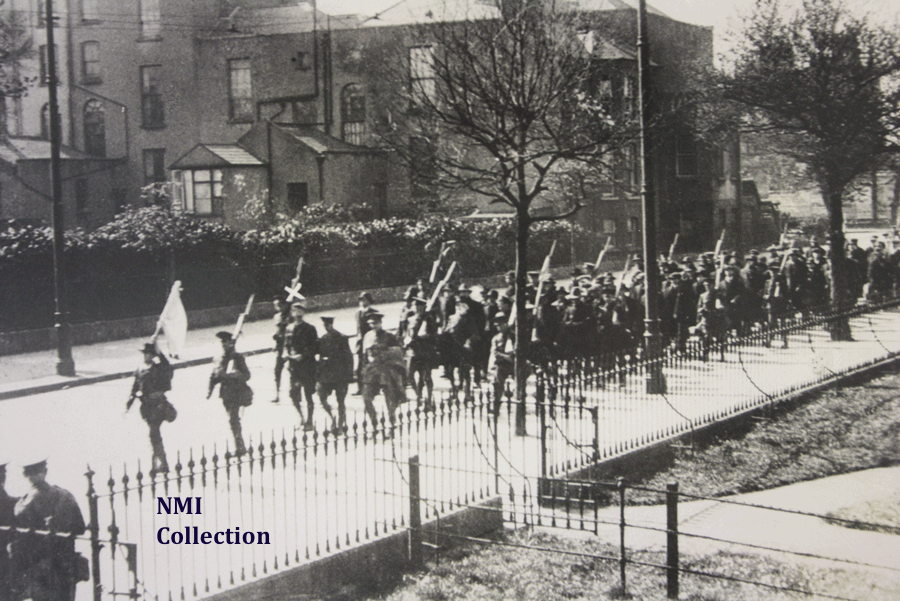
De Valera leads the surrender of the Boland's Mills Garrison, 30th May 1916 (NMI Collection)

After a week of fighting and widespread destruction in the centre of Dublin, Patrick Pearse ordered the surrender of the Irish rebels on Saturday 29 April.  De Valera was in command of the garrison stationed at Boland’s Mills in the Ringsend area of the city and the outlying posts around Northumberland Road and Mount Street Bridge, which saw heavy action and many casualties. On Sunday Elizabeth O’Farrell arrived at Boland’s Mills with a surrender order written by Pearse. Though at first there was some confusion over the order, the garrison, led by de Valera, marched out of the mills along Grand Canal Street towards a barricade manned by the Sherwood Foresters and surrendered their arms. They were held overnight on the grounds of the Royal Dublin Society at Ballsbridge, and transferred the next morning to Richmond Barracks. There began the military’s task of deciding what to do with the insurgent prisoners, of which there were about 600 and rising, with some being sent to England and Wales for internment, and others detained to be tried in Ireland.
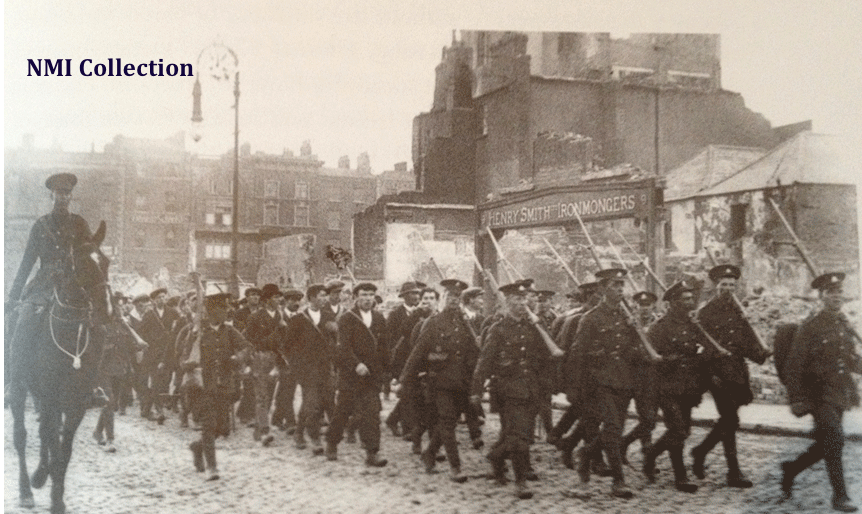
Irish prisoners being marched under guard down Eden Quay for deportation to England (NMI Collection)

Almost as soon as the Rising had begun martial law was declared, transferring power in Ireland from the civil government to the military forces. By the time of the surrender, General John Maxwell, a veteran British Officer who had served in India, the Boer War and most recently on the Western Front in the ongoing war, had been appointed Military Governor of Ireland. His decision to court martial the leaders of the Rising under martial law was problematic from the first, with even the courts’ presidents raising legal difficulties. These military trials were conducted away from the public view, and the rebel leaders had no legal defence or jury. The leaders were charged with ‘waging war against His Majesty the King with the intention and for the purpose of assisting the enemy’. Pearse, Clarke and MacDonagh were tried on 2nd May, sentenced to death and transferred to Kilmainham Gaol, which, though it had been closed as a prison since 1910, was now in use by the British Military as a detention centre for military prisoners. They were executed on the 3rd May in the gaol’s stonebreakers yard.

The speed with which these sentences were carried out caused some concern to the British government, increasing over the next days with further executions. Prime Minister Asquith was especially concerned that a large number of executions would turn public opinion further in favour of the rebellion. Moreover, Maxwell’s final decisions as to who was to have their death sentence carried out seemed irregular, with some relatively unknown figures who had been detained after the Rising, such as Michael O’Hanrahan who had been 2nd in command at the Jacob’s Factory garrison which had seen little combat, having their death sentences enacted. On the 8th May Lord Wimborne, Lord Lieutenant of Ireland, wrote to Maxwell of his concerns about this, urging him to cease the executions except in the case of ‘one or two very prominent and deeply implicated suspects’.
Image

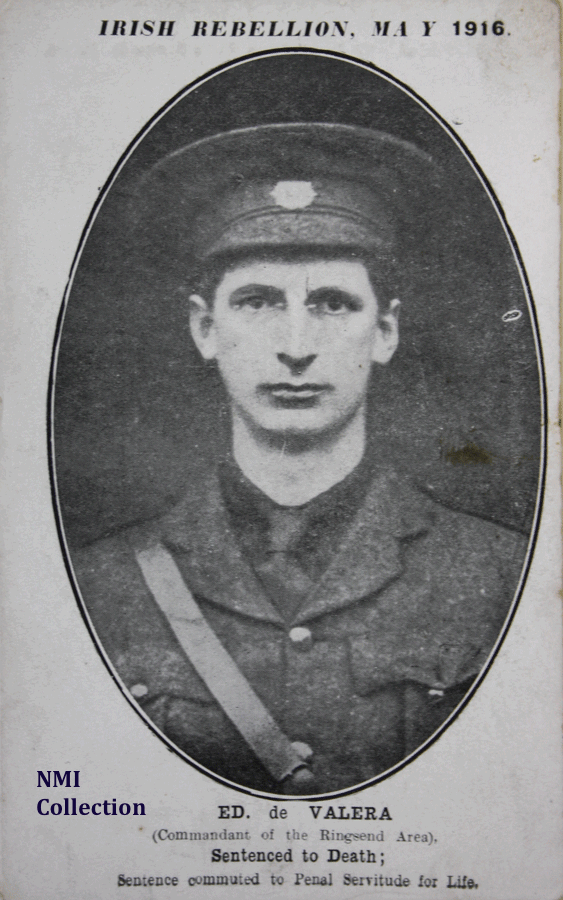
De Valera, as a garrison commander, was court martialled on the 8th May and a death sentence was passed. He was transferred to Kilmainham Gaol to await his execution, and wrote this letter to Michael Ryan of Cashel, Co. Tipperary on the 9th May (it is incorrectly dated as the 4th May in the copy). He writes ‘Tomorrow I am to be shot, so pray for me, an old sport unselfishly played the game’, believing he was to die the next day, the 10th. However, on the 10th May Asquith sent an order that no further executions were to take place, though James Connolly and Sean MacDiarmada, court martialled on the 9th May, were executed on the 12th. Countess Constance Markievicz had already escaped death on the order that no woman was to be executed. De Valera also escaped his sentence when it was commuted to penal servitude for life. This raises the question as to how de Valera escaped execution.

It was commonly thought that the fact he was an American citizen saved his life, as Britain executing a U.S. citizen at such a critical time in the war would have caused diplomatic issues. Robert Schmuhl has written that the de Valera personal papers in the UCD archives show that his wife Sinead appealed to the US Consul for help, and his half brother Reverend Thomas Wheelwright wrote letters to Washington on his behalf. However, it is less likely that his citizenship saved him, but the luck of the timing of his court martial. His trial was one of the later to take place, and he was not a well known figure at this time. The executions of Connolly and MacDiarmada, which took place after de Valera’s court martial and the British government’s order to cease the executions, were likely enacted due to these men’s very prominent role in the Rising and the fact that they were signatories of the Proclamation. De Valera had not been a high profile individual in the years before the Rising, and the government had little knowledge of him. It would appear that it was generally considered that he was not important enough to be executed.
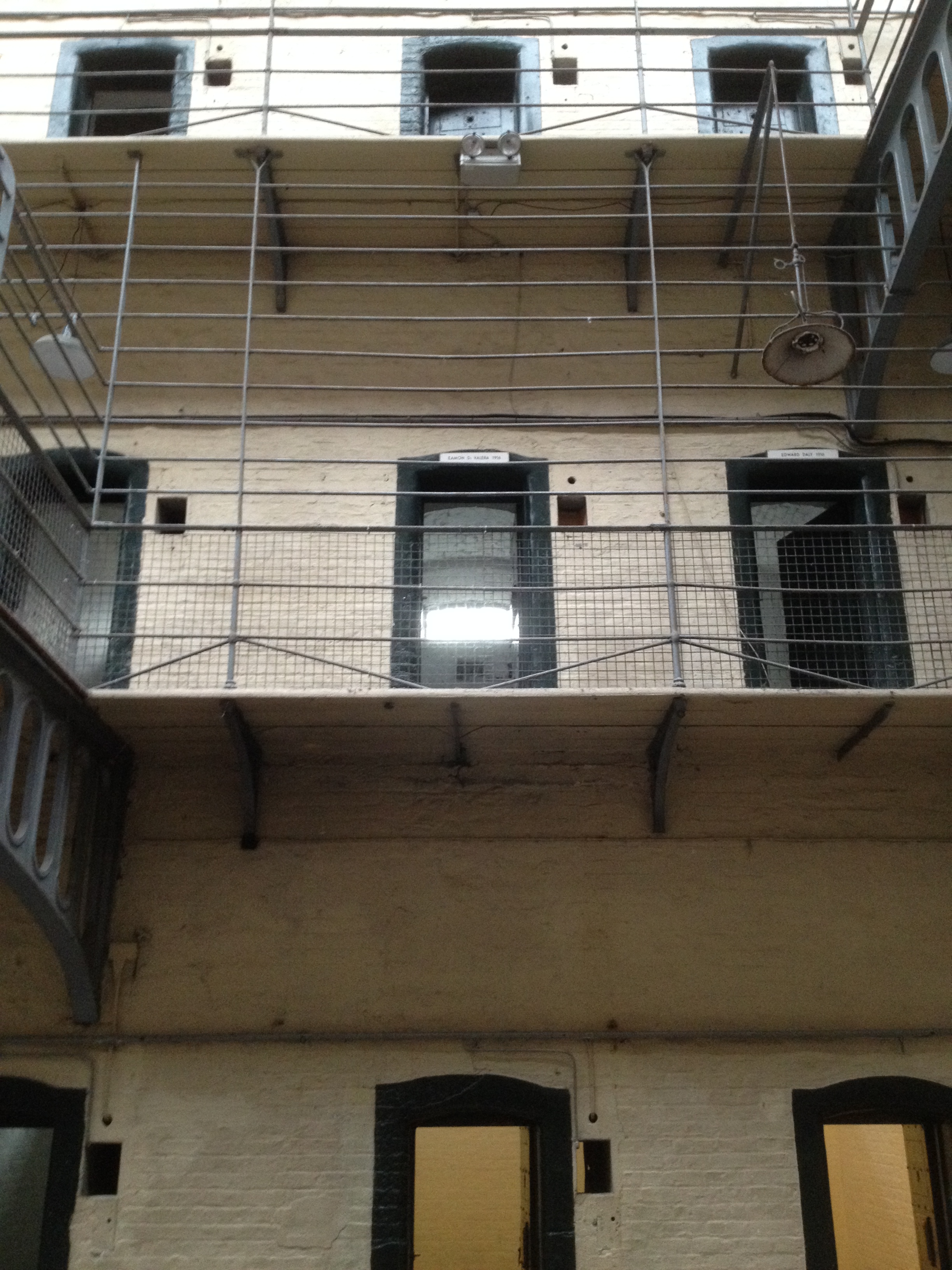
De Valera's cell in Kilmainham Gaol, May 1916

Eamon de Valera went on to play a hugely significant role in 20th century Ireland. On the commuting of his death sentence, he was imprisoned in various jails in England until the general amnesty in June 1917. He went on to play key roles in the War of Independence period, becoming the President of the first Dáil Éireann in 1919, led the Anti-Treaty side in the Civil War, became leader of the Fianna Fáil Party, was Taoiseach of Ireland at various times from the 1930s to 1950s, wrote the Constitution of Ireland, and was elected President of Ireland from 1959 to 1973 before dying at the age of 92 in 1975.

But for a moment in May 1916, as evidenced in this letter, de Valera truly believed he was about to die.
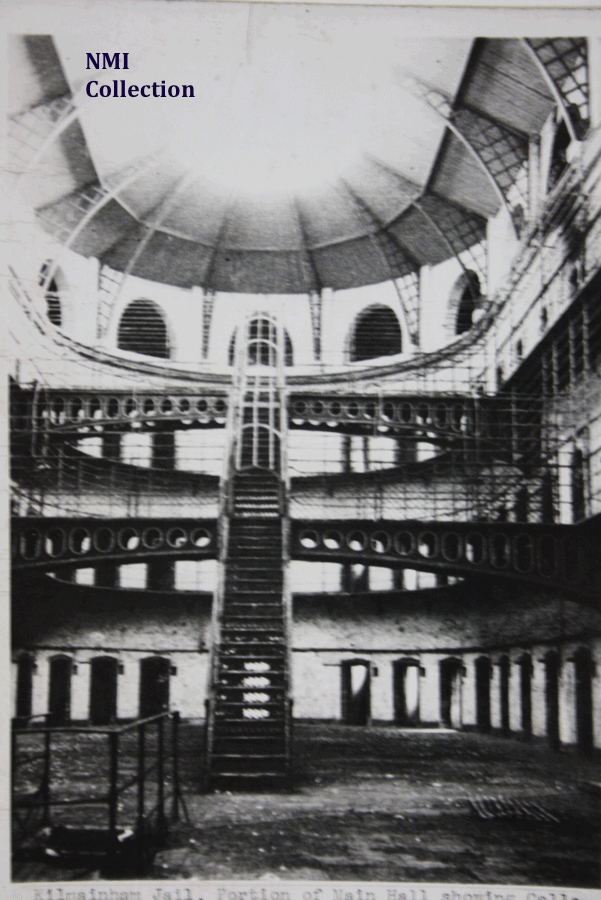
The Victorian Wing's central stairwell, Kilmainham Gaol (NMI Collection)

Kilmainham Gaol is open to the public for guided tours, and I’d highly recommend visiting this site to learn more about the long history of this gaol as well as its role in the early 20th century fight for Irish Independence.

© Brenda Malone. This work is original to the author and requires citation when used to ensure readers can trace the source of the information and to avoid plagiarism.

https://libguides.ucd.ie/academicintegrity/referencingandcitation

Sources and general reading used in the creation of these articles are listed on the Further Reading page.
Categories
1916 Rising

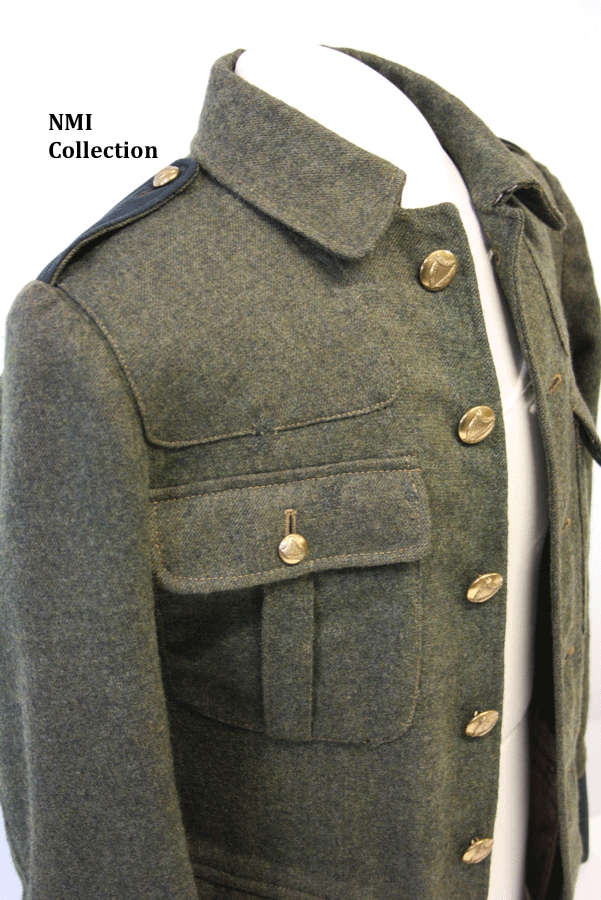
Irish Volunteer Tunic, The Surrender at Jacob’s Factory, 1916 Rising

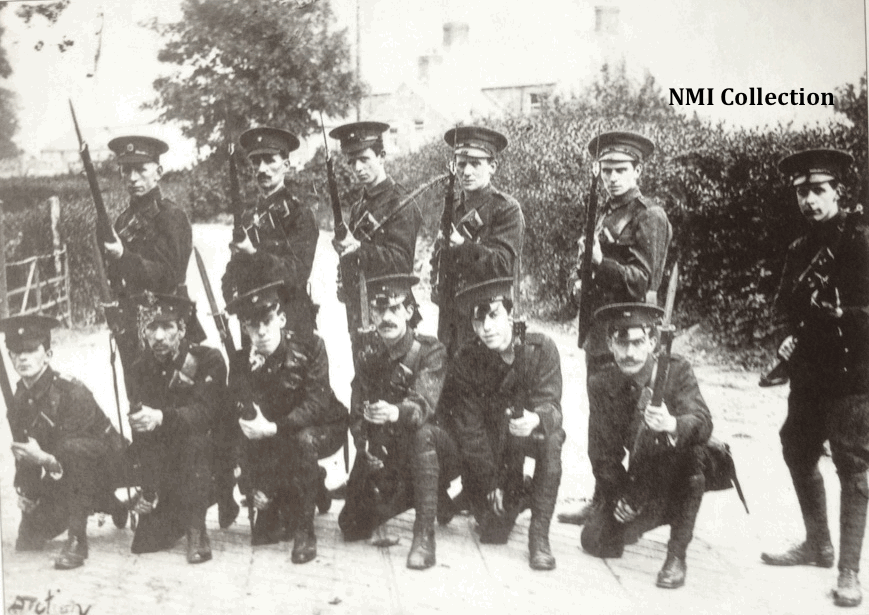
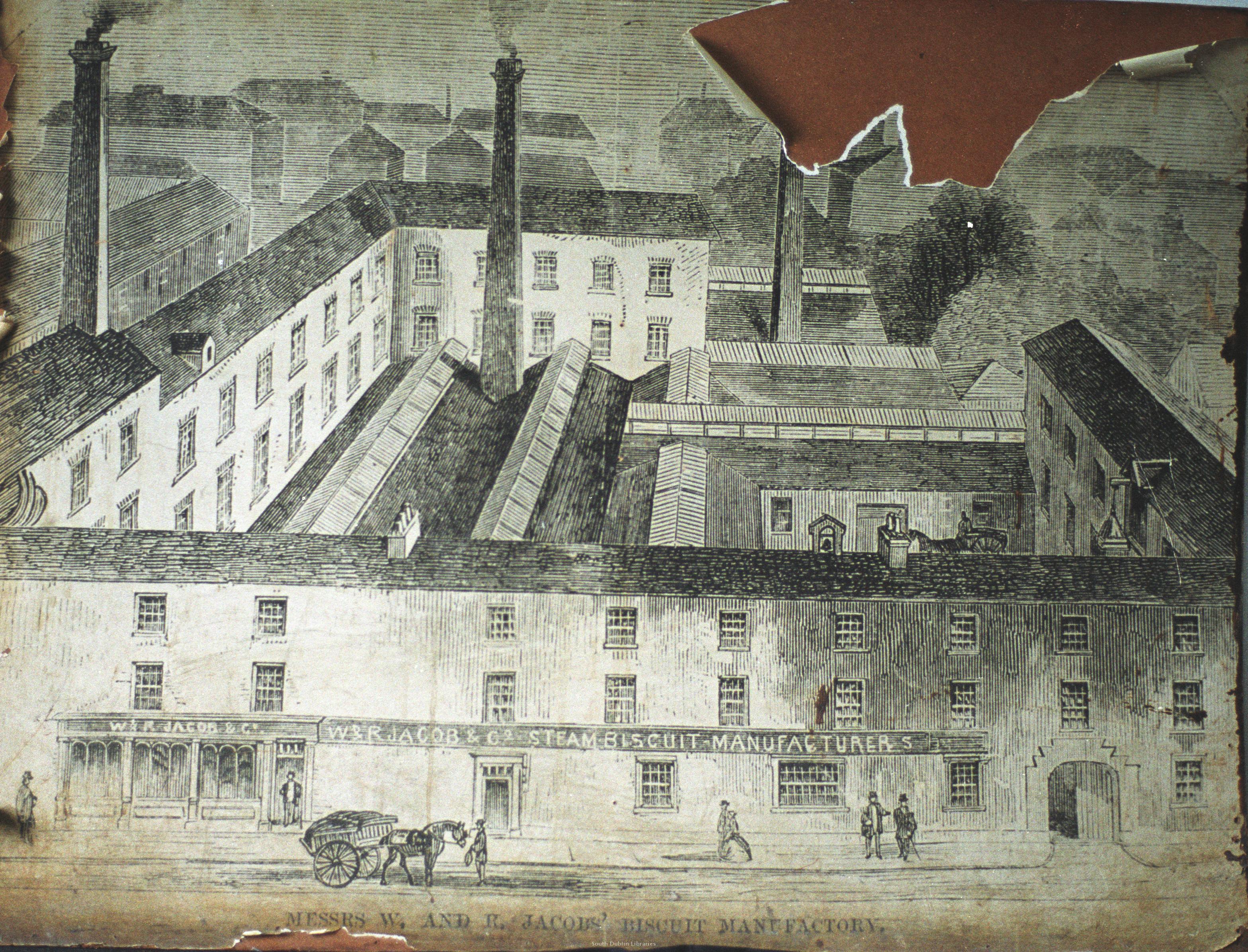
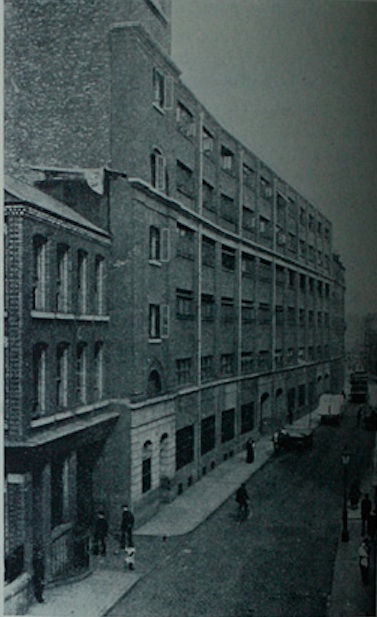
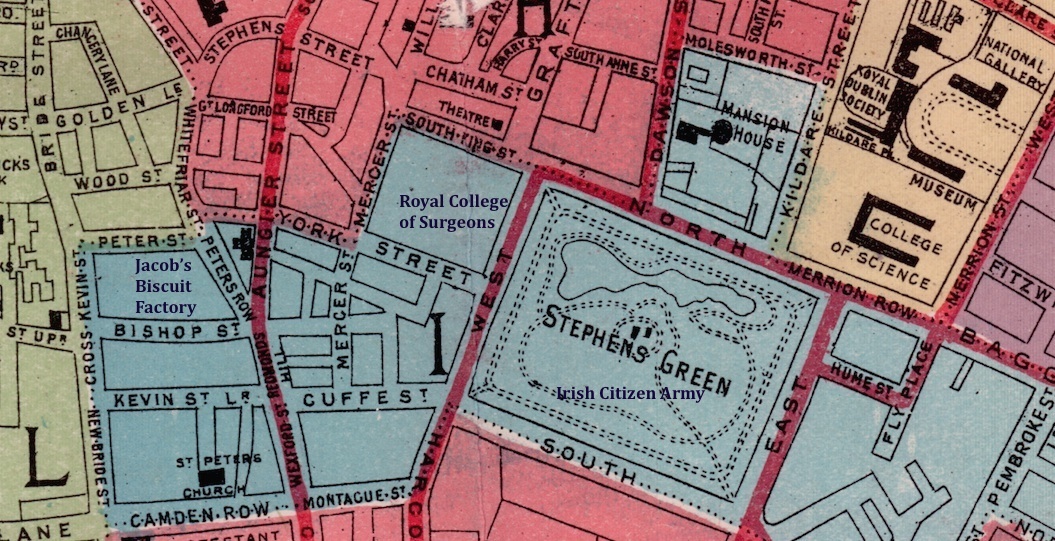
During the week of the Easter Rising the site of Jacob’s Biscuit Factory on Bishop Street was occupied by up to 150 Irish Volunteers, Fianna Éireann and Cumann na mBan, led by Thomas MacDonagh, John McBride and Michael O’Hanrahan.

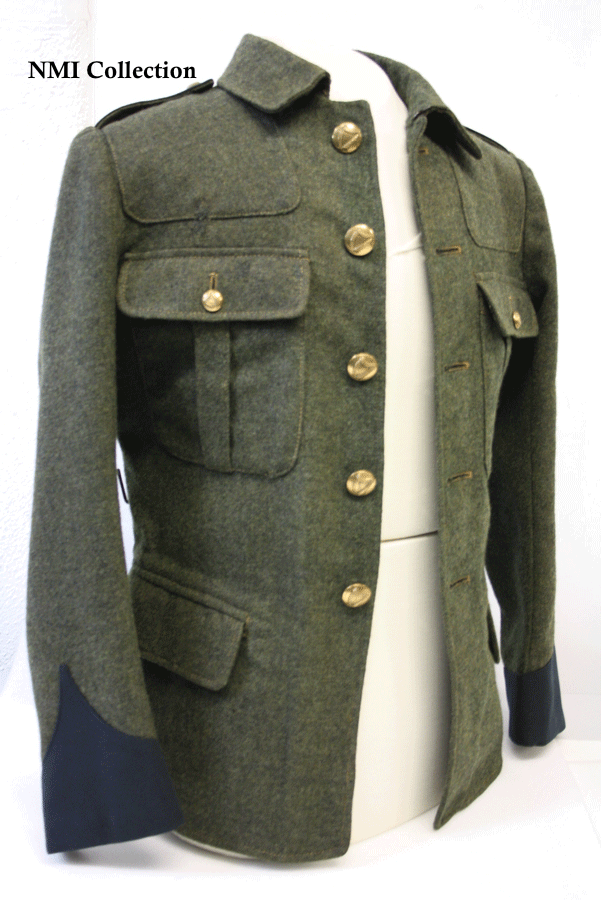
It was surrendered on Sunday 30 April, when one of the Volunteers left this tunic behind.  It was donated to the National Museum in 1917.

The Jacob’s complex, where the National Archives and DIT Aungier Street now stands, took up a large area between Bishop Street and Peter Street, and was closely surrounded by mostly tenement housing. It was positioned between Portobello Barracks and the city centre and its tall towers made it ideal for sniping – it was therefore a good position to try to cut off military reinforcements travelling to the centre of action. 

The main body of Volunteers took the Factory at mid-day on Monday 24th April, and set up outposts in Fumbally Lane, Camden Street, Wexford Street and Aungier Street. The factory was located in the Liberties and Blackpitts area which was quite pro-British, with many families connected to the British Army. The local community, including the ‘separation women’ (the dependents of Irish men in the British Army), was at first hostile to the Volunteers and were verbally abusive to them; one civilian who physically attacked a Volunteer was killed in his defence.

Thomas Slater, in his witness statement to the Bureau of Military History, tells of how they broke through the door with a sledge, politely telling the employee on duty that the best thing he could do was to get his hat and leave, along with any other employees. Being a bank holiday, the factory would have had a minimal level of staff on that day. The men barricaded themselves in, using sacks of flour against windows and doors.  As the week progressed the garrison saw little action in the form of assault on the buildings, apart from intermittent rifle fire between the Volunteers and the military, and focused on the sourcing of provisions to feed the men, who were otherwise surviving on biscuits and sweet goods.

In Seosamh de Brun’s beautifully descriptive statement he tells of how the men occupied themselves during rest periods inbetween their duties, when the combatants slept, read books from the Jacob’s library, wrote diaries and even formed study circles. Seamus Pounch relates that the men and women held a céilí during a lull in the fighting.

The Jacob’s men were mainly active in supplying nearby garrisons such as the Irish Citizen Army in the Royal College of Surgeons with provisions, forming parties to gather information on what was happening in the city (the last communication from the GPO was on the Wednesday) and supporting other garrisons by sending men to join the fighting. In particular, a group of 20 men was sent to de Valera’s Boland’s Mills and Westland Row Railway Station, which was under heavy fire from the British Army. When they reached the Mount Street area they were fired on and were forced to retreat, with Volunteer John O’Grady mortally wounded – the only member of the garrison to die that week.


Patrick Pearse officially surrendered to General Lowe on Saturday 29 April, but the news did not reach Jacob’s that day.  On the Sunday, Father Aloysius, a Capuchin father, came to the factory with the order. Thomas MacDonagh, refusing to accept the surrender order as binding as Pearse was a prisoner, went with the priest to confer with him in person. Thomas Slater stated that before he left, he told the men ‘to get away if they could, as there was no use of lives being lost’, and many left at this point.   On his return, he conferred with the other commanding officers, confirming the surrender order and breaking down with the words ‘Boys, we must surrender, we must leave some to carry on the struggle’.

He called the men to the headquarters on the ground floor to inform them. Michael Walker remembered his words, ‘We are about to surrender but we have established the Irish Republic according to international law by holding out for a week. Though I have assurance from his reverence here that nobody will be shot, I know I will be shot, but you men will be treated as prisoners’ (of war).  At this there was uproar, with the men declaring that they did not trust the word of the British, and some urging to continue the fight.  

The men had the option of either marching out and surrendering, or escaping. Some took that option; escaping through windows wearing the civilian clothing which had been supplied to them by the Whitefriars Street Priory. Walker was one of these, though he was later found and arrested.  Seamus Pounch escaped arrest and had to lay low for some weeks, describing ‘how awkward it was now to have appeared so prominently and so often in uniform in the years leading up to the Rising’.

Vincent Byrne, a 15 year old Volunteer who would later become a member of Michael Collins’ ‘Squad’, remembers being lifted out of a window onto the street to escape, where he was taken into a house by a local woman to brush the telltale flour off his clothing.

Those who officially surrendered were brought to Richmond Barracks before being deported to various prisons and internment camps in Britain.  The leaders – Thomas MacDonagh, John McBride, and Michael O’Hanrahan were court martialled and executed the following month.


This Irish Volunteer tunic is of the pattern decided upon by the organisation’s uniform subcommittee in early 1914, and is one of the earliest examples of the type to survive. It was donated to the National Museum in 1917, just one year after the Rising, when its aftermath was still keenly felt by the city, and so it is not only a fine example of contemporary collecting, but is also the earliest object from the 1916 Rising to enter a national cultural institution.

It was found in Jacob’s Factory after Easter Week, and it is likely, given what the witness statements tell us about the surrender, that the Volunteer who wore it made the decision to abandon it before attempting escape.  We don’t know who owned this tunic, or whether or not he avoided arrest and internment.  I believe that it cannot have been an easy decision for him to make. From a personal perspective, he would have paid for this tunic on a weekly basis over a long period of time, and a number of small, neat repairs to the breast pocket show how valued it was by its owner.

On a practical level, if he had been arrested in uniform he would have had a better chance of being treated as a prisoner of war (though this did not in fact happen to the arrested rebels), but being dressed as a civilian increased his chances of escape. To abandon his uniform and escape may also have been regarded as dishonourable, despite having the full permission of his commanding officers to do so. We can assume from the pattern of the uniform that he was a member of the Irish Volunteers from at least early 1914, and that he was dedicated to the cause of the Irish Republic. Perhaps he went on with the struggle for independence, as MacDonagh hoped when he surrendered the garrison and himself, wishing to ‘leave some to carry on the struggle’.


© Brenda Malone. This work is original to the author and requires citation when used to ensure readers can trace the source of the information and to avoid plagiarism.

https://libguides.ucd.ie/academicintegrity/referencingandcitation

Sources and general reading used in the creation of these articles are listed on the Further Reading page.
Categories
19th century

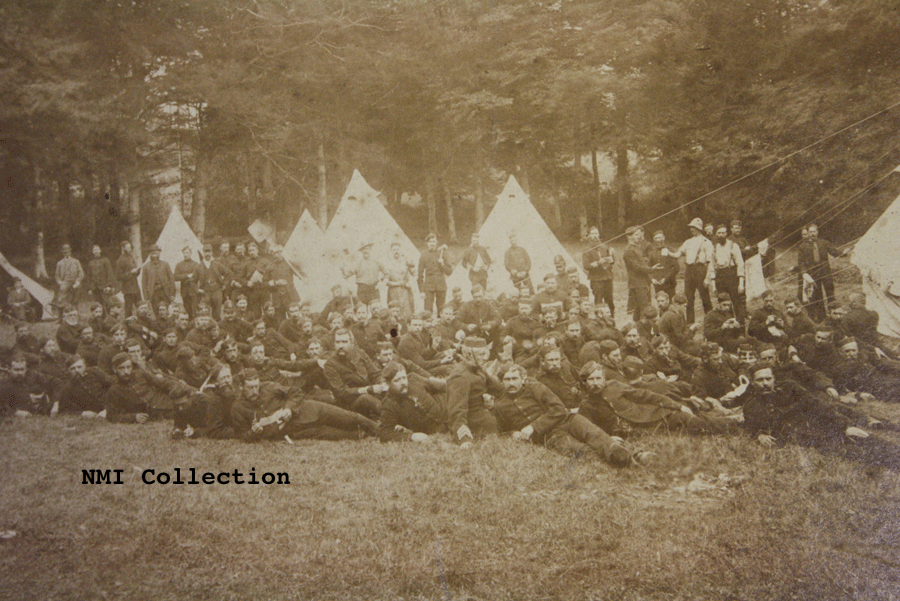
RIC Encampment, Coolgreany Evictions, 1887

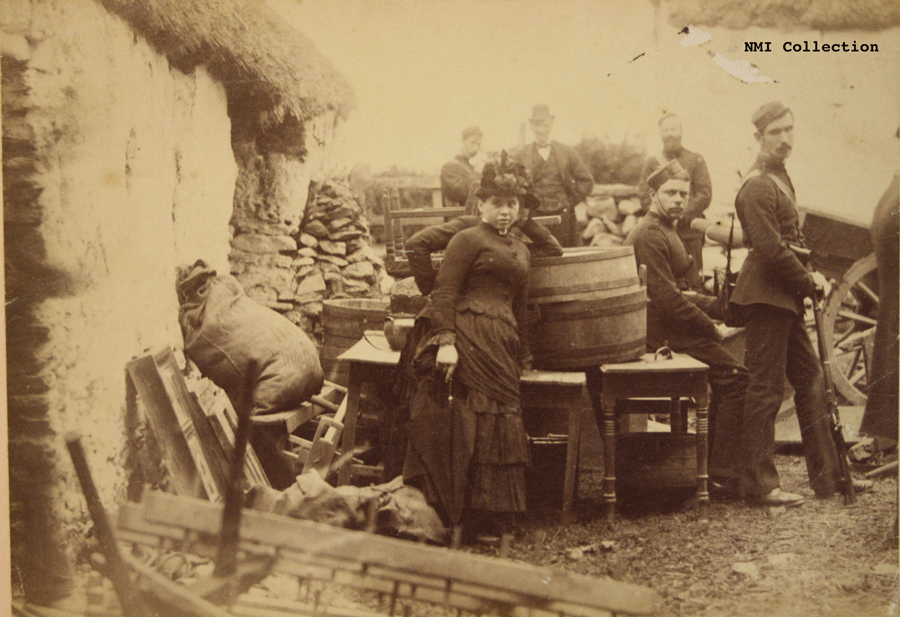
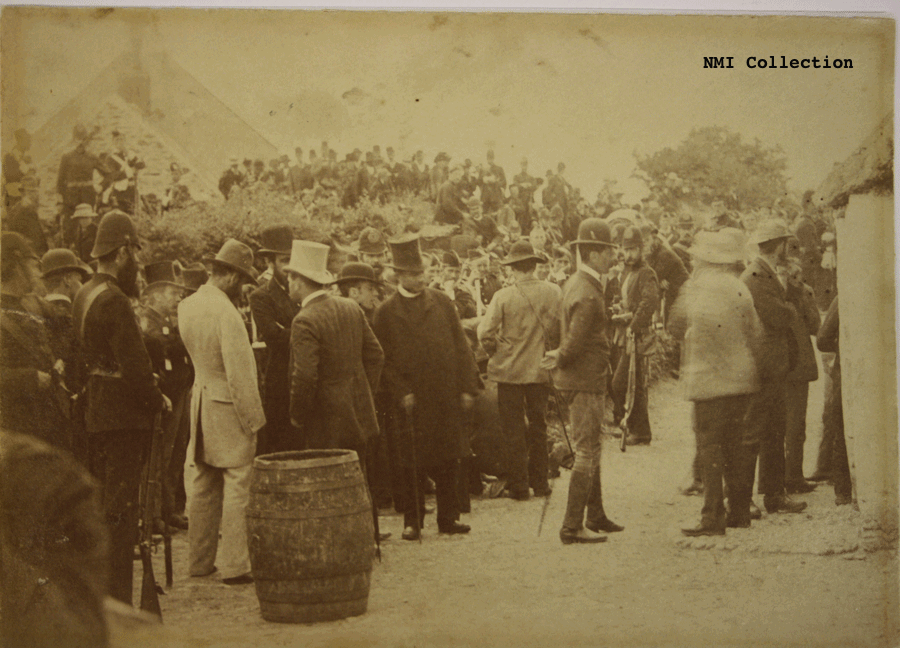
Previously on the blog I’ve posted about the Coolgreany Eviction Album from 1887 (The Eviction of Mrs Darcy and The Murder of John Kinsella).  There are two copies of the Coolgreany photograph album in public collections; the National Museum of Ireland received its copy in 1942 from a donor who rescued it from destruction when it was about to be disposed of in a fire, and the National Library of Ireland acquired its copy in 1992 from the grand-niece of Fr Laurence Farrelly, who was active in the Plan of Campaign in Co. Wexford in the 1880s.


The album shows scenes from the infamous Coogreany Evictions in Co. Wexford, near Gorey, where from February 1887 about 300 people were evicted from the estate of the Dublin wine merchant, High Sheriff and Justice of the Peace George Frederick Brooke, after their adoption of the Plan of Campaign.


The album contains photographs of the families who were evicted, their homes at the time of the eviction process, and their new shelter at neighbours’ holdings.

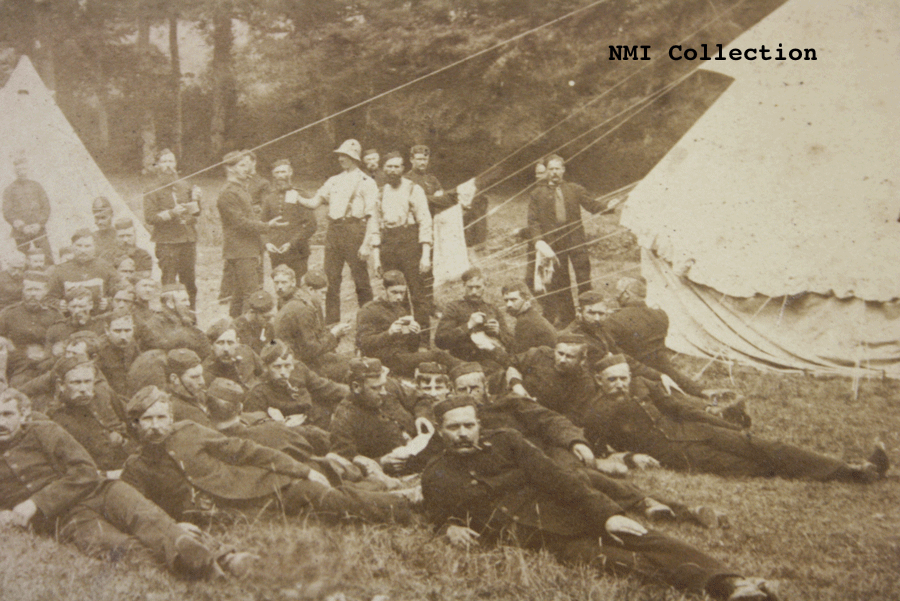
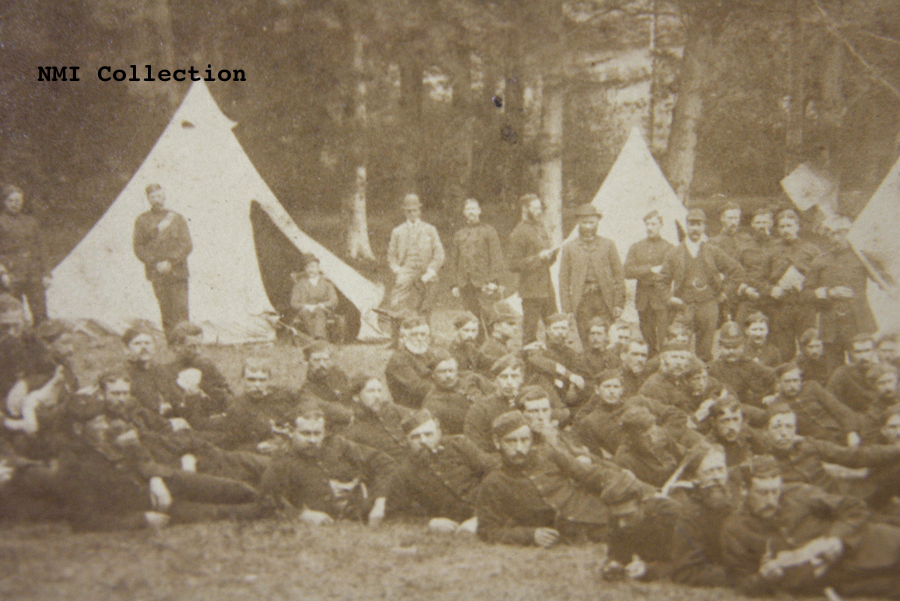
Recently, a scrapbook containing material relating to the visit of Queen Victoria to Ireland in 1900 was acquired by the museum from the family of John J. Jones, who joined the Royal Irish Constabulary as a cadet and later became Chief Commissioner of the Dublin Metropolitan Police. Inside the scrapbook was this loose photograph with the title ‘RIC Encampment, Coolgreany Evictions 1887’.

The Royal Irish Constabulary was established with the Peace Preservation Act in 1814, which set up police forces in the baronies under the jurisdiction of Dublin Castle, the UK administration in Ireland. Its role in policing the people of Ireland in this century of civil unrest, particularly in relation to land, led it into regular conflict with the rural population.

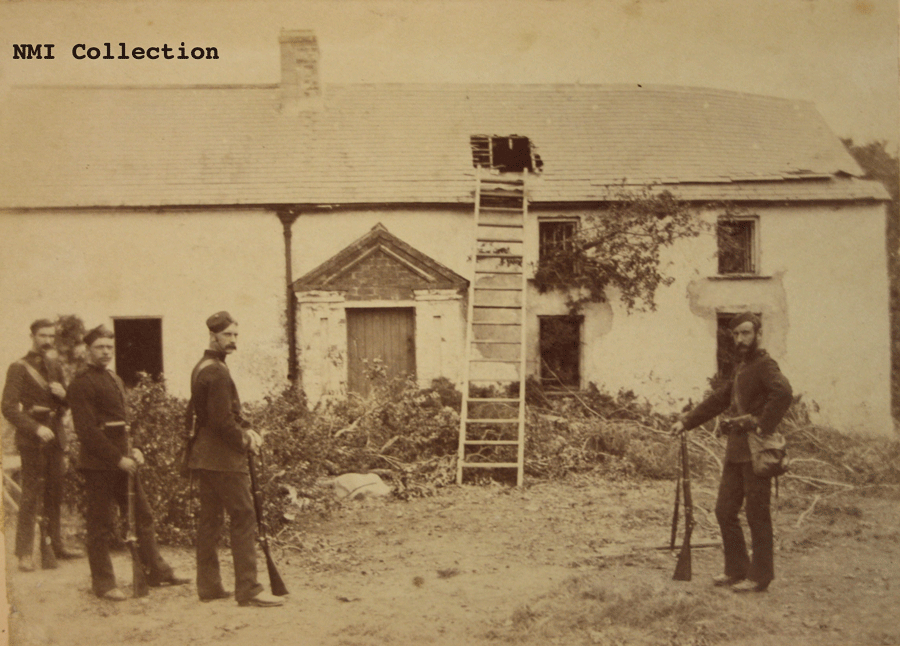
It was regularly used, along with the military and the ‘Emergency men’ hired by estate managers and their bailiffs, in the course of evictions. In Coolgreany many photographs show RIC constables armed with carbine rifles enforcing the eviction order and providing protection for the estate managers and their employees against the protesters.


Their role was not simply to act against the evictees however; in July of 1887 John Dillon M.P. enquired in the House of Commons about an incident the day before, when a house in Coolgreany was said to have been burned to the ground before the Sheriff had taken possession of it, with the bailiff throwing the women of the house out of the top floor window, and a number of RIC constables had to go in and rescue the women.


This encampment of RIC constables was brought in from outside areas to aid the evictions in Coolgreany in early 1887. There are at least 100 constables pictured, and the photograph, when seen alongside the images of the evicted families, give an idea of the sheer force which the tenants faced when fighting for their homes.

© Brenda Malone. This work is original to the author and requires citation when used to ensure readers can trace the source of the information and to avoid plagiarism.

https://libguides.ucd.ie/academicintegrity/referencingandcitation

Sources and general reading used in the creation of these articles are listed on the Further Reading page.
Jewel Adviser

Perfect Piece Awaits

AN SIONNACH FIONN

Irish News, Politics, Culture

In the Dark

A blog about the Universe, and all that surrounds it

Crawling EgMaf

... where things go slow, but we're getting there!

Portals of London

Towards a catalogue of London’s interdimensional gateways

Landscapes of Revolution

A Project Exploring Ireland's Conflict Archaeology, 1913-1923

caught on the wire

Reflections on military history

Fintan O'Mahony

Reading and writing amid the ruins

Early Irish Cinema

What's On in Irish Cinemas - 100 Years Ago

Virtual Curation Museum

Where the Past Meets the Future

the many-headed monster

the history of 'the unruly sort of clowns' and other early modern peculiarities

A SILVER VOICE FROM IRELAND

An Eclectic mix of items from a 'senior' blogger in Ireland looking at the past and keeping an eye on the present.

Pue's Occurrences

An Irish History Blog

The Museum of Ridiculously Interesting Things

a collection of ridiculously interesting art, objects, ideas, and history

Dublin Tenement Experience

Living the Lockout

kilmainhamgraffiti

Recording, photographing, deciphering, analysing and understanding historical graffiti from Kilmainham Gaol, Dublin. This research has been funded by the Irish Research Council (2012-2014)