Categories
1916 Rising

16 Days of Internment; Alderman James J. Kelly, 1916


 In 1942 Maeve Cavanagh; poet, wife of composer and revolutionary Cathal MacDowell and sister of political cartoonist Ernest Kavanagh, deposited their souvenir album of postcards and photographs in the National Museum of Ireland. These cards were produced mostly between 1913 and 1922, and covered topics such as the Labour war of 1913-14, the 1916 Rising, the Irish Volunteers and National Volunteers, conscription and various propaganda cartoons, many of them drawn by MacDowell and Kavanagh themselves.  
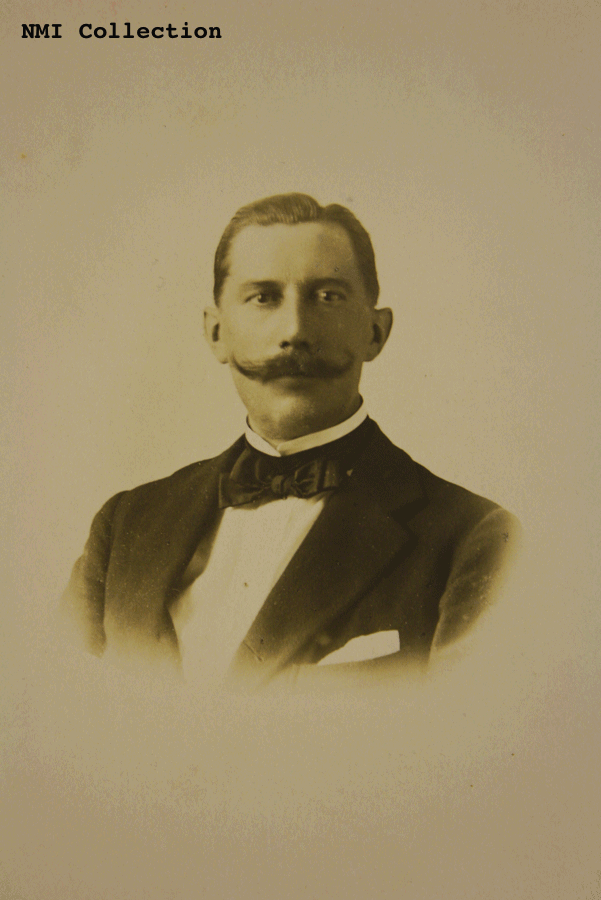
 

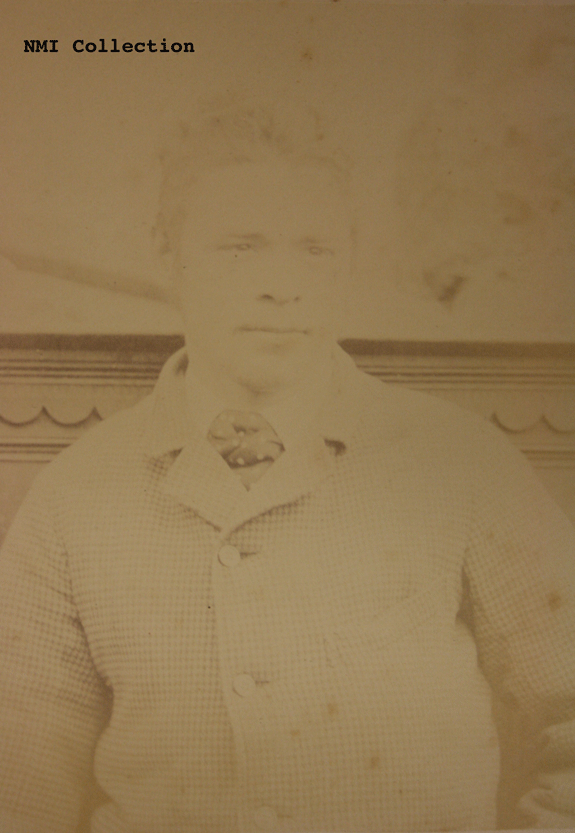
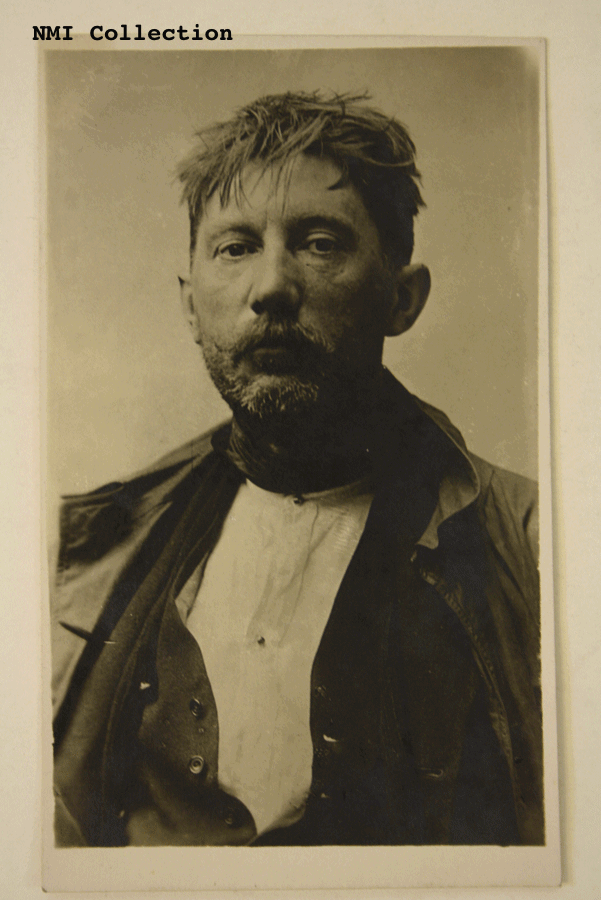
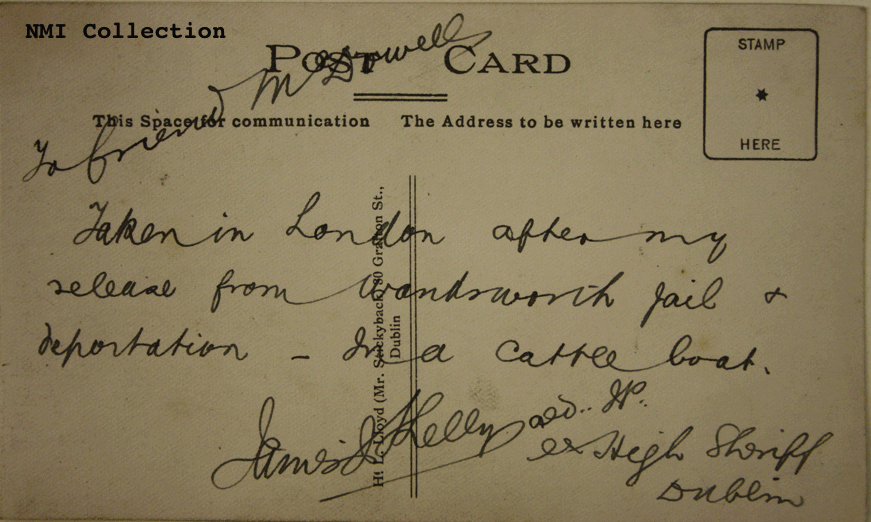
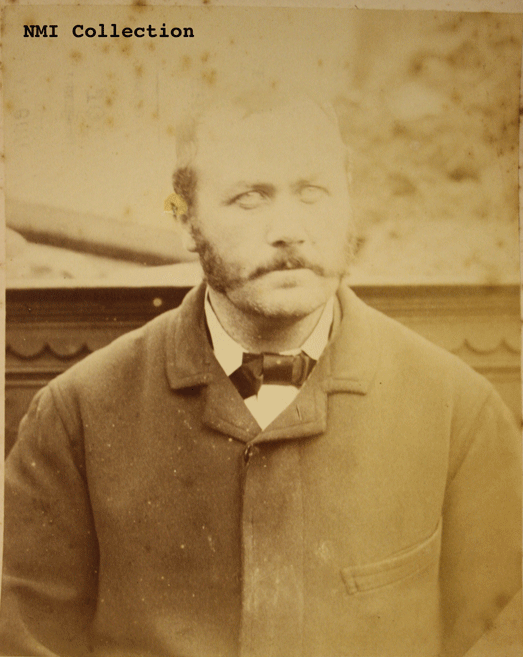
Among the postcard photographs were two very different images of Alderman James Joseph Kelly, which he personally sent to his friend MacDowell, each with a message of explanation on the reverse.  One photograph is of James Kelly, taken in Dublin in 1916 before his arrest. The other is of the same man, taken in London after his release from prison after just 16 days.

James J. Kelly, a 45 year old merchant, owned a tobacconist shop on the corner of Camden Street and Harrington Street, also known as ‘Kelly’s Corner’. He was a Dublin Corporation Alderman, a Justice of the Peace and had previously held the office of High Sheriff of Dublin.  Kelly was a Nationalist, but not a member of either Sinn Fein or the Irish Volunteers, believing more moderately in self-determination for Ireland. However, on the 26th April 1916, the third day of the Rising, he found himself suddenly linked to the rebels and to the story of Francis Sheehy Skeffington.
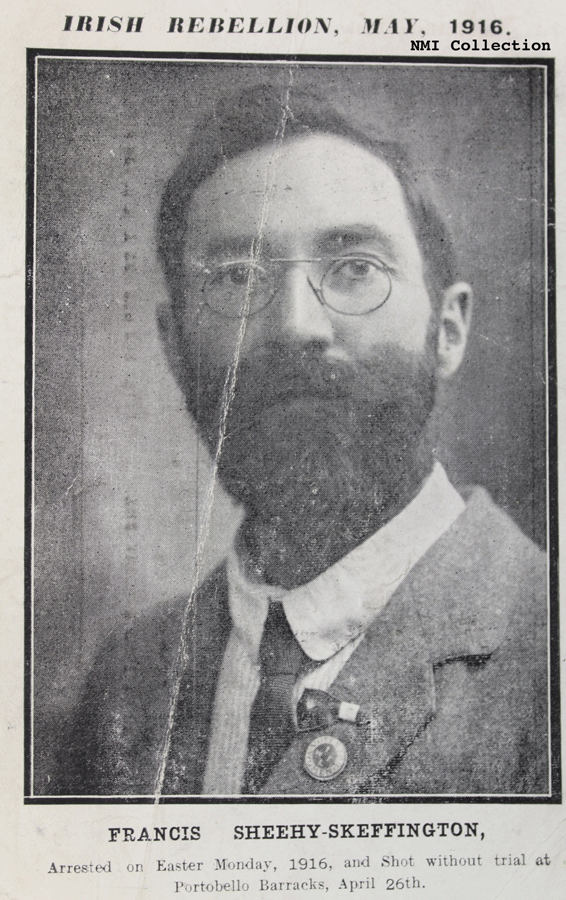
 

Sheehy Skeffington, journalist, suffragist and pacifist, was arrested on 25th April and detained in Portobello Barracks, not far from Camden Street. He had not taken any part in the Rising, and he had been in the city appealing for peace and trying to prevent looting. British Army officer Captain Bowen-Colthurst of the Royal Irish Rifles was at that time attached to the 3rd Battalion stationed at the barracks. On the 26th April he decided to lead a raiding party into the city in search of Sinn Feiners, using Sheehy Skeffington as a hostage. As he marched into the city he shot 19 year old mechanic James Coade on the Rathmines Road, and 40 year old bricklayer Richard O’Carroll as he reached Camden Street. As the people on the streets fled from the gunfire, Thomas Dickson, editor of The Eye Opener, took shelter in Kelly’s shop, which Bowen-Colthurt’s party was heading towards in the belief that Kelly was a member of Sinn Fein. Patrick McIntyre, the editor of the Searchlight and a friend of Kelly’s, was already inside. Dickson and McIntyre were both arrested and brought to Portobello Barracks, where they were shot alongside Sheehy Skeffington.  Kelly himself was not present at the time of their arrests, but was arrested later and sent to Richmond Barracks.  His sister gave evidence to the Royal Commission of Inquiry which investigated the events, stating that the soldiers wrecked the shop, then bombed it with hand grenades.

Kelly spent from 26th April to 8th May in Richmond Barracks, from where he was deported to Wandsworth Prison in London on a cattle boat along with 196 other men. He appears on the Released List for the 12th May, so spent a total of about 16 days in detention before his release, unlike the many men who would spend up to eight months in prison camps. However, what Kelly suffered in those 16 days is evident on his face; apart from the tough conditions in prison, on close inspection there are also signs of his being beaten, evident in the black eye visible in the photograph.

On the 15th May 1916 during the Commons sitting on the Disturbances in Ireland, the Under-Secretary of State for War was questioned about Kelly’s case, in particular on ‘what charge, if any, was made against Alderman Kelly; and if he will be compensated for the loss sustained by the action of the military authorities?’ The Under-Secretary replied that ‘Mr. Kelly was arrested on suspicion, but, on investigation of the facts, it was determined that no charge should be preferred, and he has been released. The Government cannot recognise any claim to compensation’.
Kelly returned to politics after the Rising, and ran as an Independent nationalist candidate in the 1918 General Election in the St. Patrick’s Division of Dublin. He ran against the Irish Party candidate William Field who had held the seat since 1892, and the Sinn Fein candidate Countess Constance Markievicz.  Markievicz won, but refused her seat in the British Imperial Parliament in Westminster and joined the newly formed Dáil Éireann in January 1919. 

© Brenda Malone. This work is original to the author and requires citation when used to ensure readers can trace the source of the information and to avoid plagiarism.

https://libguides.ucd.ie/academicintegrity/referencingandcitation

Sources and general reading used in the creation of these articles are listed on the Further Reading page.
Categories
19th century

The Murder of John Kinsella, Coolgreany Eviction Album, 1887

The last post on the Coolgreany Evictions Album focused on the eviction of the Darcy family from their lands in Ballyfad in the July of 1887. In all, more than 60 families, in excess of 300 people, had been forcibly evicted during that year.

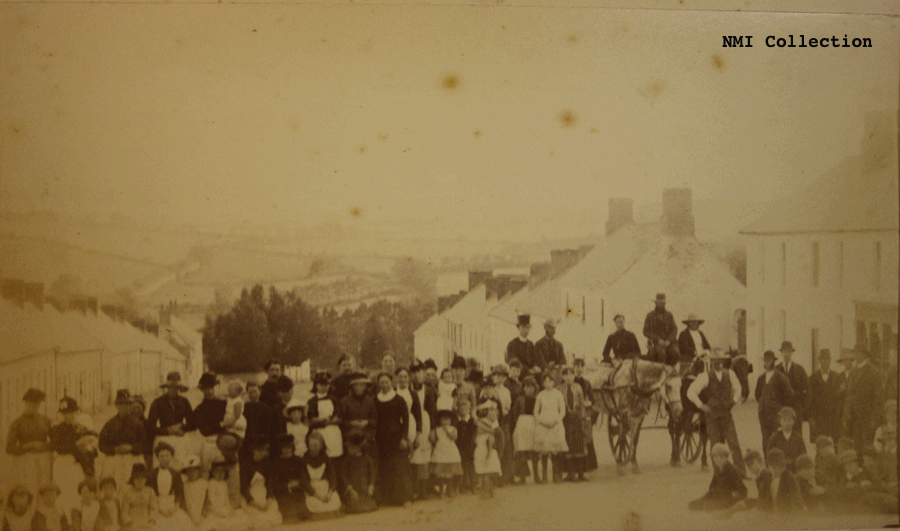
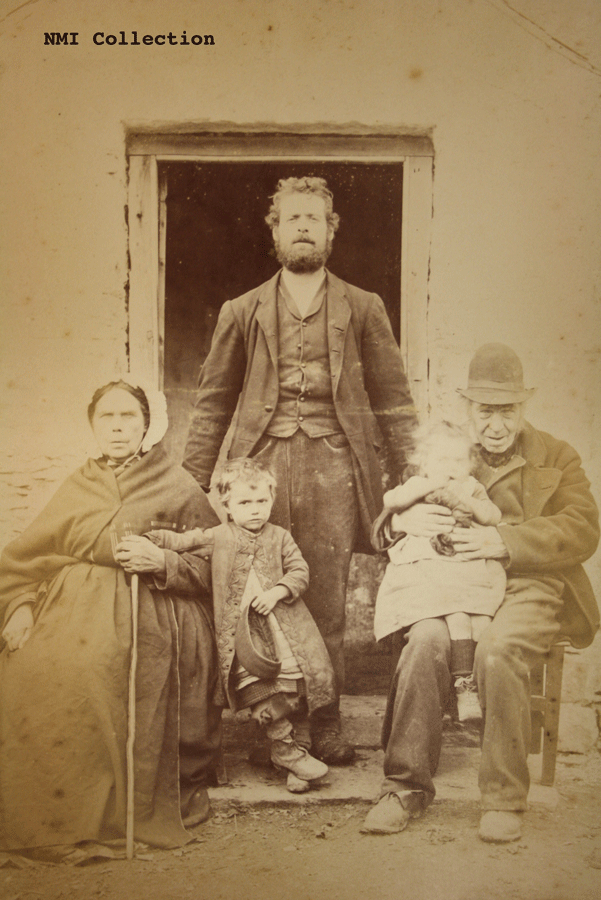
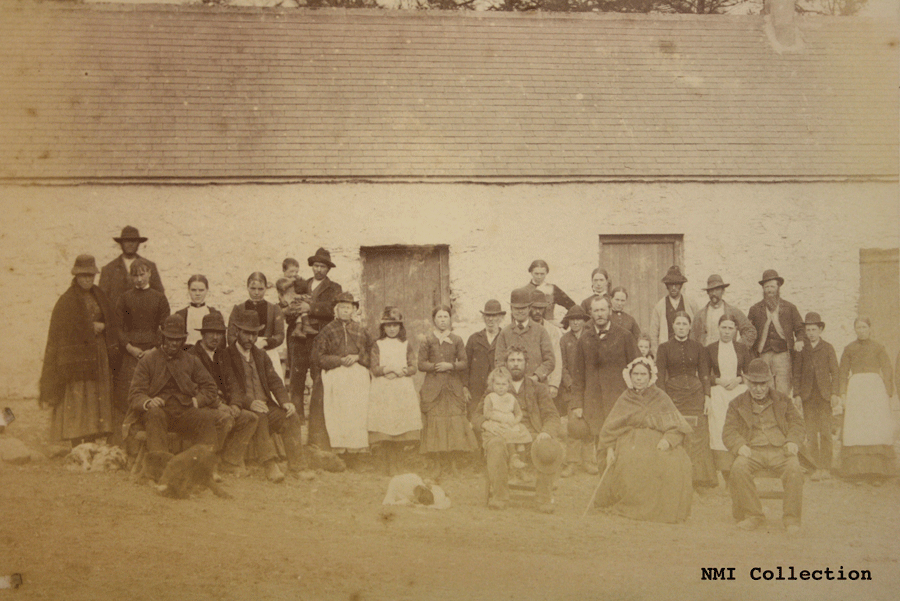
The Land League organisers of the Plan of Campaign had however planned for the possibility of a landlord refusing to negotiate a downwards rent and the eviction of the tenants. Using Plan funds, shelters called Campaign Huts were erected in the locality on the land of charitable neighbours, and used to house the families who found themselves homeless. Such huts were built in Coolgreany, many on the holding of the Kavanagh family.

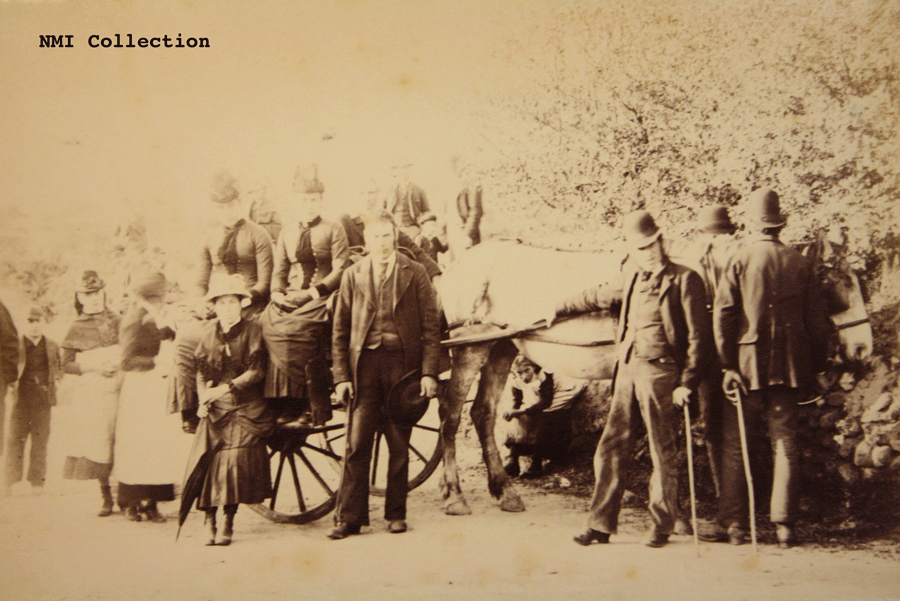
The Coolgreany album contains a photograph of a gentleman who is identified by the album’s compiler as the builder of the Coolgreany huts, a Mr John Tierney.

About 30 people took shelter on the Kavanagh’s land, and in early September of that year a legal case to enforce the removal of the huts was taken by Captain Hamilton, the agent for the Brooke Estate, against Dora Kavanagh. Their argument, as reported in the Irish Times, was that their presence was ‘an interference with the agricultural character of the land’, and in Hamilton’s evidence he stated that the people were ‘unpleasant to him, and that his great object was to get rid of the nuisance of the people in these huts’.  Later that month, while this case was still ongoing, the matter came to a head.

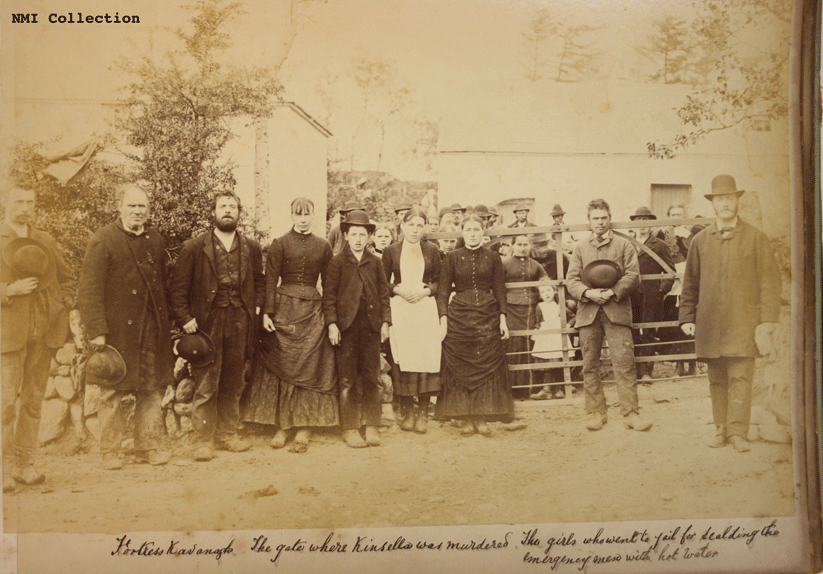
 On 28th September, on the order of Captain Hamilton, Bailiff George Freeman and 17 other men, known as Emergency men – the enforcers of the landlords’ Property Defence Association, arrived at the Kavanagh’s farm. Their objective was to collect one year’s rent from the Kavanaghs, who at this time had provided shelter for ten families in the outhouses in the farmyard. The Kavanagh’s interest in the holding had been sold by the Sheriff, and the rent to be collected had been accrued during their tenancy. A dispute arose between John McCabe, the leader of the Emergency men, and Michael Kavanagh when McCabe demanded £57, but would not produce the warrant.  A crowd of evicted tenants gathered at the gate of the property, and as Emergency man John ‘Red’ Johnston tried to enter the yard by climbing the gate, John Kinsella, a 64 year widower, struck the gate with a pitchfork. Freeman, who had been standing nearby, immediately shot Kinsella with his revolver. As Kinsella fell dead, the Emergency men fired on the crowd, narrowly avoiding further casualties. As the tenants brought Kinsella’s body inside the house, the Emergency men seized the Kavanagh’s cattle in lieu of the rent owed.


At an inquest at the coroner’s court the verdict was passed that ‘We find that the said John Kinsella came by his death at Coolgreany, in the county of Wexford, on the 28th September 1887 by a gunshot wound inflicted feloniously, maliciously, and of malice aforethought, by George Freeman, aided and abetted by John McCabe, John Harris, Henry Oakes, David Crawford, Samuel Scott, Thomas Olinging, T.R. McCawley, Moses Porter, Alexander Kingsbury, George Harris, John Levingston, John Johnston, James Rogers, John Johnston (Red), Francis Maguire, William Johnston, R.H. Maxwell, and E.C. Hamilton’. A number of men, including Captain Hamilton, were released on bail, but Freeman and nine others remained in custody in Wexford Jail.  However, when the case came to trial all the men, including George Freeman, were acquitted of the murder.

It is interesting to note that earlier that year, in February of 1887, Sir Thomas Esmonde put forward a question in the House of Commons enquiring about an incident involving Freeman on the 5th of that month. He and an Emergency man named Woods, also employed on the Brooke Estate, came to the village of Coolgreany and got drunk. When they were removed from the premises, they turned their firearms on the shop owner, a Mr Doyle, and were only stopped from firing by the police, who had come and managed to disarm them.  Freeman was later bound to the peace for flourishing a revolver.

John Kinsella, father of Patrick, Myles, Elizabeth and Bridget, was buried in Kilninor Cemetery, where a memorial to him reads –

‘Sacred to the Memory of John Kinsella of Croghan, who was foully slain in defence of home and country by the bullets of the Property Defence Association on the 26th September 1887 in the 64th year of his age. This monument was erected by the men of Wicklow and Wexford as a testimony of their respect for his many Christian virtues and as an indignant protest against the cruelty and injustice of those who before God are guilty of his innocent blood’.


 Since first looking into the NMI’s acquisition of the Coolgreany Album, I have found that its donor stated that he had saved it from being burned about 16 years previously, in the 1920s, though he did not mention where. So though we do not know anything further about the provenance of this copy of the album, we know that it was very fortunate to have been saved.

© Brenda Malone. This work is original to the author and requires citation when used to ensure readers can trace the source of the information and to avoid plagiarism.

https://libguides.ucd.ie/academicintegrity/referencingandcitation

Sources and general reading used in the creation of these articles are listed on the Further Reading page.
Categories
19th century Irish Women

The Eviction of Mrs Darcy, Coolgreany Eviction Album, Wexford, 1887

The images from the Coolgreany Eviction album, comprised of photographs of the infamous 1887 series of evictions in the Coolgreany area near Gorey in North Co. Wexford, are already fairly well known.  The National Library of Ireland acquired a copy in 1992 from the grand-niece of Fr Laurence Farrelly, who was active in the Plan of Campaign in Co. Wexford in the 1880s.  Some of the images were used in the NLI’s wonderful Notice to Quit exhibition in 2003, so are very familiar to some. A letter that came with the donation identifies a T. Mallacy as the compiler of the album (and also probably the photographer), which he gave to Fr Farrelly in 1888. The National Museum also acquired a copy of the album in 1942, compiled in the same manner and probably at the same time as the NLI’s. This copy has handwritten captions on some of the images, identifying the people and places, though we do not know who wrote these captions.


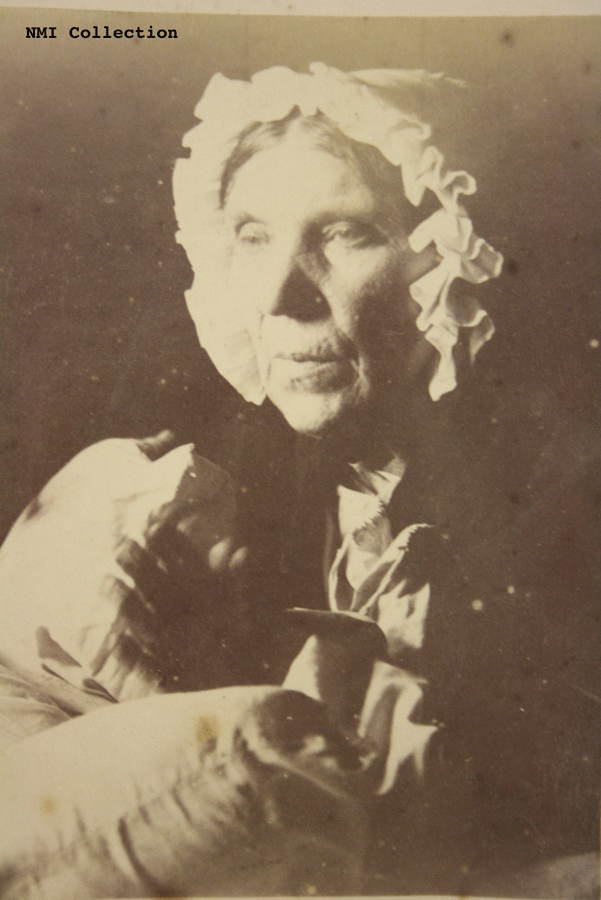
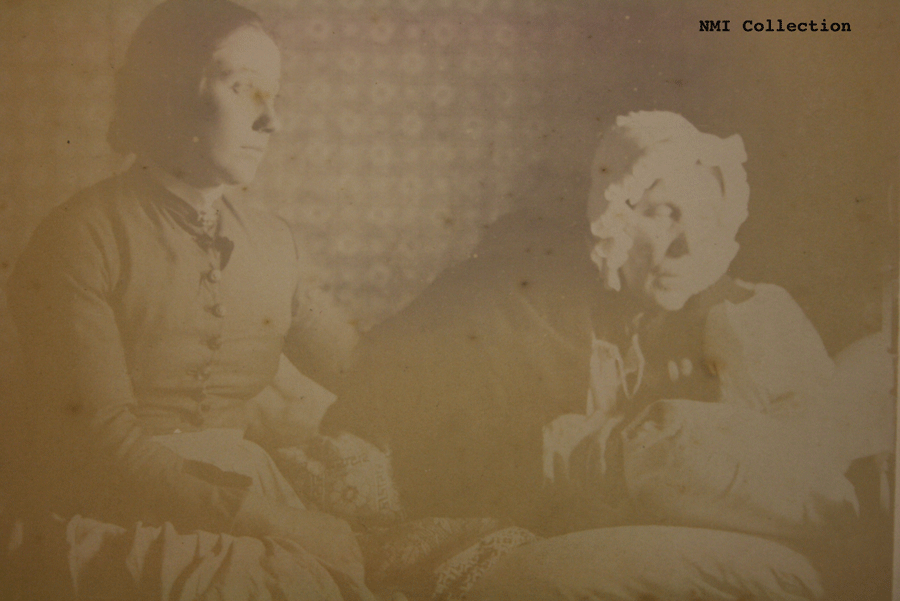
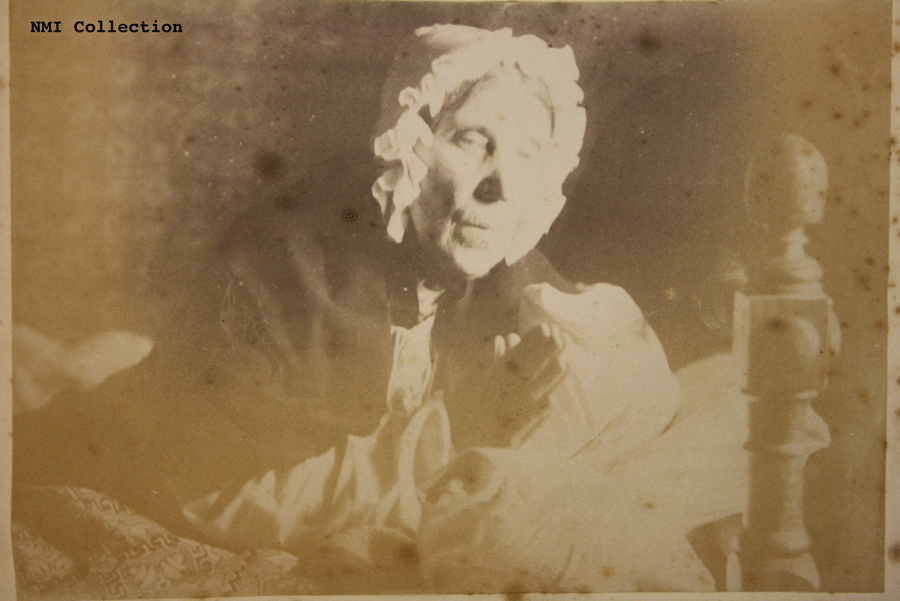
A particular set of photographs stood out for me; the photographs of the 80 year old Mrs Darcy, taken at her sick bed in the process of her eviction from her home in Ballyfad, Coolgreany, in July 1887. Many photographs of evictions are of the eviction scenes themselves, or depict evictees posing outside houses for the camera. The photographs of Mrs Darcy are taken inside her home, making them look quite dark and despairing, yet there is also an air of defiance in her face.


Mrs Darcy’s home, a five-roomed farmhouse with seven outbuildings, was situated on the Brooke Estate; lands owned by the wealthy Dubliner George Frederick Brooke, Wine Merchant, High Sheriff and Justice of the Peace. Brooke lived in Castleknock, Co. Dublin, and his estate was managed by Captain Hamilton.


The Plan of Campaign (where tenants withheld rent from the landlord until a rent reduction was negotiated and agreed) was adopted by the tenants on the Brooke Estate in December 1886. The terms were refused by the owner, and in February 1887 Hamilton was preparing for a series of evictions. The eviction campaign started in July of that year, and numerous families (many of whom are photographed in the album) were removed from their homes by force by Hamilton’s bailiffs and Emergency Men.


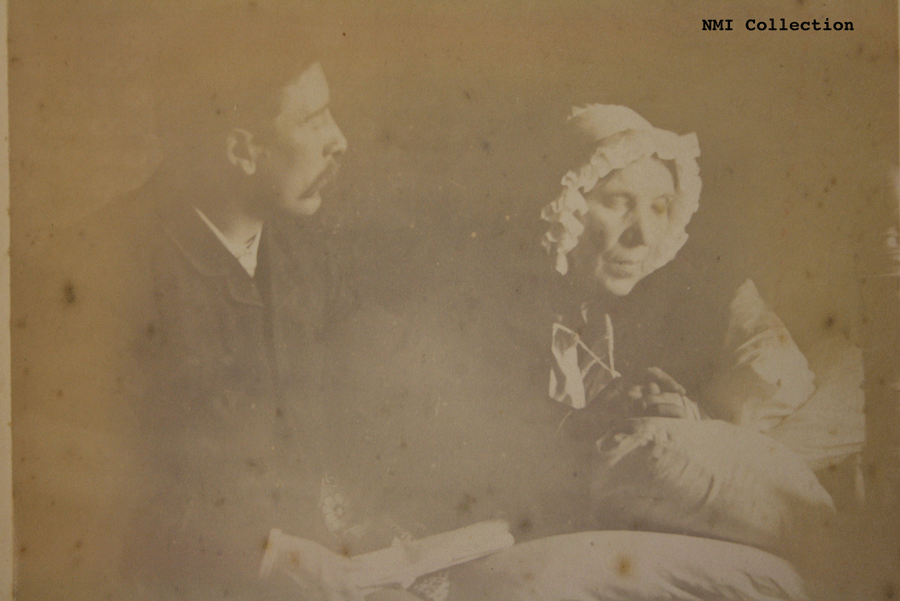
When Hamilton and his men came to the Darcy household, they found Mrs Darcy on her sick bed.  The photographer captures some moments inside the cottage. In one, Daniel Crilly, the Irish nationalist M.P. for North Mayo, consoles Mrs Darcy, and another shows Mrs Darcy with her daughter.


Despite the situation, Mrs Darcy remained strong. One image of her, with her hands clasped, is captioned ‘From the sick bed Mrs Darcy tells Captain Hamilton to evict her; her terms are ‘no surrender’.


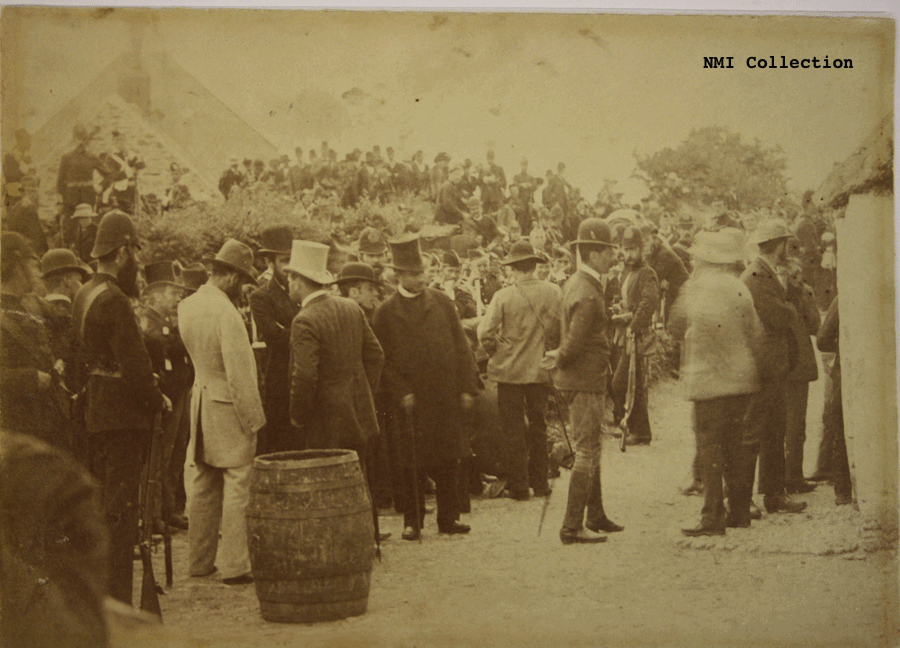
Another photograph shows a crowd gathered outside her cottage, described by the caption writer  as ‘A council of war over Mrs Darcy’s eviction’, including friends and enemies. A crowd of onlookers are seen on higher ground, being kept back from the house.  Members of the Royal Irish Constabulary, armed with rifles, can be seen to the far left. In front of them are leading nationalists Daniel Crilly M.P., John Dillon M.P. and Michael Davitt.  Captain Hamilton, the evicting agent, is seen leaning on his stick talking to Captain Slack, the magistrate in command.  In the background a group of Emergency Men are waiting for the word.  The caption also reads that Captain Hamilton receives a telegram, and postpones the eviction.


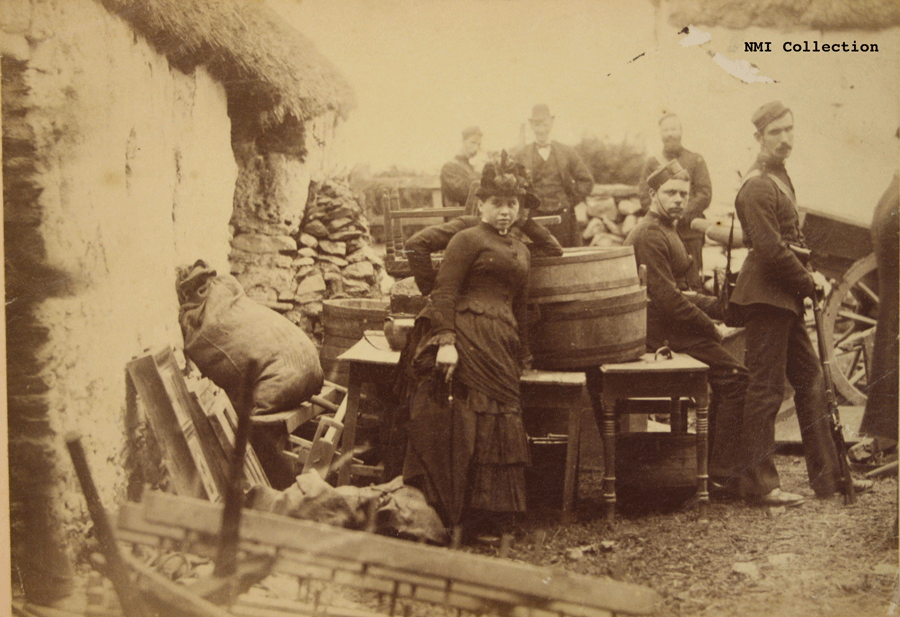
The delay to the Darcy’s eviction did not last long though, and a later photograph shows Miss Darcy gathering up her furniture after eviction for conveyance to the Campaign Cottage (cottages set up by the Plan of Campaign as shelters for evicted tenants).


The Darcy family did manage to return to their home eventually.  The 1901 census shows William, John and Catherine Darcy living in house number 2 in Ballyfad where they are running a post office and shop.  The land was still owned by George Brooke at this point, but the passing of the Wyndham Land (Purchase) Act in 1903 meant that Irish tenant farmers could now buy the title to their land, and in 1911 John Darcy is listed as the landholder, and his brother Michael owns a neighbouring house and farm.  Coincidently, the oldest son of George Frederick Brooke, a Lieutenant George Brooke of the Irish Guards (1st Battalion) and his wife Nina were also resident in Ballyfad, alongside the Darcy family in 1911.  Sadly, George was killed aged just 37 in the First World War in Northern France just a few years later in October 1914, and is buried in Soupir Communal Cemetery. 

Categories
19th century

Indian meal ticket, the Great Famine, 1846

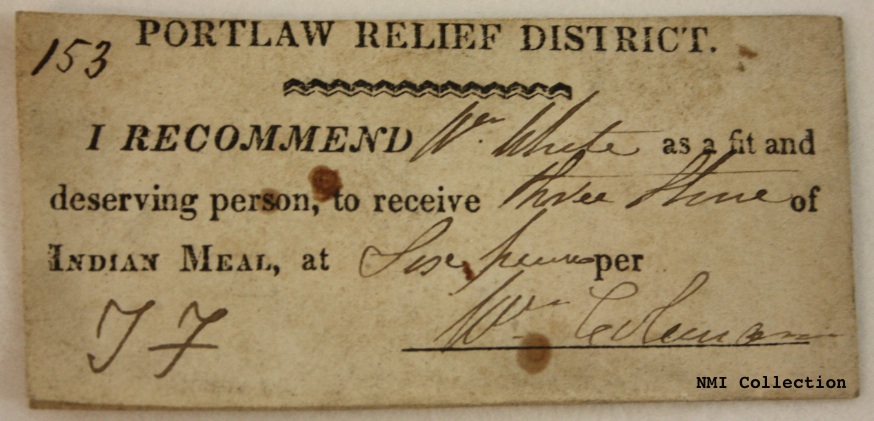
Today is National Famine Commemoration Day in Ireland, an event which has been held annually since 2009. Though it seems little remains of any material culture relating to the famine, the National Museum has a small number of ‘famine pots’; large iron pots used to cook soup in the kitchens set up by the Quaker community to feed the starving. A number of these pots survive around the country. Another object from the museum’s Historical Collections is this Indian meal ticket, issued by the Portlaw Relief District in Waterford to a Mr White, enabling him to purchase three stone of Indian meal for six pence. It was found in the Carrick Road area of Portlaw, and was given to the museum in 1952.

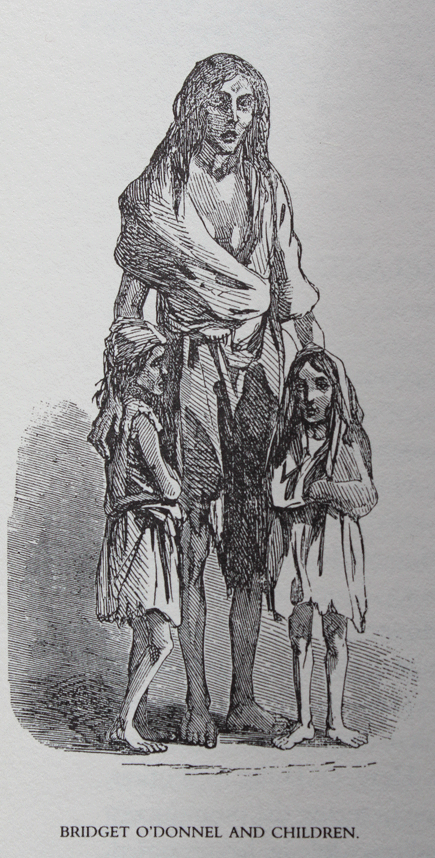
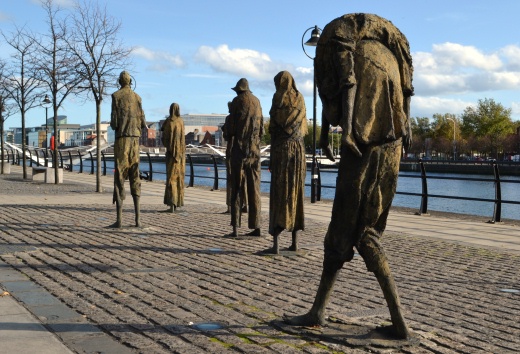
Ireland has seen much famine in its history, but the most well-known is the period between 1845 and 1852; the Great Famine. During its course it is estimated that between one and one and a half million people died of starvation and disease, and a further one million people emigrated. The 1841 census of Ireland had recorded eight million people, making the loss during these famine years at least 25%. The population continued to decline over the decades, and the pre-famine population levels were never again seen in Ireland.

The famine was caused primarily by the potato blight that caused the potato crops, on which so many Irish people were dependent, to fail in the autumn in 1845. Other crops were unaffected and Ireland continued to export food to England during the course of the famine, in many cases escorted under armed guard from famine stricken areas to the ports.

In November 1845 The Relief Commission was established to assess food shortages and the levels of distress in the country. At the same time, the British Prime Minister Robert Peel arranged the import of cheap Indian cornmeal, which could be sold at a reduced rate. Local relief committees were set up to raise funds, which would be partially matched by the Commission, to buy the cornmeal and sell it at cost price to poor families, as they were restricted from providing the meal for free to any person unless they were unfit for work but could not enter a poorhouse. The cornmeal didn’t arrive in Ireland until February 1946.

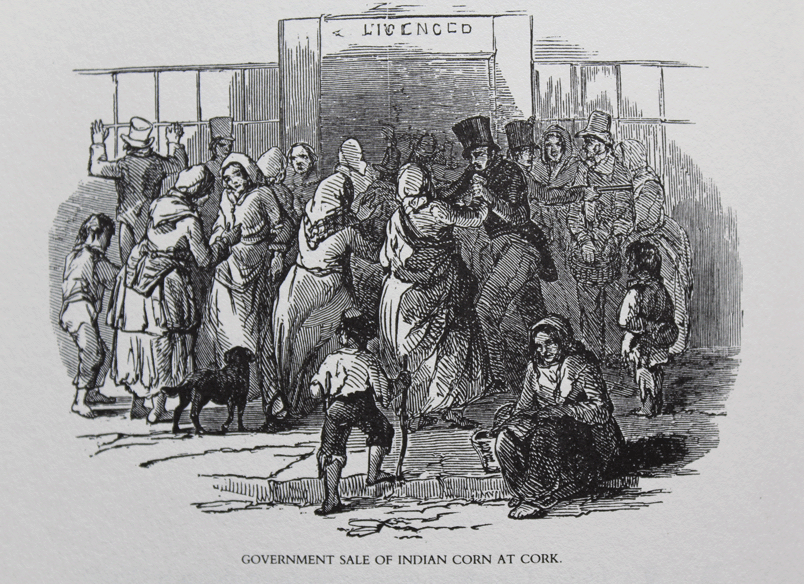
The Illustrated London News (4th April 1846) carried an artist’s sketch and account of the selling of the Indian meal in Cork.


‘On Saturday last, the Government Sales of Indian Corn and Meal commenced in Cork. Immediately on the depots being opened, the crowds of poor persons who gathered round them were so turbulently inclined as to require the immediate interference of the police, who remained there throughout the day.  Among the poor, who were of the humblest description, and needing charitable relief, the sales were but scanty. The occasion had become of necessity; for potatoes have risen to 11d market price for 14lbs.; and, some of the leading commercial men in Cork have made a calculation, which shows that the Government can afford to sell the Indian Corn at a much cheaper rate’.

The Indian meal posed its own problems though; it needed to be ground twice before it could be eaten so it required substantial processing.  Most importantly, it was a poor dietary substitute. The staple diet of potatoes that the poorer Irish were used to was quite nutritious, but the Indian meal lacked Vitamin C, leading to many people developing scurvy. However, the meal undoubtedly did help reduce the death rate by starvation in that year.

The supply of the meal was gone by June 1846, and Peel’s government had fallen, replaced by Charles Trevelyan. The potato crop continued to fail, no more Indian meal was purchased, and the famine continued and worsened.

This small ticket is not only one of the few surviving objects of the Great Famine, but an incredibly personal one. The Waterford area may not have been the worst afflicted by the famine, but the people there were affected. We don’t know who Mr White is, but this ticket, which must have been given to him in the first year of the famine, identifies him and his family as in need of the aid provided by the local relief committee. We will probably never know what happened to him in the following years, if he died during the famine, or had to emigrate. It’s also possible that he survived, perhaps with descendants still living in Waterford.

© Brenda Malone. This work is original to the author and requires citation when used to ensure readers can trace the source of the information and to avoid plagiarism.

https://libguides.ucd.ie/academicintegrity/referencingandcitation

Sources and general reading used in the creation of these articles are listed on the Further Reading page.
Categories
1916 Rising

The End of the Rising; Souvenir Photographs of Dublin’s Destruction, 1916

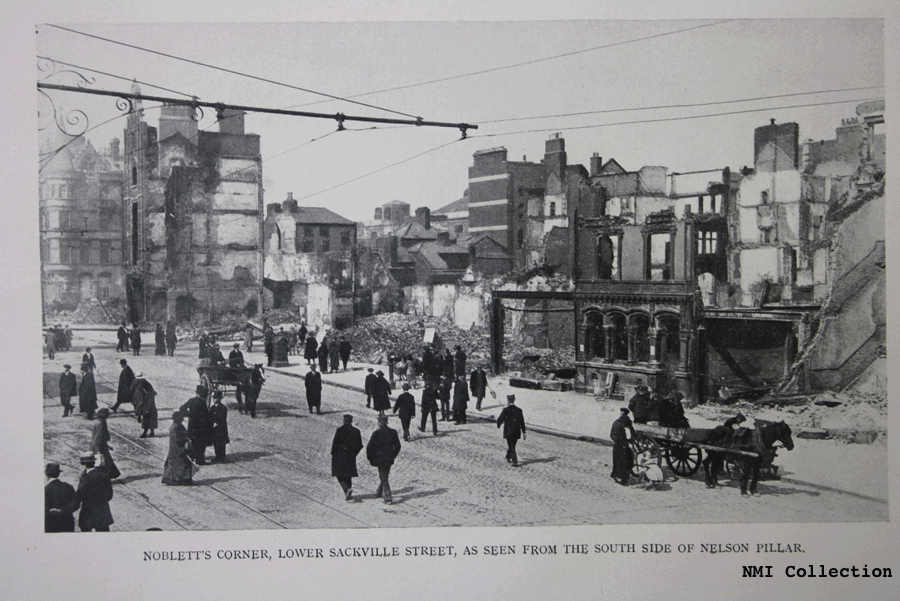
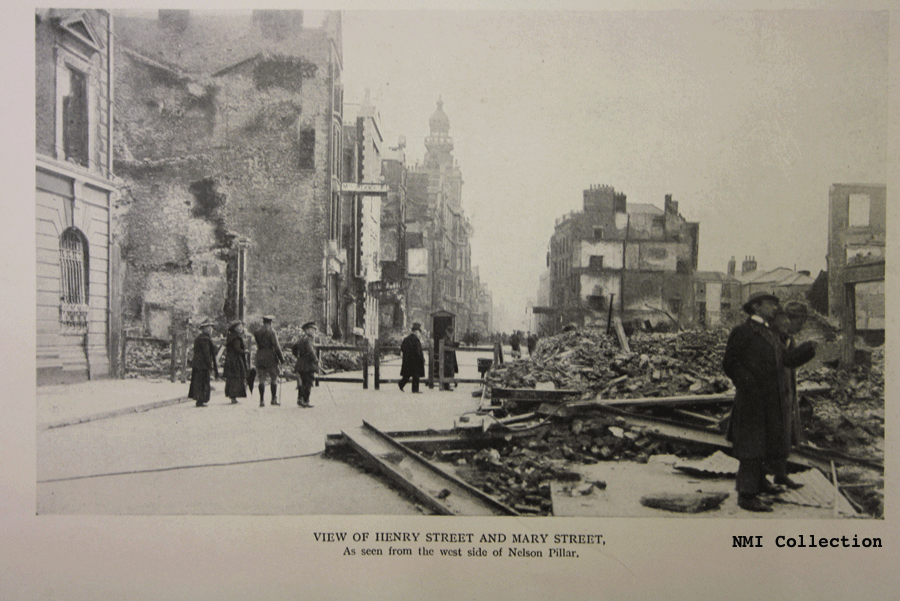
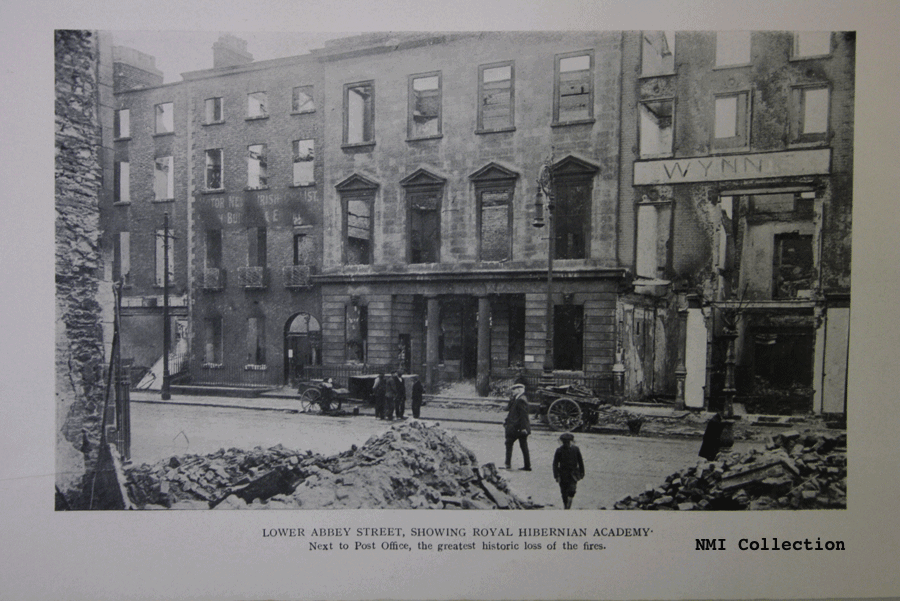
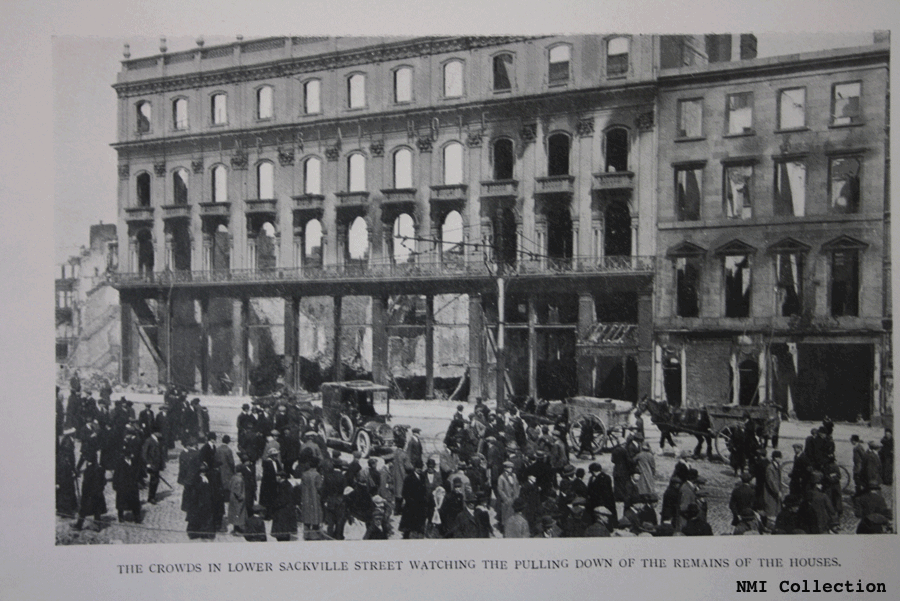
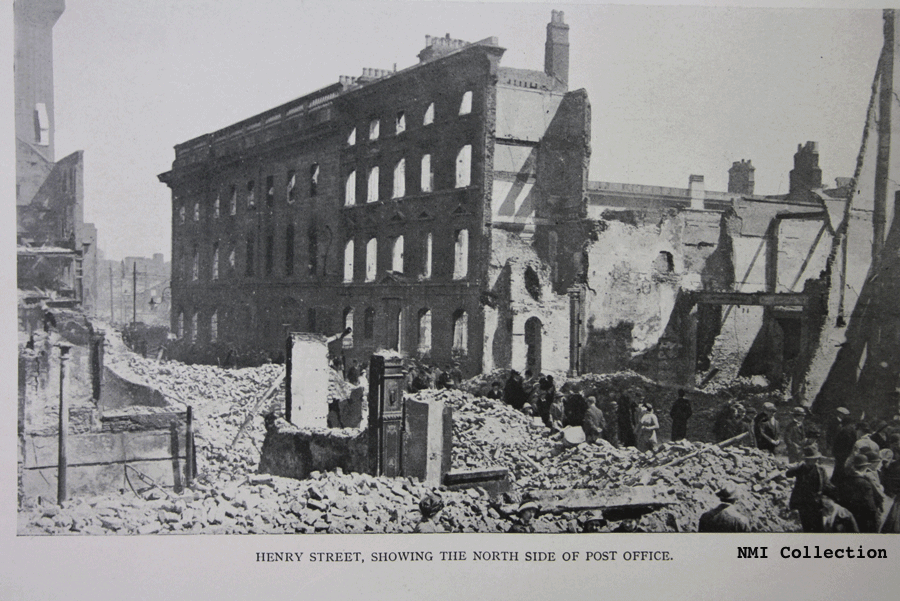
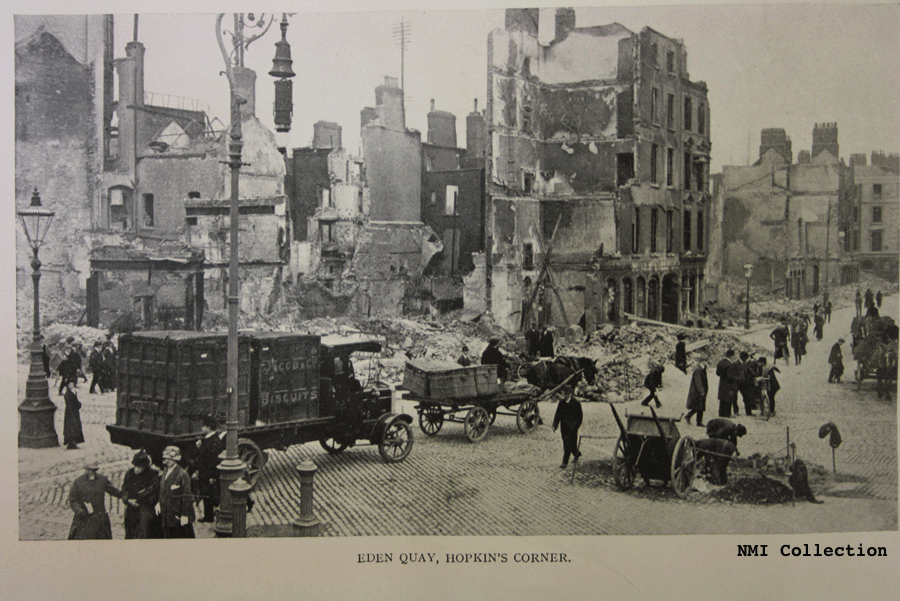
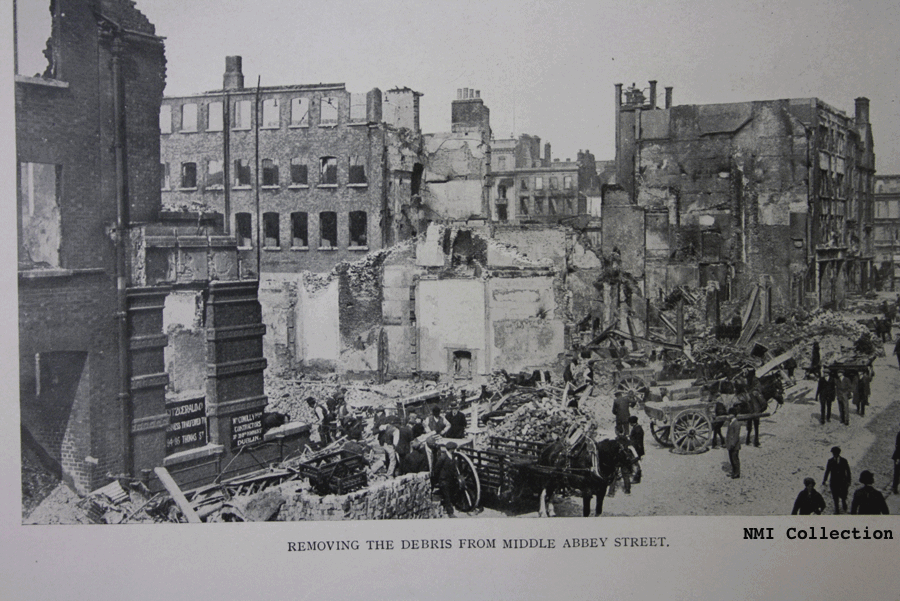
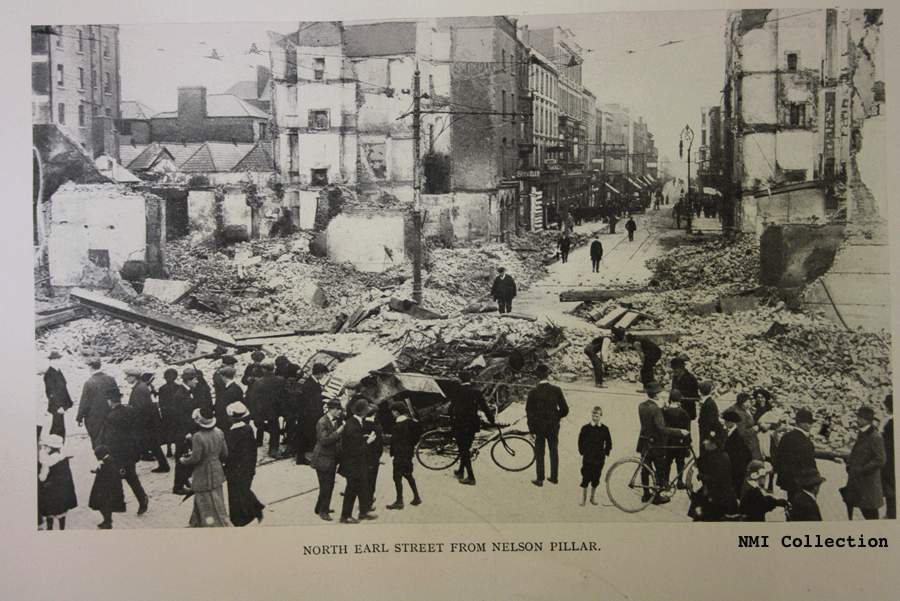
On Saturday 29th April, six days after the Rising began, the rebels had been driven from their central position at the GPO. From their new base at No. 16 Moore Street, Patrick Pearse, accompanied by Elizabeth O’Farrell, surrendered unconditionally to Brigadier General Lowe.  He was taken to Arbour Hill Prison, from where he issued the surrender order to the various garrisons. By Sunday evening all the outlying garrisons in Dublin had surrendered. When the fighting stopped Dublin could begin to assess its loss. There had been many deaths; about 65 Volunteers, up to 300 civilians and over 100 British Army soldiers had lost their lives, with many more injured. The extent of the physical damage to the city centre could now also be seen, with many areas receiving significant damage, and the areas around the GPO and Middle Abbey Street, Sackville Street, Henry Street and Eden Quay being almost completely destroyed.


Soon afterwards a number of publications appeared featuring photographs of the aftermath of the Rising; Dublin After The Six Days Insurrection by T. W. Murphy, published by Mecredy Percy, Dublin, Dublin and the Sinn Fein Rising published by Wilson Hartnell of Dublin, The Sinn Fein Revolt Illustrated published by Hely’s of Dublin, The Sinn Fein Rebellion Picture Souvenir published by W. & G. Baird Ltd of Belfast, and The Rebellion in Dublin, April 1916 published by Eason & Son Ltd.  Souvenir photographs of the Rising were in demand!


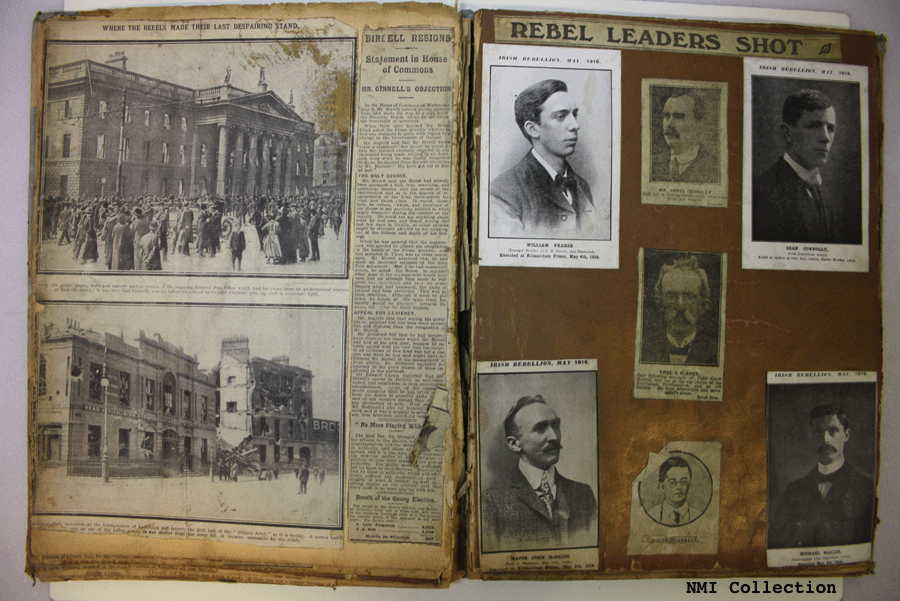
Valentine & Sons, a picture postcard company, also produced a set of photo postcards depicting the city, sold in a set of six. These are often seen in museum collections not only as individual cards but also as part of scrapbooks and albums that people made in the months after the Rising. I often think the creation of these albums, containing the postcard photographs alongside newspaper cuttings, is an indication of how the people of Dublin at the time were affected by the sight of the destruction of their city.


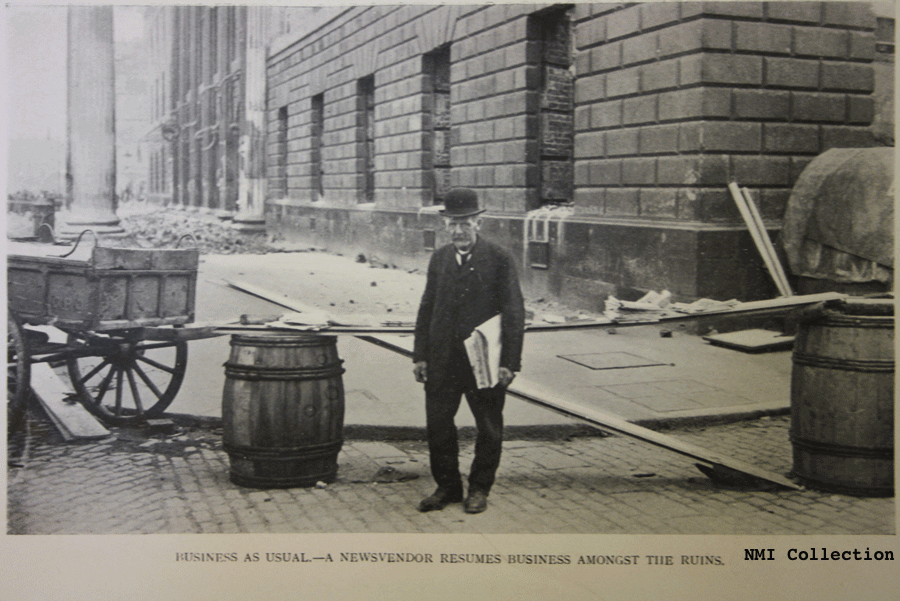
This is a selection of photographs taken from Dublin After The Six Days Insurrection, taken by T. W. Murphy.  They are full of people, and it always strikes me that life for them had to go on despite the very changed city landscape they suddenly found themselves in.


This weekend was the Object Matters – Making 1916 Conference in Dublin. It was a great event; congratulations to the organisers and the speakers, who gave papers ranging from the 1916 Proclamation, ephemera, internment material and the various public collections, their objects and their exhibitions. I’m looking forward to the proceedings!

© Brenda Malone. This work is original to the author and requires citation when used to ensure readers can trace the source of the information and to avoid plagiarism.

https://libguides.ucd.ie/academicintegrity/referencingandcitation

Sources and general reading used in the creation of these articles are listed on the Further Reading page.
Jewel Adviser

Perfect Piece Awaits

AN SIONNACH FIONN

Irish News, Politics, Culture

In the Dark

A blog about the Universe, and all that surrounds it

Crawling EgMaf

... where things go slow, but we're getting there!

Portals of London

Towards a catalogue of London’s interdimensional gateways

Landscapes of Revolution

A Project Exploring Ireland's Conflict Archaeology, 1913-1923

caught on the wire

Reflections on military history

Fintan O'Mahony

Reading and writing amid the ruins

Early Irish Cinema

What's On in Irish Cinemas - 100 Years Ago

Virtual Curation Museum

Where the Past Meets the Future

the many-headed monster

the history of 'the unruly sort of clowns' and other early modern peculiarities

A SILVER VOICE FROM IRELAND

An Eclectic mix of items from a 'senior' blogger in Ireland looking at the past and keeping an eye on the present.

Pue's Occurrences

An Irish History Blog

The Museum of Ridiculously Interesting Things

a collection of ridiculously interesting art, objects, ideas, and history

Dublin Tenement Experience

Living the Lockout

kilmainhamgraffiti

Recording, photographing, deciphering, analysing and understanding historical graffiti from Kilmainham Gaol, Dublin. This research has been funded by the Irish Research Council (2012-2014)